

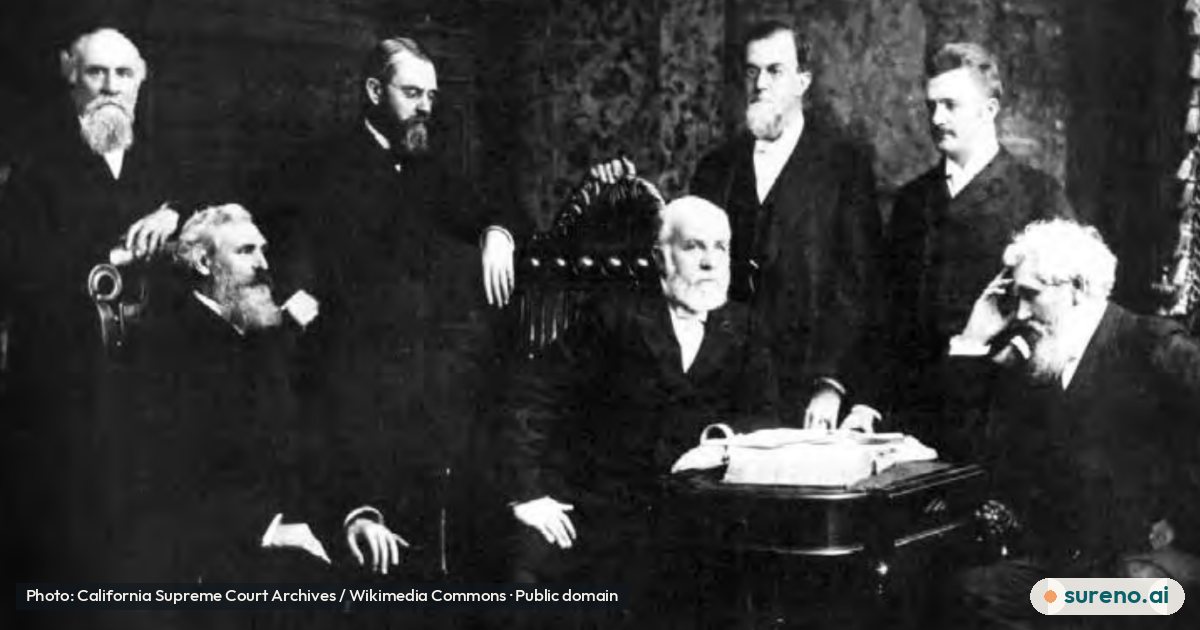
What the Supreme Court’s California Ballot Ruling Means
The court refused an emergency request to set aside ballots flagged by the Trump administration, leaving California’s existing counting process in place.
The short version
- The Supreme Court rejected the Justice Department’s emergency request to stop California from counting about 20,000 mail ballots it said might be connected to noncitizens 13.
- The court’s brief order gave no reason, so it did not publicly settle the disagreement over the administration’s information 13.
- The ruling did not change California’s law against noncitizens voting in state elections 1.
- Lower courts had also rejected the administration’s effort, and the Supreme Court’s decision left California free to continue its existing ballot-counting process 13.
What did the Supreme Court decide?
On November 2, the Supreme Court turned down an emergency request from the Trump administration’s Justice Department. The department wanted California temporarily to stop counting about 20,000 mail ballots that it said could be associated with noncitizens 13. The court denied the request in a short order without explaining its reasons 13.
The decision concerned whether the court should step in urgently during an election. It did not establish that the ballots were unlawful or that the people identified by the administration were noncitizens. California officials disputed the administration’s claim 1.
Did the ruling change California’s ballot rules?
No change to California’s basic voting rules is reported in the order. California law already prohibits noncitizens from voting, according to NBC News 1. The Supreme Court did not remove that restriction or permit noncitizens to vote.
The court declined to require California to separate or hold back the ballots included in the Justice Department’s request 13. That left the state’s existing counting process in place. The reports do not say that every ballot had been counted by the time of the decision.
Why were about 20,000 ballots in dispute?
The Justice Department said its information indicated that noncitizens might appear on California’s voter rolls and asked that ballots linked to them be kept separate while eligibility was checked 14. NBC News reported that the administration’s estimate was disputed by California officials, who also questioned whether the federal information was reliable 1.
A name appearing on a list or voter roll does not, on its own, prove that someone voted illegally. The sources do not establish that all, or any particular number, of the ballots involved were cast by noncitizens. Deadline reported concerns about names on the list, but the available reporting does not give a complete account of how it was assembled or verified 2.
What happened before the Supreme Court acted?
The administration first brought a lawsuit in October, and a federal district court rejected its request. On October 30, the U.S. Court of Appeals for the 9th Circuit also declined to overturn the district court’s decision allowing the ballots to be counted 34. The Justice Department then sought emergency relief from the Supreme Court on November 2; the justices denied it that day 13.
A separate federal judge in California also barred the Justice Department from threatening election workers with criminal prosecution over their handling of ballots or federal demands, CNBC reported 3. That was a separate matter, not part of the Supreme Court’s order on the ballot request.
What does the decision mean for voters and election workers?
The immediate effect was that the Supreme Court did not require California to stop counting the ballots covered by the request. The order did not say how many of those ballots would ultimately be counted, or whether they would affect an election result. The supplied reports give no final tally or list of the voters involved 13.
For election workers, the decision left the state’s current process in place rather than requiring a new procedure to isolate the ballots. The reporting describes a dispute over federal involvement, the reliability of information about voter eligibility, and how officials should respond to flagged records 13. It does not establish a new statewide checking rule.
What is still unresolved?
The Supreme Court did not explain why it denied the emergency request. Its order therefore does not reveal which legal argument, timing issue, or other consideration shaped the decision 13.
The available sources also do not verify the administration’s list, establish how many people named on it were noncitizens, or show that any particular ballot was cast by a noncitizen. The court’s refusal to intervene should not be mistaken for a finding on those questions. Its immediate result was narrower: the request to halt or separate the ballots was denied, and California’s counting was not blocked by that order 13.
What we don't know yet
- The Supreme Court did not explain its denial of the emergency request 13.
- The reporting does not verify how many people on the administration’s list were noncitizens or how many ballots, if any, were cast by noncitizens 12.
- The supplied sources do not give the final count or disposition of the disputed ballots.
Share this explainer
Get this every day, on every new tab
Sureno Browser brings the day's stories, explained simply, to your start page.
Questions people ask
Did the Supreme Court stop California from counting the ballots?
Were the 20,000 California ballots proven to be illegal?
No. The administration said the ballots might be associated with noncitizens, while California officials challenged that claim and questioned the federal information 1. The reporting does not establish that any particular number of ballots was cast illegally.
Can noncitizens vote in California elections?
California law makes it illegal for noncitizens to vote, according to NBC News 1. The Supreme Court’s order did not change that rule.
Why did the Supreme Court act so quickly?
Did the Supreme Court decide whether the voter list was accurate?
Sources
- Supreme Court quickly rejects Trump effort to target alleged noncitizen voters in California — NBC News, 2026-11-02
- Supreme Court Rejects Trump Request On California Noncitizens Voting — Deadline, 2026-11-02
- Supreme Court rejects DOJ's bid to block California from counting disputed ballots — CNBC, 2026-11-02
- Supreme Court rejects Trump bid to block 20,000 California ballots — dw.com, 2026-11-02
Free tools for this
They run in your browser. Nothing is uploaded and there is nothing to sign up for.
More to read
 WorldWhat the Reported U.S. Strikes on Qeshm Island Could MeanNov 3, 2026 · 4 min read0 views
 WorldSupreme Court Rejects Bid to Set Aside California BallotsNov 3, 2026 · 4 min read0 views
 WorldWhat Haley Stevens’s Endorsement Means for Michigan’s Senate RaceNov 2, 2026 · 3 min read0 views
 WorldAlaska Ballot Lawsuit: What It Means for Senate CertificationNov 2, 2026 · 3 min read0 views
 Travel & PlacesWhy the MV Odyssey Cruise Ended Early in CambodiaNov 2, 2026 · 3 min read0 views
 WorldWhat the U.S. Patriot Missile Sale Means for UkraineOct 31, 2026 · 4 min read0 views
 WorldHow Israel’s Election Works and What Happens NextOct 28, 2026 · 5 min read0 views
 WorldWhy King Charles Is Being Asked to Apologize for SlaveryOct 28, 2026 · 3 min read0 views
 WorldHow Elon Musk’s Political Spending Could Shape U.S. PoliticsOct 27, 2026 · 4 min read0 views
 Tech & Online SafetyThree AI studies test results against outside evidenceNov 2, 2026 · 5 min read0 views