

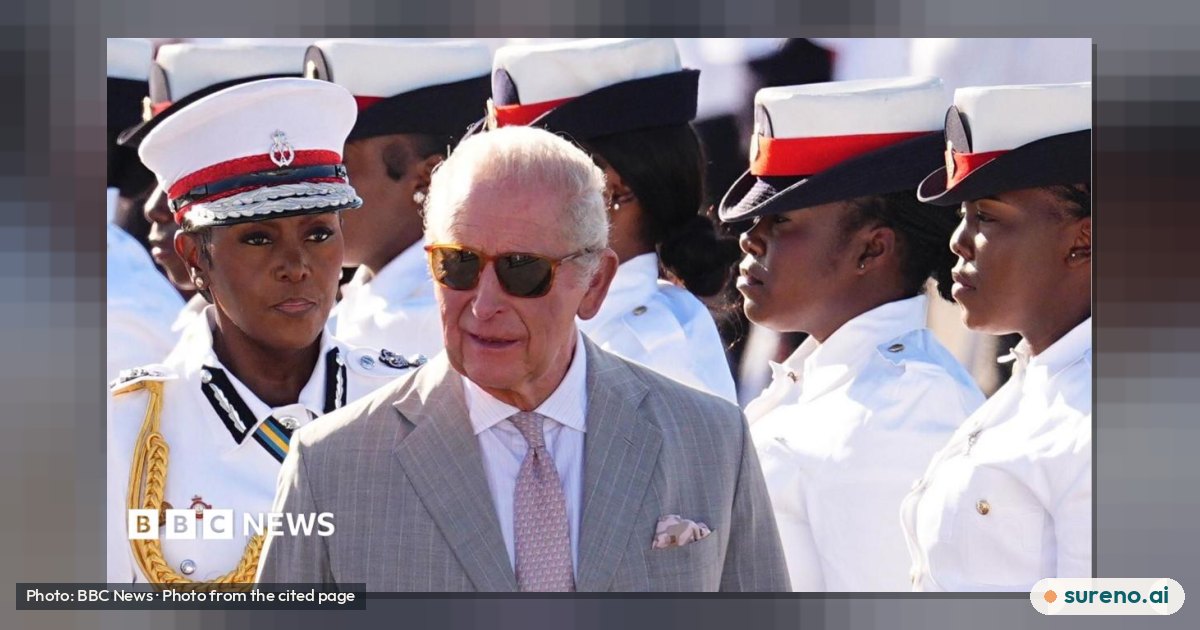
Why King Charles Is Being Asked to Apologize for Slavery
The King recognized past suffering during a Caribbean visit, while the British government’s position rules out an apology and reparations.
The short version
- King Charles is being asked to apologize because his Caribbean tour has brought renewed attention to Britain’s role in the slave trade and its colonial legacy. 12
- At a youth rally in the Bahamas, he said it was right to acknowledge the suffering and injustices of the past. 12
- Buckingham Palace said before the trip that he would not apologize for Britain’s role in the slave trade or offer reparations, in line with the UK government’s position. 1
- His remarks recognize historical harm, but they do not amount to an apology or a commitment to reparations. 12
Why is King Charles being asked to apologize?
The calls are tied to Britain’s role in the slave trade and the lasting colonial legacy in the Caribbean. Charles’s visit has brought those issues into public view, with pressure for him to address them directly. The available reports describe calls for an apology but do not identify every group making them or set out a detailed list of demands. 12
The King is visiting the Bahamas, Guyana, and Antigua and Barbuda on a nine-day tour. It is his first visit to the region as monarch, according to the BBC. 1
What did King Charles say in the Bahamas?
At a youth rally in the Bahamas, Charles said it was right to acknowledge the great suffering and injustices of the past. He also recognized that some aspects of Bahamian culture today were shaped by a painful history. 12
Those words recognize historical suffering. They do not, by themselves, accept a specific responsibility or announce a remedy. The reports do not say that the King offered a formal apology. 12
Has King Charles apologized or offered reparations?
No. Before the trip, Buckingham Palace said the King would not apologize for Britain’s role in the slave trade or offer reparations, reflecting the UK government’s position. 1
Reparations means measures intended to address harm caused by past wrongdoing. The sources do not describe a reparations plan or a change in the government’s position. Acknowledging suffering is therefore different from agreeing to an apology or compensation. 1
What does the King’s response mean?
It signals that the King is willing to speak about the past during the tour, while stopping short of the apology and reparations that campaigners are calling for. His remarks are an acknowledgment, not a policy announcement. 12
The distinction matters because the monarchy and the UK government are not the same institution. The Palace’s statement says the King’s approach follows the government’s position; the reports do not describe any new government commitment. 1
What happens next on the Caribbean tour?
The tour is scheduled to include Guyana and Antigua and Barbuda as well as the Bahamas. Queen Camilla is due to join the King for the final leg in Antigua and Barbuda, where he is expected to address a Commonwealth heads of government summit. 12
The King also spoke in the Bahamas about climate threats to low-lying Caribbean islands. The reports do not establish whether he will make further remarks about slavery or whether the calls for an apology will lead to any change in policy. 12
What we don't know yet
- Whether the King will make further statements about slavery during the rest of the tour.
- Whether the UK government will change its position on an apology or reparations.
- Which groups are making the calls and what specific steps they seek; the supplied reports do not fully detail this.
Share this explainer
Get this every day, on every new tab
Sureno Browser brings the day's stories, explained simply, to your start page.
Questions people ask
Did King Charles apologize for slavery in the Bahamas?
Why did King Charles mention past suffering?
Will Britain pay reparations for slavery?
The sources say Buckingham Palace ruled out reparations by the King in line with the UK government’s position. They do not report a reparations plan or a later change in that position. 1
Which Caribbean countries is King Charles visiting?
Sources
More to read
 WorldHow Israel’s Election Works and What Happens NextOct 28, 2026 · 5 min read0 views
 WorldHow Elon Musk’s Political Spending Could Shape U.S. PoliticsOct 27, 2026 · 4 min read0 views
 WorldWhat the Oleshky Truce and Putin Talks Could MeanOct 27, 2026 · 4 min read0 views
 WorldWhy Finland and Norway Spoke With Putin About UkraineOct 27, 2026 · 3 min read0 views
 Tech & Online SafetyWhat to Know About Apple’s iOS 27.2 UpdateOct 27, 2026 · 3 min read1 view
 WorldWhat Albanese’s $6 Million Golf Club Grant Was Meant to FundOct 27, 2026 · 3 min read1 view
 WorldWhy a Judge Paused Tree Removal at a D.C. Golf CourseOct 27, 2026 · 3 min read0 views
 WorldWhat the Court Order Means for Trees at D.C. Golf CourseOct 27, 2026 · 3 min read0 views
 WorldWhat Trump’s $1 Million Voter-Fraud Tip Reward MeansOct 26, 2026 · 5 min read0 views
 Tech & Online SafetyWhat Anthropic’s Planned Stock-Market Debut MeansOct 27, 2026 · 4 min read1 view