At Stennis, NASA conducts 500-second RS-25 engine test in support of future Artemis missions
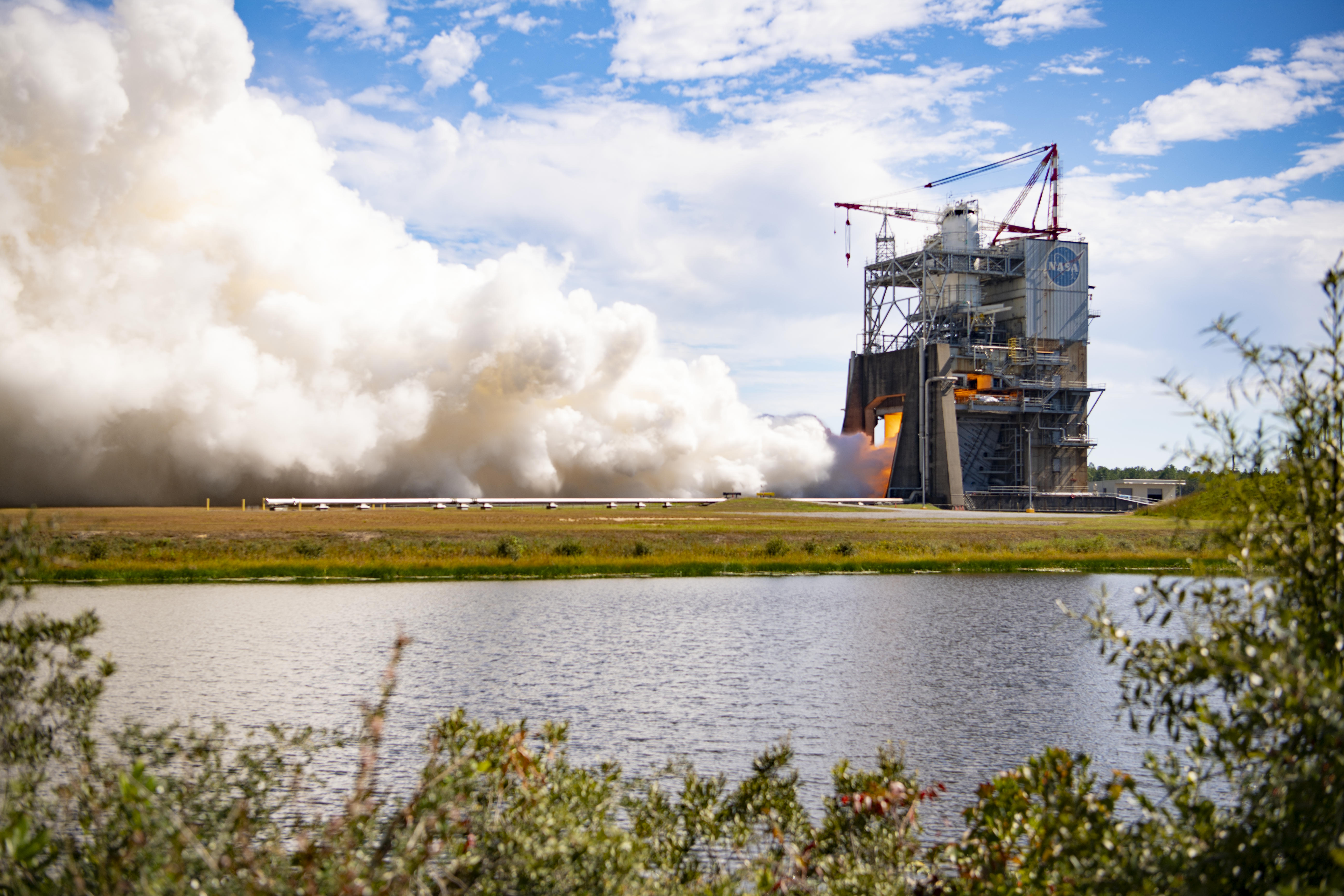
A full-duration engine firing
The test took place on the Fred Haise Test Stand at NASA’s Stennis Space Center, near Bay St. Louis, Mississippi. Operators fired RS-25 engine No. 10001 for 500 seconds, or almost eight-and-a-half minutes.
That duration matches the time RS-25 engines fire during an SLS rocket launch. During the run, the team also brought the engine to 111% power, the level needed for new production engines to send SLS and the Orion spacecraft to orbit.
Testing components and protection
The test’s main goals included acceptance testing RS-25 flight components for future Artemis missions and validating a new thermal protection system. That system is designed to shield the engine nozzle from the heat around SLS during launch. Although the developmental engine will not be used in flight, NASA and its prime contractor, L3Harris Technologies, will use data from the firing to improve engine performance and reliability.
RS-25 engines for Artemis
Four RS-25 engines together produce up to 2 million pounds of thrust to help launch SLS on each Artemis mission. Before use, every RS-25 engine is tested at Stennis and must be proven flightworthy. Teams conducting the tests include operators from NASA, L3Harris and Nova Space Solutions.
Key points
- NASA tested developmental RS-25 engine No. 10001 for 500 seconds at Stennis Space Center.
- The engine reached 111% power, matching the level required of new production engines.
- Testing focused on flight components for future Artemis missions and a new nozzle thermal protection system.
- The engine will not fly; the test is intended to generate data on performance and reliability.