NASA Science: Tracks Along Perseverance’s Longest Drive on Another World Reach 45.22 Kilometers
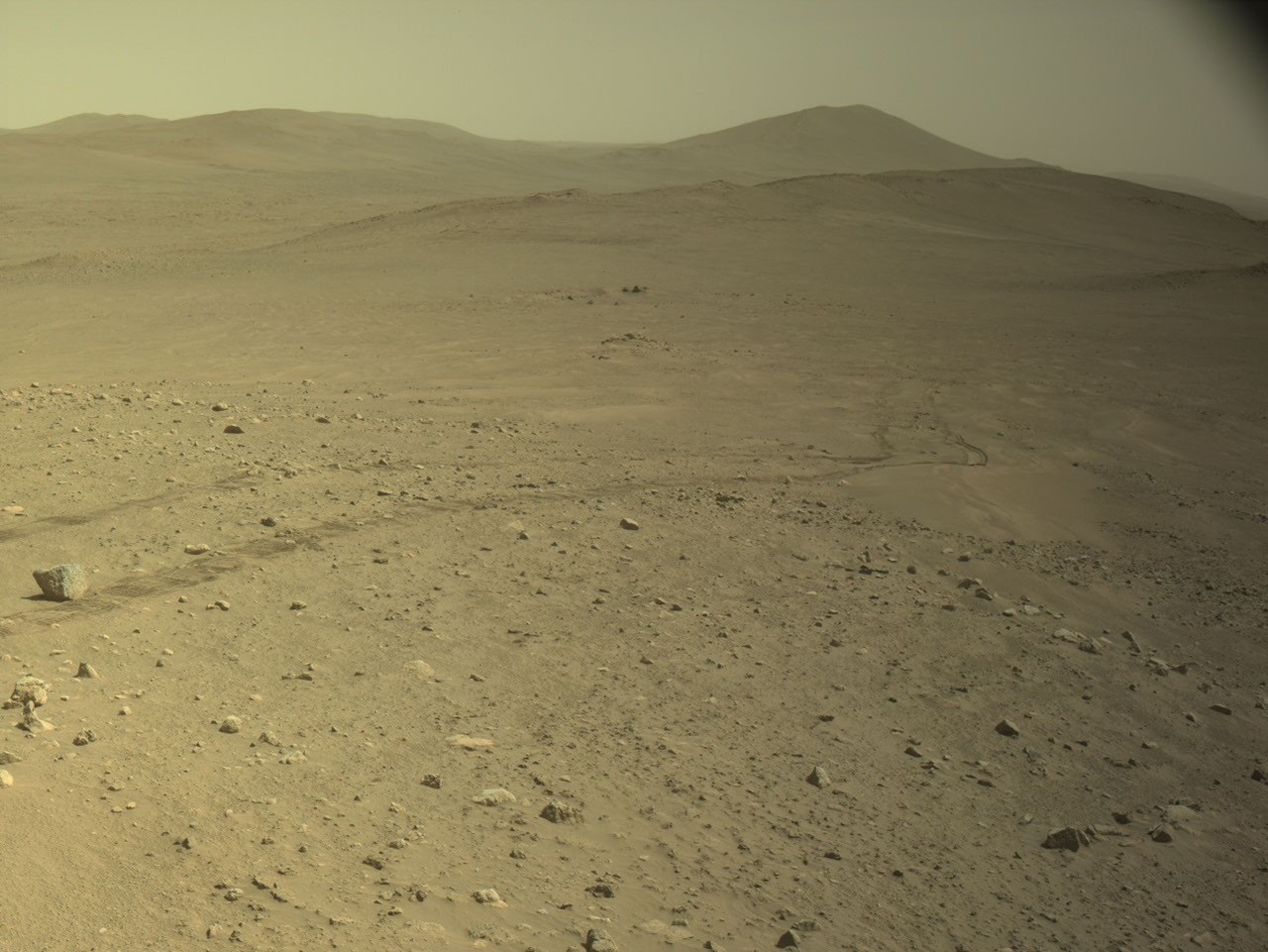
A Mars driving milestone
The rover was about 200 meters short of the record on Sol 1947, roughly two months earlier. Instead of immediately covering that distance, Perseverance explored a scientifically interesting area, making short drives for rock abrasions and close-up study of ancient outcrops.
Adapting to difficult terrain
Perseverance encountered dense boulder fields and steep slopes while traveling toward the record. Those challenges led the team to revisit driving guidelines, supported by thousands of simulations. The team raised the rover’s tilt limit to 24 degrees and lowered the required clearance beneath its belly pan to 20 centimeters, or about 7.9 inches. It also revised braking software to avoid rocks, nearly doubled steer motor current limits, and added software tools to estimate wheel slip. Cross-slope driving has helped anchor the wheels on exposed bedrock.
Locating the rover autonomously
That processor is not designed to withstand Mars’ radiation environment. Radiation can cause temporary memory bit flips, so the team created a software-based method to protect the system’s operation.
What comes next on Mars
The team is applying lessons from more than 45 kilometers of driving as Perseverance climbs higher along the crater rim. The rover’s evolving capabilities are intended to support further autonomous exploration on Mars. The report ends mid-sentence after referring to plans for the next stage, so it provides no further detail about what the team expects to do.
Key points
- Perseverance drove 45.22 kilometers (28.10 miles) by Oct. 11, 2026, setting a record on another celestial body.
- The rover spent time studying ancient rock outcrops before driving past the previous milestone.
- The team changed driving limits and software to help Perseverance handle challenging terrain.
- Onboard Global Localization uses ground and orbital images to locate the rover after a drive.