Science in Space: NASA Astronaut Jessica Watkins Tests Cartilage Printing Aboard the Station
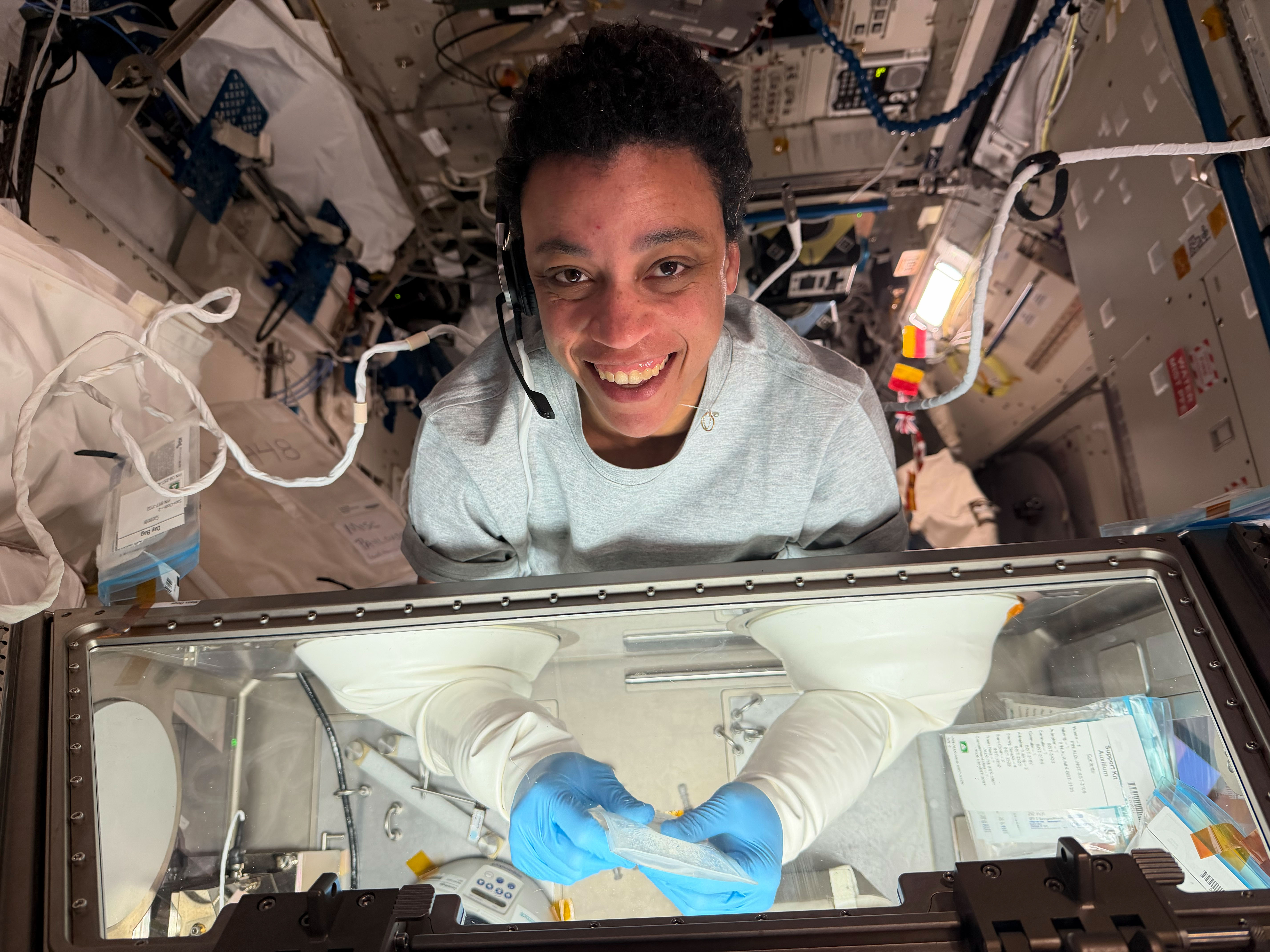
A procedure inside Kibo
Watkins, an Expedition 75 flight engineer, worked in the Kibo laboratory module on Oct. 9, 2026. She used its Life Science Glovebox to handle living cell samples and bioink.
After combining the materials, Watkins placed the cell-and-ink mixture into a special cartridge. The procedure was part of the InSPA-Auxilium Bioprinter-Cell Printing investigation.
Studying cartilage in microgravity
The investigation examines whether 3D bioprinting in microgravity can produce cartilage tissue of higher quality than tissue produced on Earth. Its focus is the process of making cartilage using cells and bioink.
The work is aimed at understanding how the space environment may affect bioprinted tissue. NASA’s description identifies the research as an exploration of cartilage production in microgravity.
Possible benefits beyond the station
Results may help advance the ability to manufacture cartilage biologically. Such progress could benefit patients on Earth, according to NASA. The research may also be relevant to crew members on long-duration space missions. NASA describes the work as having potential benefits both on Earth and in space.
Key points
- Jessica Watkins handled living cell samples and bioink in the Kibo laboratory on Oct. 9, 2026.
- The work is part of the InSPA-Auxilium Bioprinter-Cell Printing investigation.
- Researchers are studying 3D-printed cartilage tissue in microgravity.
- Results may support patients on Earth and crews on long-duration missions.