FTSE 100 explained: what the index means for you
The FTSE 100 is a snapshot of leading London-listed companies, not a measure of every part of the UK economy or every household’s finances.
The short version
- The FTSE 100 is an index representing 100 of the largest companies listed on the London Stock Exchange, measured by their market value 4.
- It gives a quick view of how those companies’ shares are performing, but it does not show how every UK company or household is doing 4.
- Recent coverage has focused on daily shifts linked to oil prices, company news and trading in the United States 123.
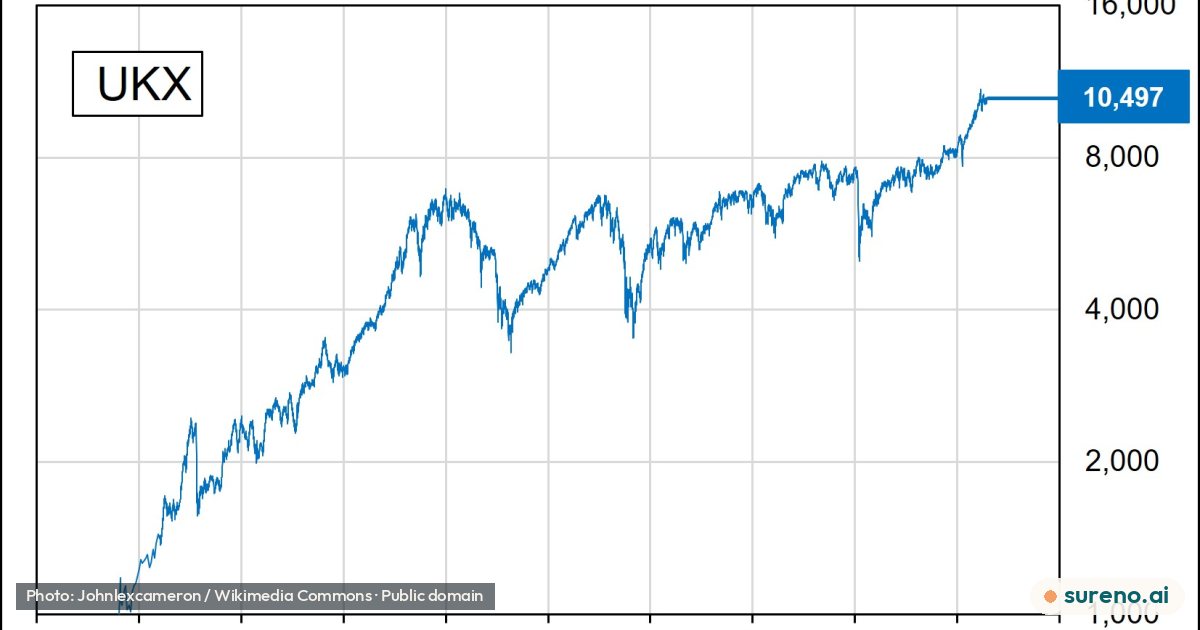
- On Monday, October 5, the index finished at about 10,498 points, up around 0.3% according to one report 1.
What is the FTSE 100?
The FTSE 100 is a stock market index. An index is a way of summarising the performance of a selected group of shares. The name refers to the 100 companies in the group. They are among the largest companies listed on the London Stock Exchange, ranked by market capitalisation—the total market value of their shares 4.
People also call it the FTSE, or informally the Footsie 4. It is one of the best-known measures of the UK share market. It is not a list of all UK businesses, nor is it a direct measure of the cost of living, wages or economic growth.
Why are people talking about the FTSE 100 now?
The index is in the news because market updates report its movements alongside developments affecting companies and investors. Recent headlines have highlighted oil prices and stockpiles, a proposed TalkTalk rescue deal involving BT, and the influence of trading in the United States 123.
These stories can matter to the shares of particular companies or sectors. One report said that resource companies offered some support to the UK market, while softer manufacturing and services survey readings weighed on the mood 1. A live report also described London shares as holding up while US markets lacked a clear direction 3. These are explanations offered in market coverage, not proof that one factor alone caused the index to move.
What does a FTSE 100 point or percentage change mean?
The index’s number is a measure of its level, not a cash amount that a person receives. A rise means the index’s overall value has increased compared with its previous level; a fall means it has decreased. A percentage change expresses that move in relation to the earlier level.
Reports differ slightly in their figures. One account said the FTSE 100 ended Monday at 10,498, up 0.3% 1. Another gave a closing level of 10,497.94, up 36 points 3. The small difference may reflect rounding or reporting conventions; the supplied reports do not explain it.
Does the FTSE 100 show how the UK economy is doing?
Only in a limited way. The index reflects share prices of its 100 constituent companies, rather than every business or household in the country 4. Its daily movement can also be affected by company announcements, commodity prices and events in other markets, as recent reports illustrate 123.
So a rising FTSE 100 does not necessarily mean that everyday costs are falling or that all UK businesses are thriving. A falling index does not, by itself, show that every company is struggling. It is one indicator among many, and its meaning depends on what question you are trying to answer.
What does the FTSE 100 mean for an ordinary reader?
For someone who does not own shares or funds linked to the index, its daily move may have no immediate effect on household finances. It is still useful as a headline indicator of how a group of large listed companies is being valued by investors.
If you have investments, the effect depends on what you own. The sources provided do not establish whether a particular person’s savings or pension is linked to the FTSE 100, or how much a particular daily change would affect them. For questions about a specific investment or pension, consult the relevant provider or a qualified professional.
What we don't know yet
- The supplied reports do not explain the small difference between their closing figures for Monday.
- They do not establish how long the reported market factors will affect the index.
- The sources do not say whether or how an individual reader’s pension or investments are linked to the FTSE 100.
Share this explainer
Understand the news that affects your wallet
Sureno Browser explains the day's money news on every new tab.
Questions people ask
What does FTSE stand for?
The name is expanded as the Financial Times Stock Exchange 100 Index 4. The index is also commonly called the FTSE 100 or simply the FTSE.
How many companies are in the FTSE 100?
There are 100 companies in the index 4. They are among the largest companies listed on the London Stock Exchange, based on market capitalisation.
Why does the FTSE 100 go up or down?
Does a rising FTSE 100 mean the UK economy is doing well?
Not necessarily. The FTSE 100 represents 100 large listed companies, not every UK business or household 4. Its movement is useful context, but cannot by itself describe the whole economy.
Do I benefit when the FTSE 100 rises?
Not automatically. Whether a rise affects you depends on whether you hold investments linked to the index; the supplied sources do not say what any individual owns. Check with your investment or pension provider for details about your own holdings.
Sources
- MARKETS LIVE: Wall Street mixed as tech stocks lift Nasdaq, Dow slips — Yahoo Finance
- FTSE 100 Live: Stocks soar as oil price eases after exports up — City AM, 2026-10-06
- FTSE 100 LIVE: London ends the day in positive territory as US lacks direction — The Markets
- FTSE 100 Index — Wikipedia
Free tools for this
They run in your browser. Nothing is uploaded and there is nothing to sign up for.
More to read
 MoneyWhat Is the Ghanaian Cedi and Why Are Bouquets Controversial?Oct 6, 2026 · 3 min read0 views
 MoneyVedanta’s Dividend Review: What Shareholders Should KnowOct 6, 2026 · 2 min read0 views
 MoneyMRVL Stock: What Marvell Does and Why It Is in the NewsOct 6, 2026 · 4 min read0 views
 MoneyIreland’s New Investment Accounts: Who Can Use Them?Oct 6, 2026 · 2 min read0 views
 SportsLions vs. Panthers: What to Know About the NFL GameOct 5, 2026 · 3 min read3 views
 MoneyMortgage Interest Rates: Why They’re Rising and What It MeansOct 6, 2026 · 4 min read0 views
 MoneyMicrosoft Stock: What the AI Push Means for InvestorsOct 6, 2026 · 3 min read0 views
 MoneyAmazon Prime Day: How to Judge October DealsOct 6, 2026 · 3 min read0 views
 MoneyCould State-Owned Supermarkets Make Groceries Cheaper?Oct 5, 2026 · 4 min read0 views
 WorldFormer Prince Andrew's Action Against Police ExplainedOct 5, 2026 · 2 min read2 views