

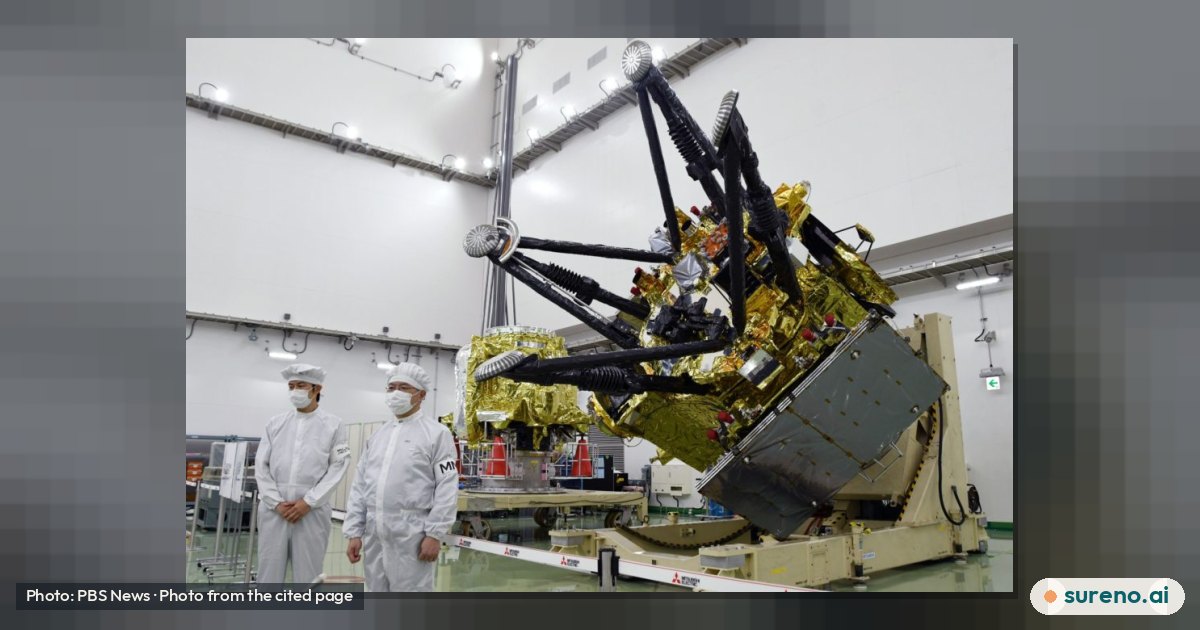
Japan’s MMX Mission: Bringing a Phobos Sample to Earth
The Japanese-led mission will investigate Mars’s moons, land a rover on Phobos and try to bring a small sample back to Earth.
The short version
- Japan’s MMX spacecraft launched on October 19, 2026, and is set to travel to Mars to study its moons and attempt to return a sample from Phobos. 12
- The mission plans to send a small rover to explore Phobos and collect about 10 grams of dust, although the sample return is not guaranteed. 12
- MMX is expected to reach the Mars system in August 2027, study Deimos as well as Phobos, and investigate how the moons formed. 2
- If successful, the sample would be the first returned from Mars or either of its moons for analysis on Earth. 2
What is Japan’s MMX mission?
MMX stands for Martian Moons eXploration. It is a robotic mission led by Japan’s space agency, JAXA, with international partners. Its central goal is to investigate Phobos, the larger of Mars’s two moons, and try to bring material from its surface back to Earth. 123
The spacecraft launched from Japan on October 19, 2026. It is expected to reach the Mars system in August 2027, after which it will study the moons and focus on Phobos. 2 The mission is planned to take about five years. 1
How will MMX collect a sample from Phobos?
The plan is to send a small robotic rover to explore Phobos, then attempt a landing and gather dust from the moon’s surface. The mission aims to bring about 10 grams of material back to Earth. 12
Phobos is only about 20 kilometres across and has an irregular shape. That makes landing and working on its surface a demanding task. The available sources describe the intended rover and sample collection, but do not give enough detail to explain the exact collection tool or the full return journey. 12
Why is MMX also studying Deimos?
Mars has two small moons: Phobos and Deimos. MMX is expected to observe Deimos as it arrives in the Mars system, then concentrate on Phobos for its surface work and sample attempt. 2
Looking at both moons may help scientists investigate their origins. Researchers have not settled how the moons formed. Some of their observed properties have been considered consistent with the idea that they are asteroids captured by Mars, but the question remains open. 23
What could a Phobos sample tell scientists?
Material brought to Earth could be examined in laboratories, where researchers can study it directly. The mission’s scientific aim includes finding clues to how Phobos and Deimos formed and to the history of the solar system. 23
A sample could help test ideas about the moons’ origins, but it would not automatically settle every question. The sources describe the sample return as an attempt, not a guaranteed outcome, and the moon’s formation remains a mystery. 123
Has a sample ever been returned from Phobos?
No successful sample-return mission from Phobos is reported in the supplied sources. If MMX succeeds, it would be the first mission to return a sample from Mars or its moons for laboratory analysis on Earth. 2
That is a significant goal, but the distinction matters: MMX has launched, while its landing, sample collection and return are future steps. The mission’s results will depend on whether it can complete those stages. 12
What we don't know yet
- Whether MMX will land successfully on Phobos and collect a sample.
- Whether the spacecraft will return the planned sample to Earth.
- What the returned material, if any, will reveal about how Phobos and Deimos formed.
Share this explainer
New discoveries on every new tab
Sureno Browser puts explainers like this one on your start page every morning, in plain words.
Questions people ask
When will Japan’s MMX spacecraft reach Phobos?
The spacecraft is scheduled to arrive in the Mars system in August 2027. It will study Deimos as it reaches the Mars neighbourhood and then focus on Phobos. 2
How much dust will MMX bring back from Phobos?
The mission aims to return about 10 grams of dust from Phobos. That is a target, not a confirmed result: the spacecraft still has to attempt its surface work and sample return. 2
What is the MMX rover meant to do?
Why does Japan want to study Phobos?
Will MMX bring back the first sample from a Mars moon?
If the mission succeeds, it would be the first time a sample has been returned from Mars or either of its moons for analysis in Earth laboratories. That achievement is not yet assured. 2
Sources
- Japan launches spacecraft to Mars' moon in mission to bring back soil samples — PBS News, 2026-10-19
- Japan's MMX mission set to grab a piece of Mars's moon Phobos — BBC News
- Japan Is Attempting an Audacious Mission to Sample a Martian Moon — WIRED, 2026-10-19
Free tools for this
They run in your browser. Nothing is uploaded and there is nothing to sign up for.
More to read
 SpaceHow Perseverance Set a Mars Driving RecordOct 21, 2026 · 4 min read1 view
 SpaceWhat to Know About Tonight’s Full MoonOct 25, 2026 · 3 min read0 views
 SpaceNew clues from a small planet, Mars and fireballsOct 24, 2026 · 6 min read0 views
 SpaceWhat NASA’s Updated Moon Lander Plans Mean for ArtemisOct 23, 2026 · 4 min read0 views
 Tech & Online SafetyThree limits of today’s AI: confidence, decisions and languageOct 25, 2026 · 5 min read1 view
 SpaceThree space studies reveal clues about planets and cosmic structureOct 23, 2026 · 5 min read0 views
 SpaceWhat the Artemis II Orion Cabin Warning MeantOct 22, 2026 · 3 min read0 views
 SpaceWhat Falcon 9’s Planned Retirement Could Mean for U.S. LaunchesOct 22, 2026 · 4 min read0 views
 SpaceWhat Causes a Rocket Launch’s Colorful “Space Jellyfish”?Oct 21, 2026 · 3 min read0 views
 MoneyJackdaw Gasfield Approval: What It Means for UK EnergyOct 21, 2026 · 4 min read3 views