

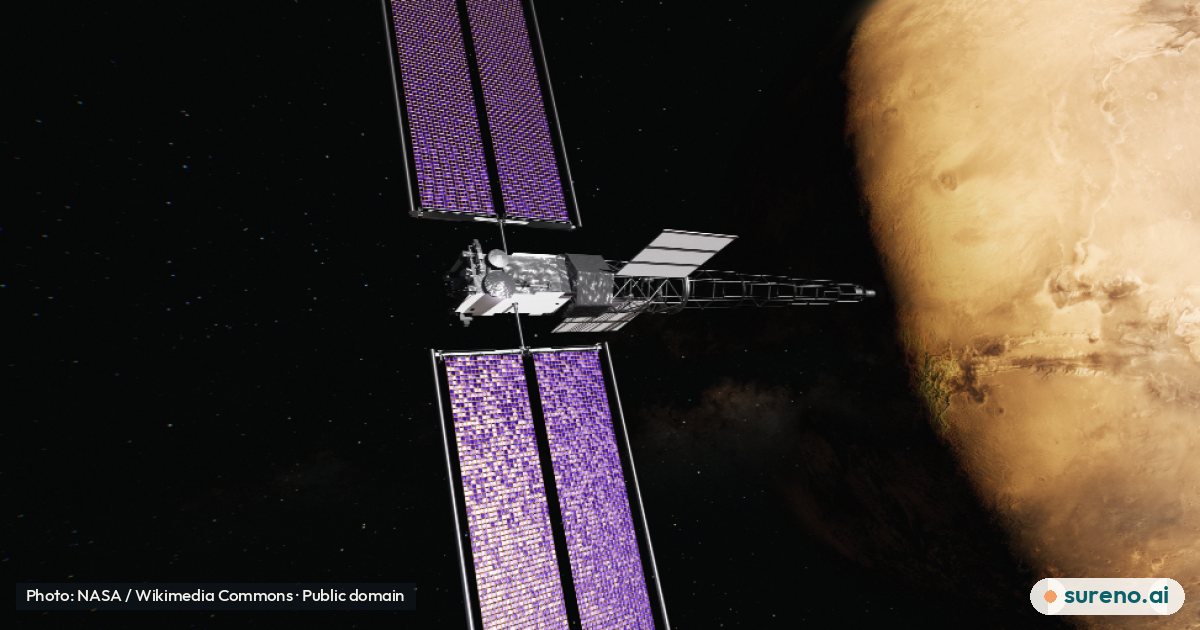
How NASA’s SR-1 Freedom Could Use Nuclear Power in Space
The planned spacecraft would use a fission reactor and an electrical conversion system to demonstrate nuclear-powered propulsion beyond Earth orbit.
The short version
- NASA describes SR-1 Freedom as a planned spacecraft to demonstrate nuclear electric propulsion beyond Earth orbit. 1
- Its power module is meant to convert heat from a fission reactor into electricity for the propulsion demonstration. 1
- NASA says it is working toward a 2028 launch, but that is a target, not a guarantee. 1
- A separate reference describes SR-1 as a pathfinder spacecraft and identifies a reactor and power-and-propulsion element, but it does not establish final mission details. 3
What is NASA’s SR-1 Freedom?
Space Reactor-1 Freedom, or SR-1 Freedom, is a NASA spacecraft project intended to test nuclear electric propulsion in deep space. NASA says it would be the first fission-powered spacecraft to travel beyond Earth orbit. That describes the planned mission; the spacecraft has not yet made the flight. 1
NASA presents the project as a technology demonstration: a way to test a space nuclear power system and propulsion beyond Earth. A separate reference also characterizes SR-1 as a pathfinder mission, but NASA’s announcement is the primary source for its current project description. 13
How would the nuclear power module work?
A fission reactor produces heat by splitting atoms. For SR-1 Freedom, NASA says a closed Brayton cycle power conversion system will turn heat from the reactor into electrical power. A power conversion system is equipment that changes energy from one form into another. 1
Sierra Lobo Inc. is to provide that conversion system under NASA’s Space Flight Systems Development and Operations Contract III. NASA says the electricity is needed for the spacecraft’s nuclear electric propulsion demonstration. A separate reference describes the design as including a closed Brayton cycle reactor system, but NASA’s announcement does not state a specific electrical output. 13
What does nuclear electric propulsion mean?
Nuclear electric propulsion uses electricity generated by a nuclear reactor to power a spacecraft’s propulsion system. For SR-1 Freedom, NASA says the power module will supply electricity for a demonstration of this approach in deep space. 1
This is not the same as saying that the reactor directly provides all of the spacecraft’s thrust. NASA’s announcement focuses on converting reactor heat into electricity for the propulsion demonstration. The supplied sources do not provide enough detail to explain the full propulsion design. 13
When is SR-1 Freedom expected to launch?
NASA says it is working toward a 2028 launch. The agency describes recent contract actions as steps to reduce technical risk and keep the project moving toward that target. A target date is not confirmation that launch will happen on schedule. 1
The announcement identifies progress on the power module and the agreement with Sierra Lobo, but it does not provide a complete schedule of remaining development and testing milestones. 1
What is still unknown about the mission?
The available NASA announcement does not specify the spacecraft’s destination, the length of its mission, or the full operating details of the reactor and propulsion system. A separate reference gives a broad description of the spacecraft’s intended technology, but does not resolve these mission details. 13
NASA describes SR-1 Freedom as a demonstration that could help develop technology for future space missions. What those later missions might be, and when they could fly, is not established by the supplied sources. 1
What we don't know yet
- The spacecraft’s destination and detailed flight plan are not given in NASA’s announcement.
- The announcement does not provide the reactor’s electrical output or a complete description of the propulsion system.
- A 2028 launch is a stated target; the supplied source does not confirm that the spacecraft will launch then.
Share this explainer
New discoveries on every new tab
Sureno Browser puts explainers like this one on your start page every morning, in plain words.
Questions people ask
What is NASA’s SR-1 Freedom mission?
SR-1 Freedom is a planned NASA spacecraft intended to demonstrate nuclear electric propulsion in deep space. NASA describes it as the first fission-powered spacecraft intended to travel beyond Earth orbit. 1
How will SR-1 Freedom get electricity?
NASA says a fission reactor will provide heat, and a closed Brayton cycle power conversion system will convert that heat into electricity. Sierra Lobo Inc. is providing the conversion system for the mission. 1
When will NASA launch SR-1 Freedom?
NASA says it is working toward a 2028 launch. This is a target in the agency’s announcement, not confirmation of a launch date. 1
What is nuclear electric propulsion?
It is propulsion that uses electricity generated by a nuclear reactor. NASA says SR-1 Freedom’s power module is intended to supply electricity for a deep-space propulsion demonstration. 1
Who is building SR-1 Freedom’s power conversion system?
NASA says Sierra Lobo Inc. will provide the closed Brayton cycle power conversion system for the nuclear power module. The supplied announcement does not give the full list of project partners or describe every part of the spacecraft. 1
Sources
- NASA’s SR-1 Freedom Advances with Progress on Nuclear Power Module - NASA — NASA, 2026-10-20
- Space Reactor‑1 Freedom — Wikipedia
Free tools for this
They run in your browser. Nothing is uploaded and there is nothing to sign up for.
More to read
 SpaceHow Perseverance Set a Mars Driving RecordOct 21, 2026 · 4 min read1 view
 SpaceWhat to Know About Tonight’s Full MoonOct 25, 2026 · 3 min read0 views
 SpaceNew clues from a small planet, Mars and fireballsOct 24, 2026 · 6 min read0 views
 SpaceWhat NASA’s Updated Moon Lander Plans Mean for ArtemisOct 23, 2026 · 4 min read0 views
 Tech & Online SafetyThree limits of today’s AI: confidence, decisions and languageOct 25, 2026 · 5 min read1 view
 SpaceThree space studies reveal clues about planets and cosmic structureOct 23, 2026 · 5 min read0 views
 SpaceWhat the Artemis II Orion Cabin Warning MeantOct 22, 2026 · 3 min read0 views
 SpaceWhat Falcon 9’s Planned Retirement Could Mean for U.S. LaunchesOct 22, 2026 · 4 min read0 views
 SpaceWhat Causes a Rocket Launch’s Colorful “Space Jellyfish”?Oct 21, 2026 · 3 min read0 views
 MoneyJackdaw Gasfield Approval: What It Means for UK EnergyOct 21, 2026 · 4 min read3 views