

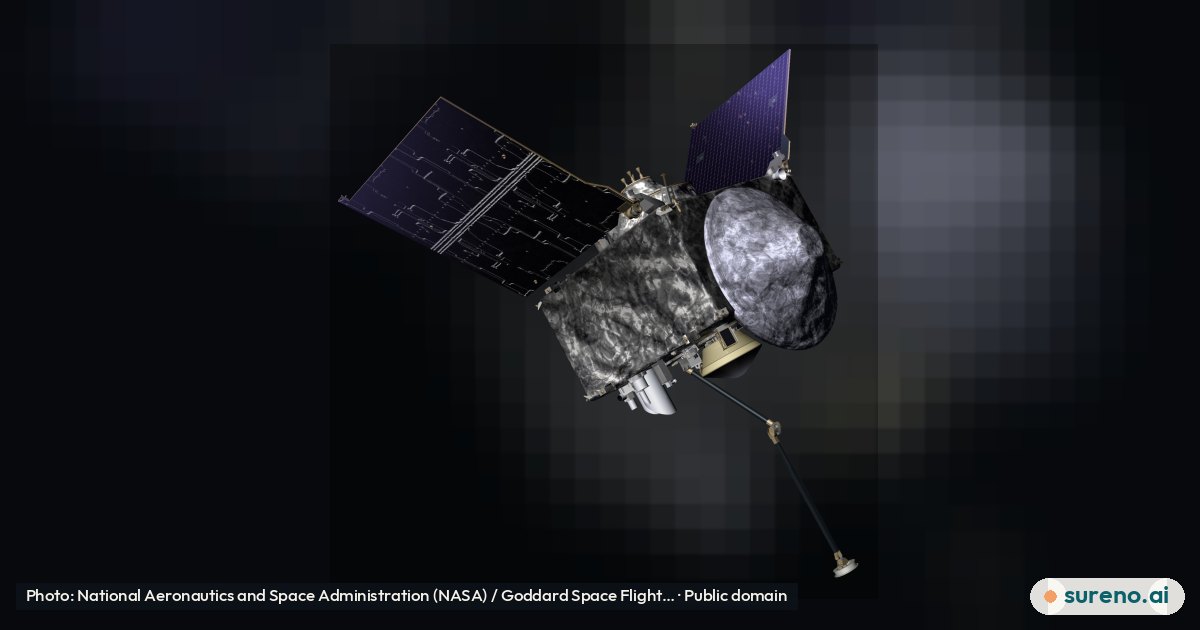
What OSIRIS-REx Learned From the Bennu Asteroid Sample
The sample gave scientists material from Bennu to study on Earth, while the mission also showed how challenging asteroid sampling can be.
The short version
- OSIRIS-REx collected rock and dust from near-Earth asteroid Bennu and returned the material to Earth for study. 1
- The sample return fulfilled the mission’s scientific objective, but the available sources do not detail specific laboratory findings from the material. 1
- The mission also showed that sampling an asteroid can be challenging: researchers describe Bennu as nearly swallowing the spacecraft. 1
- After its sample-return work, the spacecraft continued as OSIRIS-APEX, with a mission to study asteroid Apophis. 1
What did OSIRIS-REx learn from Bennu?
OSIRIS-REx gave scientists something they could not get from distant images alone: a sample of rock and dust collected from Bennu and brought back to Earth. The mission returned the material in 2023, after collecting it in 2020. 1
The sample is expected to help researchers investigate how the solar system formed and developed, and the early stages of planet formation. It may also help scientists study the origins of organic compounds associated with the beginnings of life on Earth. These are research aims, not conclusions established in the material provided here. 13
The sources describe the mission as a major step in understanding asteroids and solar-system history, but they do not give specific results from analyses of the returned material. So the careful answer is that OSIRIS-REx brought back evidence for scientists to study; the supplied sources do not establish exactly what that evidence has shown so far. 1
How did the spacecraft collect and return the sample?
The mission visited Bennu, a near-Earth asteroid, and collected a sample in October 2020. A capsule carrying the material returned to Earth in September 2023, landing in Utah. 1
The returned material amounted to 4.3 ounces, according to the University of Arizona account. Most of it remains in careful storage at NASA facilities, while portions have been distributed for research. 1
Keeping most of the sample in specialized facilities allows it to remain available for study. The source does not explain the facilities’ handling methods or name the researchers who received portions.
What made sampling Bennu difficult?
An asteroid is a small rocky body in space. Bennu is not a smooth, solid platform: the University of Arizona describes an incident in which the asteroid nearly swallowed the spacecraft. 1
That phrase signals a practical lesson from the mission: reaching an asteroid and collecting material there can involve unexpected challenges. The source excerpt does not explain the incident in enough detail to describe exactly what happened or how the spacecraft responded, so it would be misleading to add a more specific account.
What is happening to the spacecraft now?
The sample-return portion of the mission concluded, but the spacecraft continued on. Renamed OSIRIS-APEX, it is on a follow-up mission to study the near-Earth asteroid Apophis. 13
The mission aims to observe Apophis during its close approach to Earth in 2029. The University of Arizona says this could provide data about how Earth’s gravity affects asteroids. 1
This follow-up is separate from the Bennu sample work. It means the spacecraft’s journey continued, but the sources provided do not report results from the future Apophis observations.
What can we say about the sample’s findings so far?
The sources support a clear account of what the mission did and why scientists wanted the sample. They say it can help research the history of the solar system, planet formation, and organic compounds relevant to questions about life’s origins. 13
They do not provide a detailed list of discoveries made by analyzing Bennu material. Readers should therefore distinguish the sample’s scientific potential from findings that have been established and reported. For more information, NASA’s mission pages and its official sample-research updates are the appropriate places to check for current results.
What we don't know yet
- The supplied sources do not describe specific laboratory discoveries from the returned Bennu material.
- The sources do not say what results future analyses of the stored sample will produce.
- The detailed circumstances of the spacecraft’s near-swallowing incident are not explained in the source excerpts.
- The sources describe planned Apophis observations, not what those observations will find.
Share this explainer
New discoveries on every new tab
Sureno Browser puts explainers like this one on your start page every morning, in plain words.
Questions people ask
What did NASA bring back from Bennu?
OSIRIS-REx returned 4.3 ounces of rock and dust from Bennu in a capsule that landed in Utah in 2023. Most of the material remains in NASA facilities, and portions have been distributed for research. 1
Why did OSIRIS-REx collect an asteroid sample?
When did OSIRIS-REx collect and return the sample?
The spacecraft collected material from Bennu in October 2020. The capsule returned to Earth in September 2023 and landed in Utah. 1
Did OSIRIS-REx find evidence of life on Bennu?
What is OSIRIS-APEX doing after Bennu?
The spacecraft continued under the name OSIRIS-APEX, with a mission to study asteroid Apophis. Its planned observations during Apophis’s 2029 close approach could help researchers examine how Earth’s gravity affects asteroids. 1
Sources
- Five lessons from the OSIRIS-REx asteroid sample return mission — University of Arizona News
- OSIRIS-REx — Wikipedia
Free tools for this
They run in your browser. Nothing is uploaded and there is nothing to sign up for.
More to read
 SpaceHow Perseverance Set a Mars Driving RecordOct 21, 2026 · 4 min read0 views
 SpaceWhat to Know About Tonight’s Full MoonOct 25, 2026 · 3 min read0 views
 SpaceNew clues from a small planet, Mars and fireballsOct 24, 2026 · 6 min read0 views
 SpaceWhat NASA’s Updated Moon Lander Plans Mean for ArtemisOct 23, 2026 · 4 min read0 views
 Tech & Online SafetyThree limits of today’s AI: confidence, decisions and languageOct 25, 2026 · 5 min read0 views
 SpaceThree space studies reveal clues about planets and cosmic structureOct 23, 2026 · 5 min read0 views
 SpaceWhat the Artemis II Orion Cabin Warning MeantOct 22, 2026 · 3 min read0 views
 SpaceWhat Falcon 9’s Planned Retirement Could Mean for U.S. LaunchesOct 22, 2026 · 4 min read0 views
 SpaceWhat Causes a Rocket Launch’s Colorful “Space Jellyfish”?Oct 21, 2026 · 3 min read0 views
 MoneyJackdaw Gasfield Approval: What It Means for UK EnergyOct 21, 2026 · 4 min read0 views