Wildfire smoke affects animals in unique ways. Scientists are trying to understand it
Podcasts & Shows Expand/collapse submenu for Podcasts & Shows Daily Morning Edition
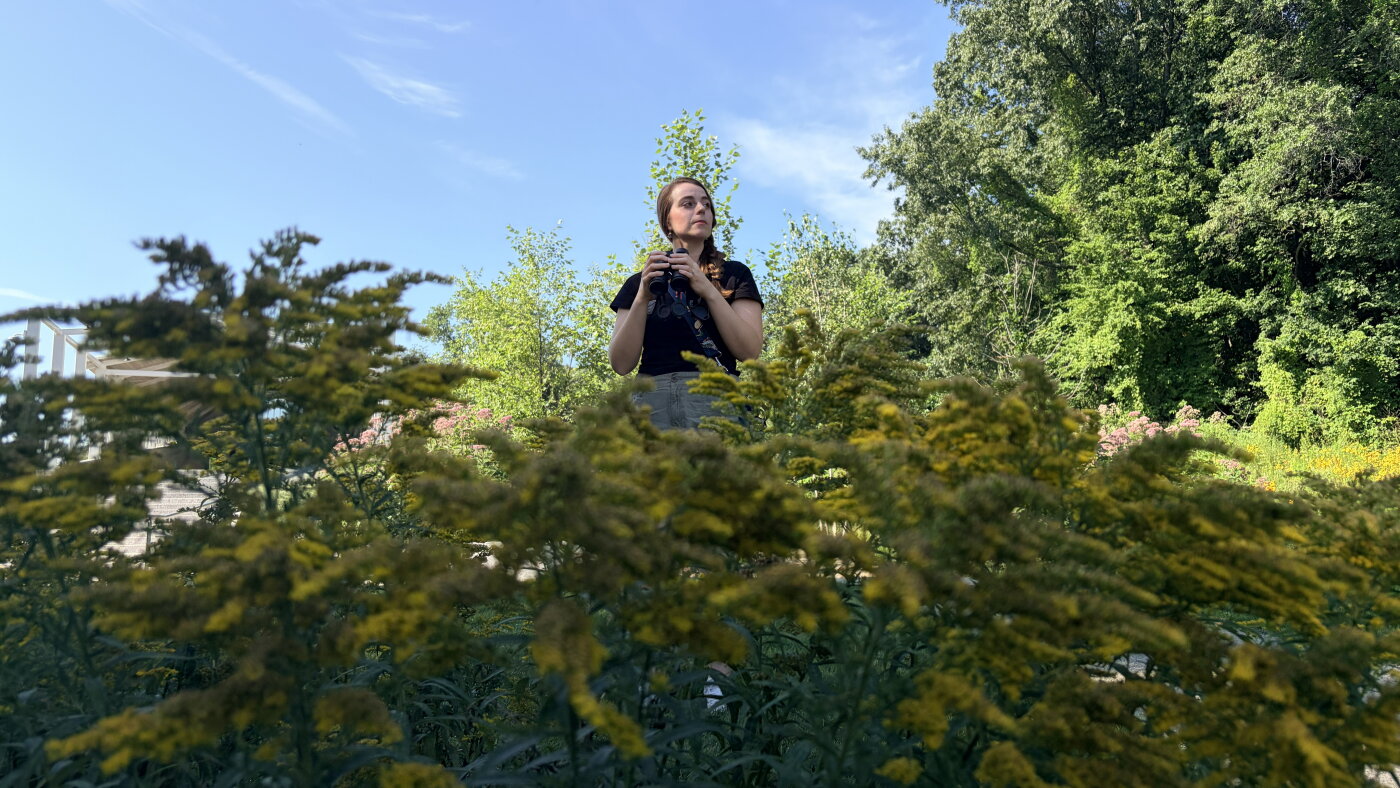
Olivia Sanderfoot of Cornell University is trying to understand how the smoke billowing off of wildfires is bothering birds — and what can be done to prevent that harm. Ari Daniel/NPR hide caption
Study Finds Wildfire Smoke More Harmful To Humans Than Pollution From Cars
Olivia Sanderfoot stands on a flower-freckled hillside in Amherst in Western Massachusetts. She listens for a moment — and a volley of birdsong flutters forth.
"It's just magical," she says with an air of reverence. There are birds foraging among the flowers. Fluffy fledglings are darting about, learning the ways of the world.
Wildfire smoke this year woke up places unaccustomed to its effects. Now what?
"Every day that I get to start birding is a good day," she says. "If you want to get the widest range of species and hear the most songs, you want to be out here in the morning."
For new discoveries, everyday mysteries, and the science behind the headlines, follow NPR’s Short Wave podcast.
Sanderfoot, a global change ecologist at Cornell University, knows that for the birds that live here, not every morning is this idyllic. Over the summer, this area was suffused with toxic smoke from distant wildfires in Canada. It's an increasingly common problem, even in places untouched by flames. Fire season is starting earlier, lasting later, burning more land — and as a result, producing far more smoke.
"Smoke can blow hundreds to thousands of miles away from that burn site," Sanderfoot explains. "That means that the footprint of a smoke event greatly exceeds that of any fire. How do birds deal with that?"
This is the central question animating Sanderfoot's desire to form a new field of study called "smoke ecology." The goal, she says, is to understand how the smoke billowing off of wildfires may be disturbing wild places and creatures — and whether anything can be done to prevent possible harm.
Sanderfoot's curiosity about how birds cope with smoke emerged in 2018 when she was living in Seattle and wildfires blazed in Eastern Washington. "The air smelled acrid," she recalls. "The city was just blanketed in this sickly yellow, gray haze."
Dive deeper
- Podcasts & Shows Expand/collapse submenu for Podcasts & Shows Daily Morning Edition
- Olivia Sanderfoot of Cornell University is trying to understand how the smoke billowing off of wildfires is bothering birds — and what can be done to prevent that harm. Ari Daniel/NPR hide caption
- Study Finds Wildfire Smoke More Harmful To Humans Than Pollution From Cars
- Olivia Sanderfoot stands on a flower-freckled hillside in Amherst in Western Massachusetts. She listens for a moment — and a volley of birdsong flutters forth.
- "It's just magical," she says with an air of reverence. There are birds foraging among the flowers. Fluffy fledglings are darting about, learning the ways of the world.