Nobel medicine prize goes to 3 scientists for research into brain activity
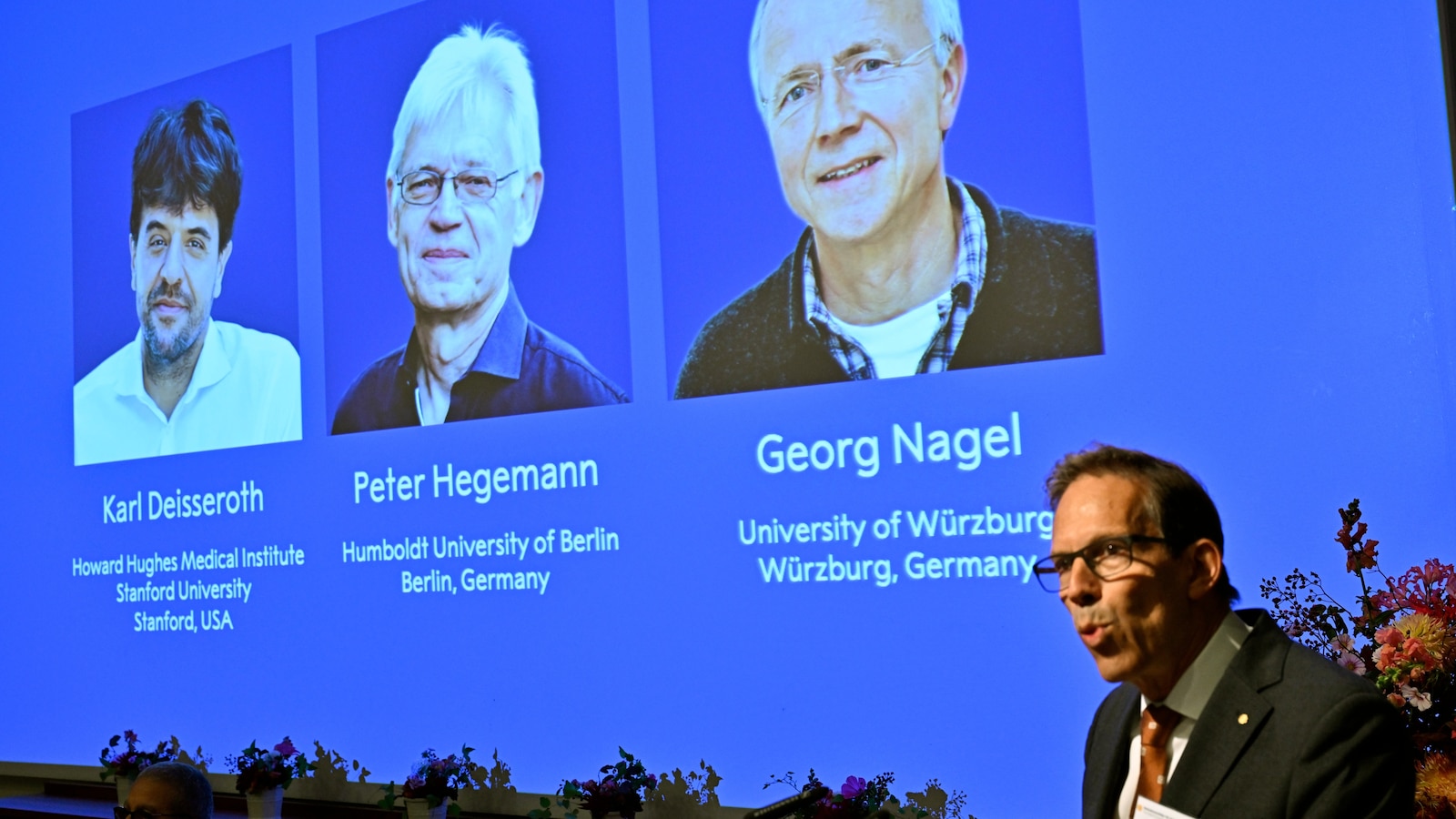
The Nobel Prize in medicine has gone to Karl Deisseroth, Peter Hegemann and Georg Nagel for work behind optogenetics, a method that uses light to influence nerve cells.
Hegemann and Nagel studied how green algae respond to light and identified a protein that can trigger electrical signals when exposed to blue light. Their finding made it possible to make other cells responsive to light.
Deisseroth used the gene for that protein to create a way to switch neurons on and off in living mice. He also developed fine fibers to deliver light to the modified cells.
The technique lets researchers affect brain cells at the rapid pace at which they communicate. It has become widely used in neuroscience and helped scientists map how brain circuits function.
Researchers have also applied optogenetics to investigate disruptions linked to conditions including blindness, depression, addiction and dementia. The Nobel Assembly says the brain still holds many unanswered questions, and the method offers a way to study them.
Key points
- Hegemann and Nagel identified a light-sensitive protein in green algae.
- Deisseroth adapted the protein’s gene to control neurons with light.
- Optogenetics is used to study brain circuits and disorders, though many mysteries remain.