
Morning
Marienplatz
Old Town
See the central square and its historic buildings, with benches and cafés nearby for breaks.
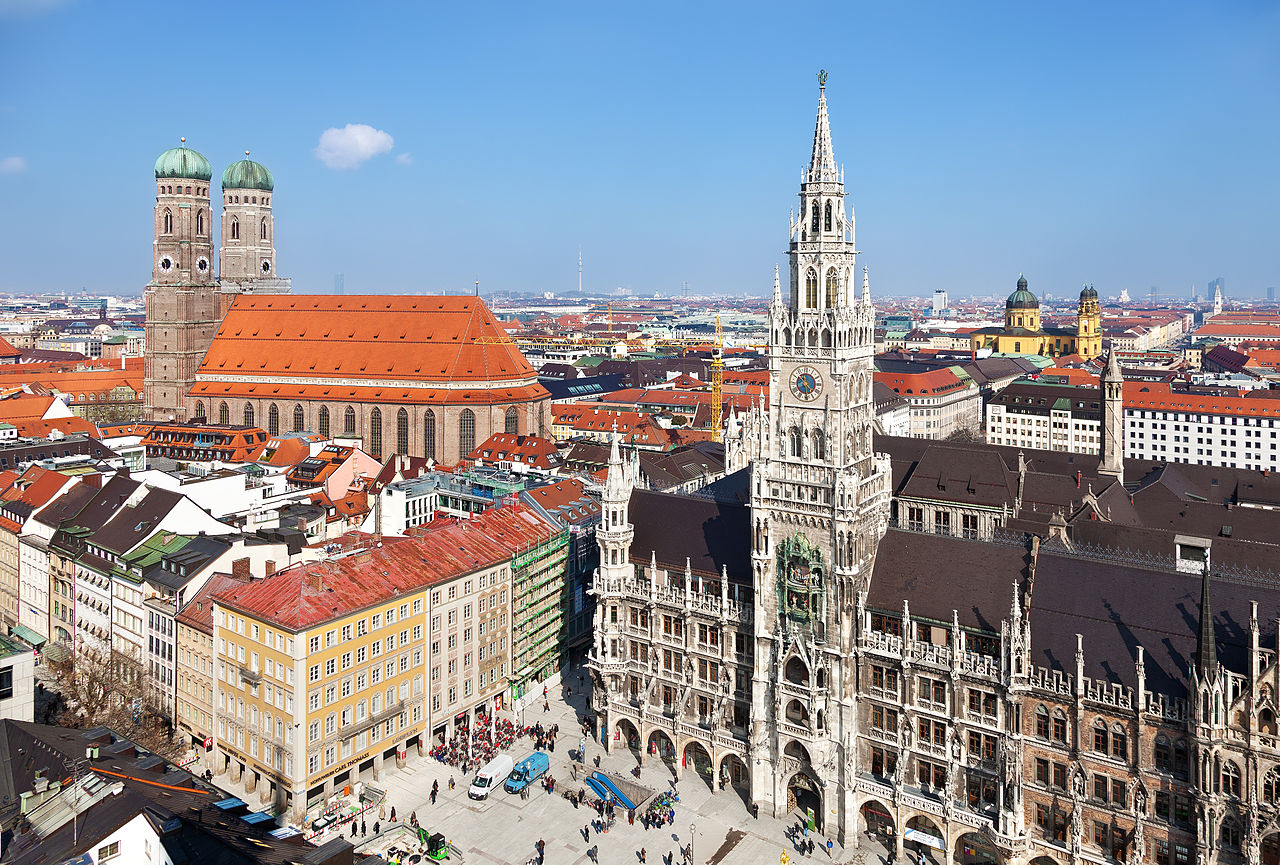
Three gentle days in Munich, with central sights, green space and time to rest.
The most comfortable months for walking about are July and September: mild days and less rain. The warmest month is July, at about 74°F (23°C) in the afternoon. The wettest is June.
Bars show the typical night-time low to daytime high; the numbers are daytime highs in °F and rain in millimetres for the month. Averages for 2001–2020 from NASA POWER, so a given year can be warmer, colder or wetter.
Written with AI from public facts about Munich, then checked by Sureno's rules. Opening times and prices change: check them before you go.
Old Town
See the central square and its historic buildings, with benches and cafés nearby for breaks.

Old Town
Visit Munich’s landmark cathedral and take time to admire its distinctive towers.

Old Town
Choose a relaxed meal or snack among the market stalls and nearby tables.

Kunstareal
Explore a major art collection at a gentle pace, choosing a few galleries rather than rushing.

Schwabing
Enjoy a flat walk through a large city park, with cafés and places to pause.

Old Town
Try Bavarian food in a well-known historic beer hall; choose a quieter table if available.

Isarvorstadt
Visit selected exhibits at this large science and technology museum, allowing time for breaks.
Isarvorstadt
Take a gentle riverside stroll and enjoy views of the Isar and its green banks.
Maxvorstadt
Share a relaxed Bavarian meal in a traditional setting near the main station.
Munich is the capital and most populous city of the German state of Bavaria. As of 30 November 2024, its population was 1,604,384, making it the third most-populous city in Germany after Berlin and Hamburg. Munich is the largest city in Germany that is not a state of its own, and it ranks as the 11th-largest city in the European Union (EU). The metropolitan area has around 3 million inhabitants, and the broader Munich Metropolitan Region is home to about 6.2 million people. It is the third largest metropolitan region by GDP in the EU. Munich is located on the river Isar north of the Alps. It…
From Wikipedia (CC BY-SA 4.0).
Photos: Wikimedia Commons, credited on each picture. Climate: NASA POWER (public domain). Introduction: Wikipedia (CC BY-SA). The plan was written with AI from those public facts.


