

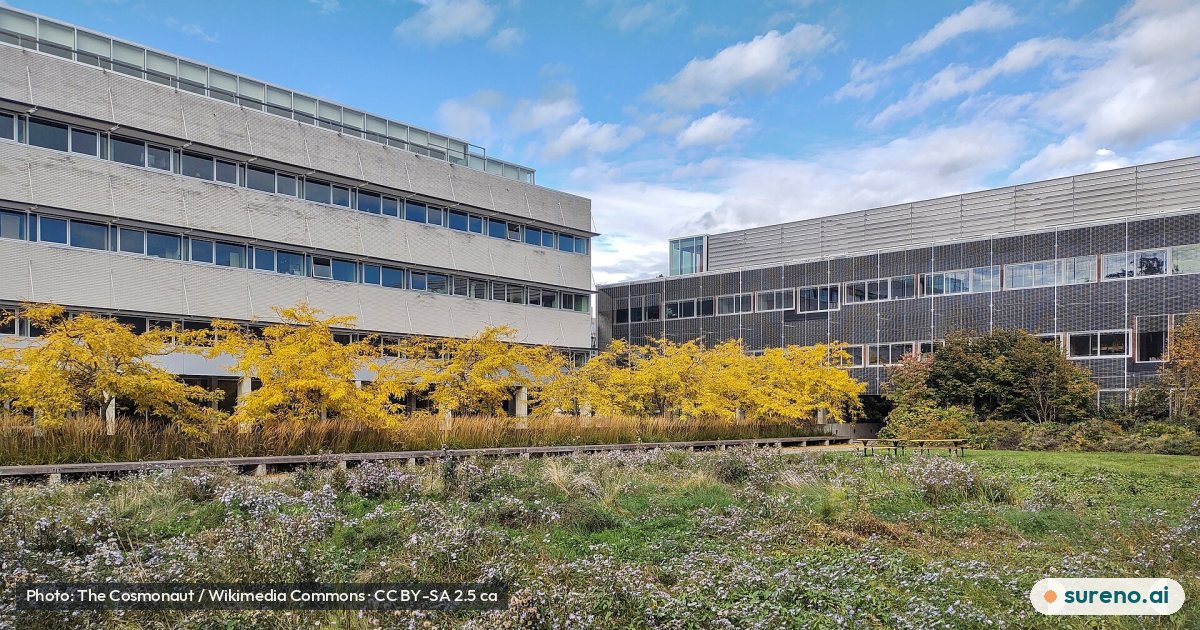
What biodiversity means for cities, oceans and ecosystems
New research connects biodiversity with ecosystem services, cooler urban habitats and deep-ocean food webs, while leaving important causes and consequences unresolved.
The short version
- A synthesis of 423 studies found biodiversity often supports ecosystem functions and services, though the pattern varies by service. 1
- Across 1,039 cities, greener areas were associated with less extreme heat exposure for birds and somewhat higher bird diversity. 2
- A Gulf of Mexico study reported deep-pelagic animal declines of 60 to 85% over 3.5 years, depending on the group studied. 3
- These findings are important evidence, but they do not settle every cause-and-effect question or show that the same outcomes occur everywhere. 123
The studies at a glance
A synthesis of findings from earlier studies
Biodiversity supported most functions and services in the synthesis, with relationships varying by service and especially strong sensitivity for oceanic blue-carbon storage.
- Who or what was studied
- Researchers combined evidence from 423 studies on biodiversity, ecosystem functions and services.
- The catch
- The review combines earlier research and does not show that every species or ecosystem responds in the same way.
A cross-city observational analysis
Higher quantity or quality of green space was associated with 23–34% lower extreme heat exposure for birds, while greening scenarios were associated with 2–3% higher bird diversity.
- Who or what was studied
- Researchers compared urban greening, heat exposure and bird diversity across 1,039 cities worldwide.
- The catch
- The associations do not prove that greening alone caused the differences or guarantee the same results in every city.
An observational study using sampling, acoustic sensing and genetic analysis
Abundance declined by 60–85%, depending on the group, and genetic analyses indicated reduced diversity among dominant taxa.
- Who or what was studied
- Researchers measured deep-pelagic fishes, crustaceans and cephalopods in the Gulf of Mexico over 3.5 years.
- The catch
- The study did not establish the cause; the oil spill is presented as a plausible explanation, not a proven one.
Three studies examine nature’s value, from streets to deep water
Biodiversity means the variety of living things. Ecosystem services are benefits people receive from nature, such as cleaner water or pollination. The three recent studies considered these connections at very different scales: a synthesis of earlier research, a comparison across cities, and measurements of animals in the Gulf of Mexico’s deep ocean. 123
One thing to keep in mind: a single study rarely settles a scientific question. These papers offer evidence within the limits of their methods. In particular, a relationship between two things does not by itself show that one caused the other. The studies were peer reviewed, according to the supplied publication information. 123
Biodiversity often supports ecosystem services, but not equally
Researchers wanted to understand how strongly biodiversity is connected to ecosystem functions and services, and whether that relationship changes depending on what the ecosystem provides. They synthesized results from 423 earlier studies, making this a research review rather than a new field experiment. 1
They found that greater biodiversity generally supported most functions and services in their analysis. For regulating services such as water quality and pollination, the relationship was often roughly additive: diversity contributed in a way that appeared broadly linear. Oceanic blue-carbon storage—the capture and storage of carbon in marine systems—was especially sensitive to biodiversity. Hazard regulation, by contrast, appeared less sensitive overall and more reliant on a few particularly important species, whose persistence still depends on the wider community. 1
The review does not mean that every species has the same role, or that biodiversity affects every service in the same way. Its findings combine earlier studies, so their strength depends on the evidence and settings those studies covered. The authors also forecast possible future effects, including reduced pest regulation in countries experiencing population growth and intensive development; that is a projection, not a reported universal outcome. 1
For readers, the main point is that biodiversity can matter to practical benefits people rely on, but the connection is context-dependent. Protecting a variety of life may help sustain services such as pollination and water quality, while the details differ across ecosystems. 1
Greener city areas were linked with cooler conditions for birds
The researchers asked how urban greening relates to heat exposure and bird diversity. They analyzed information from 1,039 cities worldwide, comparing urban greenery with these outcomes. This is a large cross-city observational analysis: it looks for patterns across places rather than assigning cities at random to different greening plans. 2
Where the quantity or quality of green space was higher, extreme heat exposure for birds was 23–34% lower in the study’s analysis. The largest reductions were associated with scenarios that expanded green cover by 5–10% of total urban area. Those scenarios were also associated with 2–3% higher bird diversity across cities. Higher green-space quality was linked with both lower heat exposure and greater bird diversity. 2
These are associations, not proof that adding greenery alone caused the differences. The supplied study summary does not establish that every city would see the same change, or specify how a particular park design would perform. Its figures describe patterns and scenarios in the analysis, not a guaranteed result for an individual neighborhood. 2
The findings suggest that urban greenery may serve more than one purpose: it can be associated with cooler conditions for birds as well as greater bird diversity. That makes the design and quality of green space relevant to how cities accommodate wildlife and heat, though local results may vary. 2
Deep-ocean animals in the Gulf declined sharply over a short period
Researchers investigated whether animal populations in the Gulf of Mexico’s deep-pelagic habitat—a vast ocean zone below the surface waters—were changing. They used direct sampling and acoustic sensing over a 3.5-year period, and examined genetic diversity. This is an observational study using independent measurement approaches, not an experiment that tested a cause. 3
They reported that deep-pelagic fishes, crustaceans and cephalopods declined in abundance by 60–85% over that period, depending on the group. Euphausiids and lanternfishes, which the paper describes as ecologically foundational, were among those hit particularly hard. Genetic analyses also indicated reduced genetic diversity among dominant groups. The researchers said the declines persisted for more than a decade. 3
The study did not identify a confirmed cause. The researchers found no correlation with the natural factors they examined, including temperature, oxygen and food supply. They noted that the declines began shortly after the Deepwater Horizon oil spill and considered it the most plausible explanation, but the timing and evidence do not establish causation. The paper also reports that managers saw parallel trends in some Gulf species that depend on deep-pelagic prey; it does not show that the declines caused those trends. 3
Deep-ocean animals contribute to carbon cycling and provide prey for ocean predators, so changes in their abundance may matter beyond the deep habitat itself. The findings also show that a very large ecosystem is not necessarily protected from human-caused disturbance. How quickly these populations might recover remains uncertain. 3
The studies point to value and vulnerability, not a single rule
Together, these studies suggest that biodiversity can support ecosystem services, urban greenery can be associated with better conditions for birds, and deep-ocean communities can experience serious declines. They do not show that all species, cities or ecosystems respond alike, or settle the cause of the Gulf changes. 123
The broad lesson is that nature’s value is not limited to places far from people: it can involve city green spaces, services such as pollination, and life deep in the ocean. More evidence is needed to identify which interventions work best in particular places, how long benefits last, and what caused the Gulf decline. 123
What we don't know yet
- What caused the deep-pelagic declines in the Gulf of Mexico and what conditions would support recovery? 3
- How well do the citywide associations apply to specific neighborhoods, planting choices and local bird species? 2
- Which ecosystem services are most sensitive to biodiversity loss in particular places, beyond the broad patterns in the review? 1
Share this explainer
New discoveries on every new tab
Sureno Browser puts explainers like this one on your start page every morning, in plain words.
Questions people ask
What does biodiversity mean for ecosystems?
Biodiversity is the variety of living things in an area. The reviewed studies found that biodiversity often supports ecosystem functions and services, but the strength of that relationship differs by service and ecosystem. 1
Do green spaces help birds in cities?
Across 1,039 cities, more or better-quality green space was associated with lower extreme heat exposure for birds and greater bird diversity. The analysis shows a relationship, not proof that greenery alone caused the differences in every city. 2
How much did deep-ocean animal abundance decline in the Gulf of Mexico?
The study reported declines of 60–85% over 3.5 years, with the size depending on the animal group. Researchers found evidence through direct sampling and acoustic sensing. 3
Did the Deepwater Horizon spill cause the Gulf deep-ocean decline?
The study did not establish a cause. The declines began shortly after the spill, which the researchers considered the most plausible explanation, but that timing does not prove the spill caused them. 3
Sources
- Biodiversity safeguards ecosystem services and functions worldwide. — Nature ecology & evolution, 2026-10-06
- Urban greening strategies for mitigating heat exposure and enhancing bird diversity. — Nature communications, 2026-09-08
- Immense but not immutable: A sudden and sustained decline in deep-pelagic life in a large oceanic ecosystem. — Proceedings of the National Academy of Sciences of the United States of America, 2026-10-19
Free tools for this
They run in your browser. Nothing is uploaded and there is nothing to sign up for.
More to read
 ScienceHow Satellites Track Autumn Leaf Colour—and What It ShowsOct 26, 2026 · 3 min read0 views
 ScienceHow Scientists Trapped a Positron for MonthsOct 23, 2026 · 3 min read0 views
 ScienceHow Excess RNA May Disrupt Cells’ Energy SupplyOct 21, 2026 · 3 min read0 views
 ScienceWhat Recent Research Says About Climate and Air PollutionOct 21, 2026 · 4 min read0 views
 Tech & Online SafetyThree limits of today’s AI: confidence, decisions and languageOct 25, 2026 · 5 min read1 view
 ScienceHow Kelvin Waves Can Raise Pacific Sea LevelsOct 20, 2026 · 3 min read0 views
 ScienceThree studies test cleaner power’s reach, materials and claimsOct 20, 2026 · 6 min read0 views
 ScienceHow New Methods Could Reduce Animal TestingOct 19, 2026 · 4 min read0 views
 ScienceWhat Dogs’ Bouba-and-Kiki Responses May Tell UsOct 19, 2026 · 4 min read0 views
 MoneyJackdaw Gasfield Approval: What It Means for UK EnergyOct 21, 2026 · 4 min read3 views