

How New Methods Could Reduce Animal Testing
Human-cell models and computer tools can answer some research questions without animals, but they do not yet capture every feature of a living body.
The short version
- Alternatives include tests using cells, devices that model organs, and computer simulations; they can replace some animal tests but not every kind of research. 123
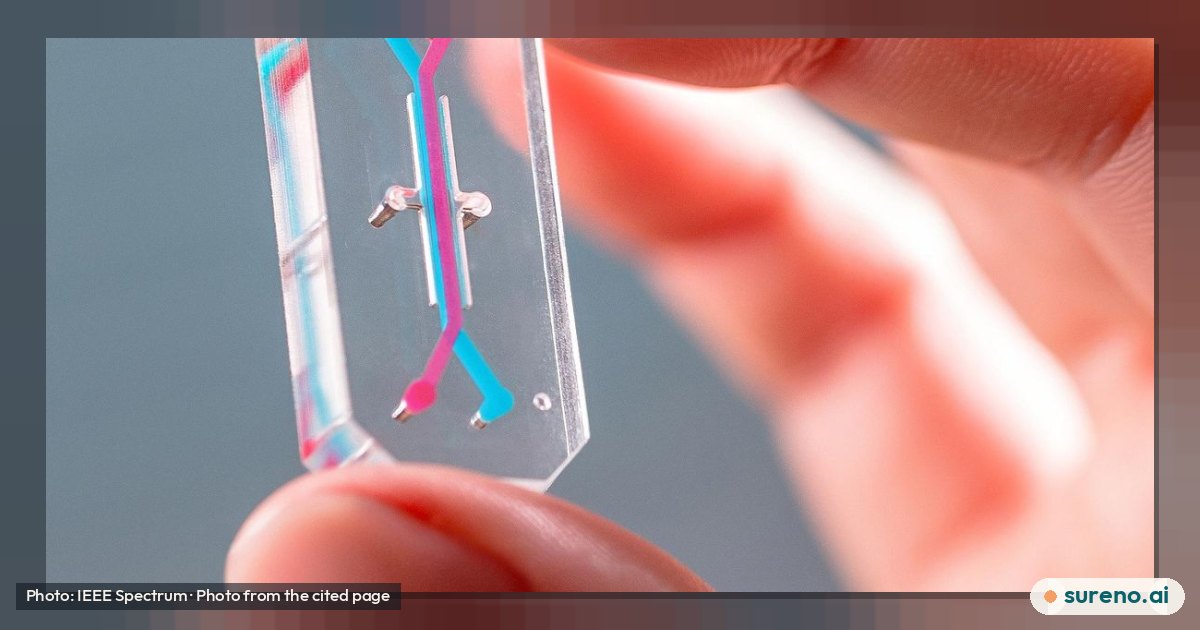
- A lung-on-a-chip uses human lung and blood-vessel cells in tiny channels, with air movement to mimic part of how a lung works. 1
- The FDA says it has incorporated some new approach methods into standard nonclinical assessments, including methods that became accepted alternatives to animal tests. 2
- The sources describe limits: cell models and simulations may not reproduce the complex interactions of a whole living system. 3
What are the alternatives to animal testing?
The term covers several ways to study biology or test a substance without relying on a live animal. These include in vitro methods, which study cells or tissues outside the body, and in silico methods, which use computer simulations. Organ-on-a-chip devices are another approach: they use cells and small channels to imitate selected features of an organ. 13
Researchers and regulators also use the term new approach methodologies, often shortened to NAMs, for newer nonclinical testing methods. The FDA describes these methods as ways to replace, reduce or refine animal testing in drug development. 2
How does an organ-on-a-chip work?
A chip can be a small, clear device with narrow channels lined by cells that normally form parts of an organ. In the lung-on-a-chip described by IEEE Spectrum, one channel held lung air-sac cells and another held blood-vessel cells. Air moving through nearby chambers made the device expand and contract, imitating a breathing motion. 1
That movement matters because a static layer of cells cannot reproduce every physical condition in a working lung. In reported demonstrations, the model reacted to inflammatory proteins and bacteria in ways resembling a living lung. It also showed that movement changed how tissue absorbed silica nanoparticles. These results demonstrate what the model can study; they do not establish that it can stand in for every animal test. 1
What can these methods replace?
A new method may replace an animal test when it can answer the relevant scientific or safety question well enough. It may instead reduce animal use by providing useful evidence before or alongside an animal study, or refine testing by changing how testing is done. The FDA article describes NAMs in all three roles and reports that some tests have become validated and internationally accepted alternatives in standard assessments. 2
That does not mean one device or computer model can reproduce an entire animal. A chip models selected parts of an organ. Cell tests examine cells or tissues, while simulations work from data and assumptions. Their value depends on the question being asked and on whether the method has been assessed for that use. 123
Why can’t animal testing be replaced all at once?
Living bodies have interacting systems that are difficult to reproduce in a dish, a chip or a computer. The supplied overview of alternatives notes that some people question whether cell cultures and simulations can fully replace animal tests for this reason. It also points out that cell cultures may use animal-derived materials, and simulations may draw on information from earlier animal experiments. 3
There are also practical hurdles. A method must show that it gives useful, dependable evidence for its intended purpose. The FDA account says its reviewers have identified gaps and challenges in nonclinical testing and discusses work to assess new methods for drug safety and efficacy. 2
Are animal-free methods already used in drug testing?
Yes, some new approach methods are already part of regulatory assessments, according to the FDA researchers’ review. The authors describe methods that became validated and internationally accepted alternatives to animal testing. The review also says the FDA encourages companies to submit nonclinical tests using NAMs and to engage with regulators about how those tests can support drug development. 2
This is not evidence that all animal testing has ended, or that every proposed method is accepted for every purpose. The source concerns specific methods and regulatory uses. It does not provide a complete count of animal tests replaced or a timeline for broader change. 2
What should readers watch for next?
The important question is not simply whether a method is animal-free. It is whether it can reliably answer a particular question, such as how a tissue responds to a substance, and whether regulators accept that evidence for the intended use. The FDA’s description of validation and regulatory engagement shows why evidence for each method matters. 2
The sources do not establish how quickly these approaches will spread across research and drug development. They do show that organ-like devices can reproduce selected biological features and that regulators have incorporated some alternatives into assessments. Broader replacement depends on the limits of each method and the evidence available for its use. 123
What we don't know yet
- How many animal tests have been replaced, reduced or refined by these methods is not stated in the supplied sources.
- The sources do not give a timeline for wider adoption across different areas of research.
- They do not specify which individual tests are suitable for replacement in every drug-development context.
Share this explainer
New discoveries on every new tab
Sureno Browser puts explainers like this one on your start page every morning, in plain words.
Questions people ask
Can organ-on-a-chip replace animal testing?
It can model selected features of an organ and may help answer some research questions. The lung-on-a-chip described in the sources mimicked breathing movement and responses to certain exposures, but the sources do not show that it can replace every animal test. 1
What does in vitro testing mean?
In vitro testing studies cells or tissues outside a living body. It is one of the main alternatives discussed, though cell cultures may sometimes use animal-derived materials. 3
What are NAMs in drug development?
NAMs means new approach methodologies. The FDA article discusses their use to replace, reduce or refine animal testing and says some methods have become accepted alternatives in nonclinical assessments. 2
Are computer simulations an alternative to animal experiments?
Computer simulations, also called in silico methods, are one type of alternative. Their ability to replace a test depends on what question they are meant to answer; some simulations draw on data from earlier animal experiments. 3
Why are animal-free tests not enough for every study?
Sources
- Can New Technologies Finally Replace Animal Testing? — IEEE Spectrum, 2026-09-29
- FDA/CDER/OND Experience With New Approach Methodologies (NAMs). — International journal of toxicology, 2026 Mar-Apr
- Alternatives to animal testing — Wikipedia
Free tools for this
They run in your browser. Nothing is uploaded and there is nothing to sign up for.
More to read
 ScienceHow Satellites Track Autumn Leaf Colour—and What It ShowsOct 26, 2026 · 3 min read0 views
 ScienceHow Scientists Trapped a Positron for MonthsOct 23, 2026 · 3 min read0 views
 ScienceWhat biodiversity means for cities, oceans and ecosystemsOct 22, 2026 · 5 min read0 views
 ScienceHow Excess RNA May Disrupt Cells’ Energy SupplyOct 21, 2026 · 3 min read0 views
 Tech & Online SafetyThree limits of today’s AI: confidence, decisions and languageOct 25, 2026 · 5 min read1 view
 ScienceWhat Recent Research Says About Climate and Air PollutionOct 21, 2026 · 4 min read0 views
 ScienceHow Kelvin Waves Can Raise Pacific Sea LevelsOct 20, 2026 · 3 min read0 views
 ScienceThree studies test cleaner power’s reach, materials and claimsOct 20, 2026 · 6 min read0 views
 ScienceWhat Dogs’ Bouba-and-Kiki Responses May Tell UsOct 19, 2026 · 4 min read0 views
 MoneyJackdaw Gasfield Approval: What It Means for UK EnergyOct 21, 2026 · 4 min read3 views