

Diesel: As Gulf and Russia supplies dried up, Australia had to find new suppliers at a cost
A costly change in supply
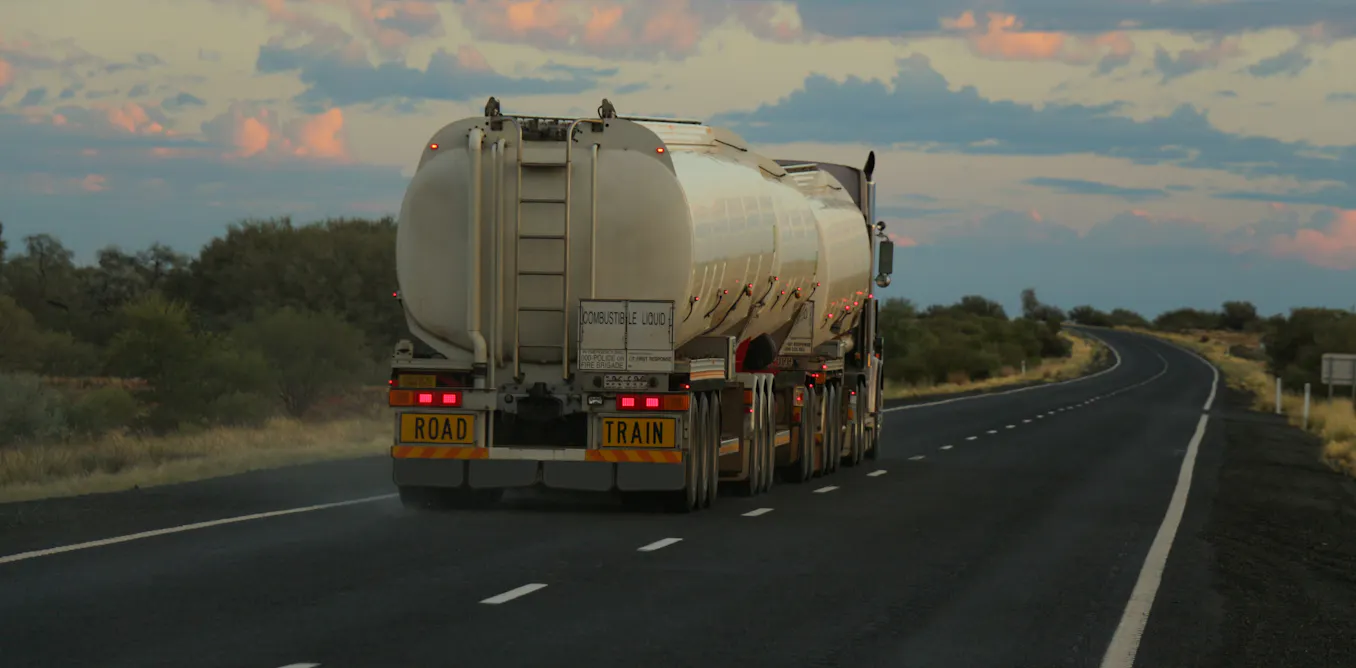
Diesel powers Australian freight, mining and farming. The country imported about 28 billion litres last year, making it the world’s largest importer of seaborne diesel. Prices reached A$3.20 a litre this year and remain around $2.79, almost a dollar above the level at the same time last year. The Climate Council says Australia spent an additional A$9 billion on diesel imports between March and August, about $324 per Australian.
Gulf and Russian exports fall
The US–Iran war and Russia’s war with Ukraine have reshaped diesel trade. After Iran closed the Strait of Hormuz on February 28, most crude and diesel shipments through the Gulf were blocked.
Saudi Arabia continued exports from Red Sea refineries, but drone strikes on its East-West pipeline have exposed the fragility of that route. Russian shipments also dropped sharply from July, after Ukrainian drone strikes put refineries out of service and Moscow restricted most diesel exports to protect domestic stocks.
New exporters fill the gap
Russia supplied about 734,000 barrels of diesel a day in 2025, but by October accounted for just 2% of diesel reaching ports worldwide, down from 12% the previous year. The United States increased exports by about 50% between April and October compared with its 2025 average, becoming the leading exporter by October.
Asian refineries also expanded their role. Their share of seaborne diesel exports rose from about 28% before the war to nearly 40% in October; India and Saudi Arabia were Europe and the Mediterranean’s largest suppliers after the United States.
Australia leans on South Korea
Australia’s diesel arrivals remained steady as suppliers changed. From March to October, imports averaged around 488,000 barrels a day, or about 78 million litres daily. South Korea’s share of Australian diesel imports rose from 29% in 2025 to almost half by October 2026, and Australia now buys more than a third of South Korea’s diesel exports. That dependence carries risk: more than half of South Korea’s crude comes from the Middle East, while about 20% comes from the United States. A possible US export restriction raised further uncertainty after President Donald Trump floated one in September and ruled it out in October.
Key points
- Australia imported about 28 billion litres of diesel last year.
- The Climate Council estimates extra import costs of A$9 billion between March and August.
- By October, Russia supplied just 2% of diesel arriving at ports worldwide.
- South Korea supplied almost half of Australia’s diesel imports by October 2026.