How verbatim theatre uses real people’s words to explore whether edited truth can ever capture grief
A personal search for faith
After God follows McKenzie as he travels the world asking people about their pursuit of God. The play reflects questions about faith and certainty that he has considered for almost 40 years.
Its material includes structured interviews, spontaneous conversations, theological lectures and McKenzie’s thoughts. His long-time collaborator and co-director, Miranda Harcourt, has worked with him on verbatim projects about public issues and their family history.
The tradition of verbatim theatre
Verbatim theatre is made from words spoken by real people, gathered through interviews, transcripts and other communications, then edited and performed. The term was coined by Derek Paget in 1987.
Aotearoa New Zealand’s first verbatim play was Verbatim, created by William Brandt and Harcourt in 1993. It drew on interviews with people convicted of murder, their families and the families of victims; Harcourt performed the work in prisons across Aotearoa.
Where truth becomes uncertain
The play raises doubts about whether edited words can present an objective truth, especially once performers embody them. Some conversations with taxi drivers and hotel staff also prompt questions about whether they were recorded or recalled.
The reviewer suggests the work may be closer to Theatre of the Real, exploring how authentic representation is performed. The play’s label as verbatim can make its account appear unquestionably factual, even as its methods invite scrutiny.
Performances and staging
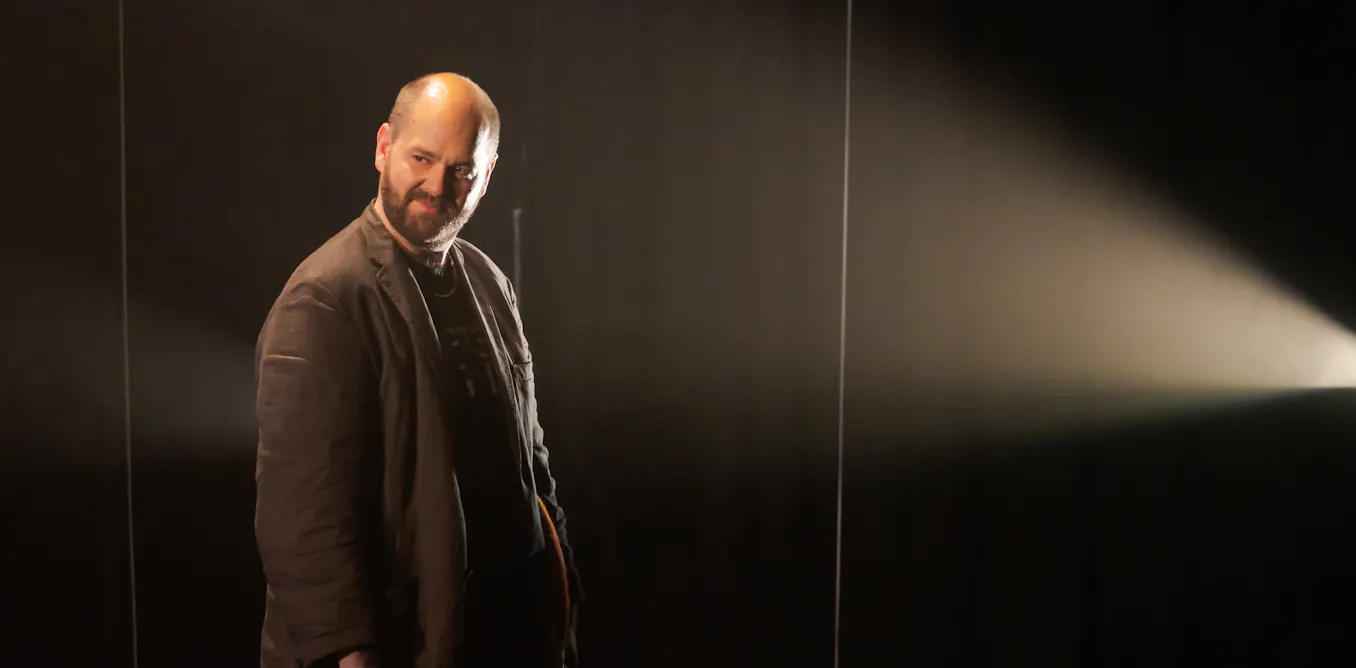
Andrew Patterson plays McKenzie as interviewer, narrator and sceptic, guiding the audience through the theological material. Michael Hurst portrays philosopher and cultural critic Mark C Taylor, whose exchanges with McKenzie include Zoom calls, lectures and conversations.
Kali Kopae, Roy Clark and Tara Canton take on the other roles, using changes in voice and movement rather than costumes. The production’s projected words, names and locations add context, though they can be difficult to read from seats away from the middle.
Key points
- After God follows McKenzie’s search for faith through interviews, conversations, lectures and personal reflections.
- The production continues a verbatim theatre tradition in Aotearoa New Zealand.
- Its approach raises questions about how editing and performance shape claims of truth.
- The play also addresses grief and mourning.