Francis Halzen wins Nobel Prize in physics for work on high-energy neutrinos from space
Podcasts & Shows Expand/collapse submenu for Podcasts & Shows Daily Morning Edition
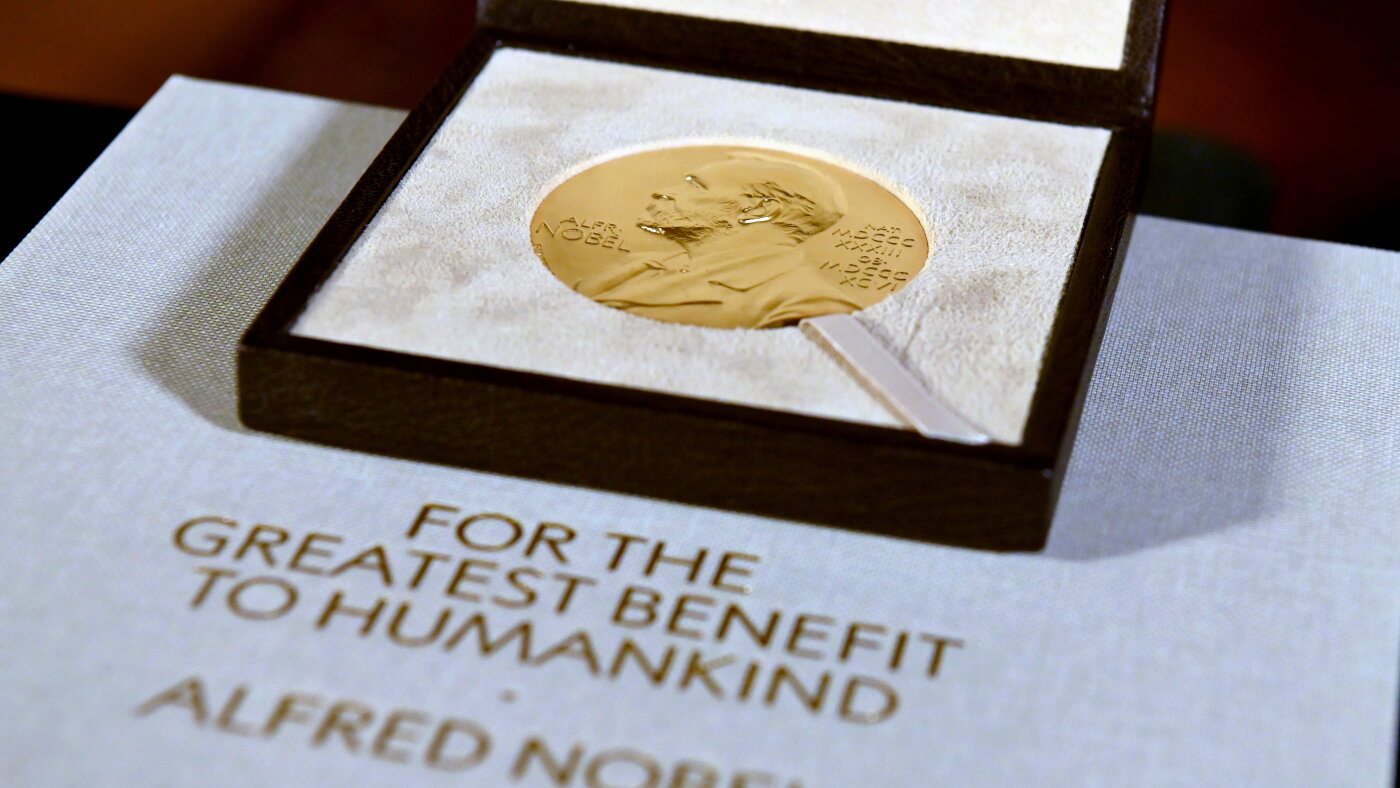
FILE - A Nobel diploma and medal are displayed, Dec. 8, 2020, during a ceremony in New York. Angela Weiss/Pool AFP via AP hide caption
STOCKHOLM — Francis Halzen won the Nobel Prize in physics on Tuesday for his contributions to the IceCube Neutrino Observatory and his discovery of high-energy neutrinos of astrophysical origin.
"Francis Halzen has led an international team of researchers and engineers who have provided us with a fantastic instrument. His tenacity and scientific vision has paved the way for a new kind of astronomy," Mark Pearce, chair of the Nobel Committee for Physics, said in a news release.
Halzen said it was predicted before that he would win the Nobel Prize but the announcement still made him feel "strange."
Born in Belgium, the 82-year-old scientist is affiliated with the University of Wisconsin–Madison in the U.S. Efforts by The Associated Press to reach him were not immediately successful.
The IceCube Neutrino Observatory is a research facility located at the South Pole in Antarctica, according to its website, and the University of Wisconsin–Madison is its lead institution.
Neutrinos are tiny cosmic particles with a mind-bogglingly small mass. Yet they are everywhere: they spew from stars like the sun and trillions zip through our bodies every second.
Scientists can't glimpse the mysterious ghost particles zooming around on their own. Instead, they measure what happens when the tiny particles collide with other bits of matter, producing flashes of light or charged particles.
Halzen studied a rare gang of neutrinos that scientists consider messengers from the cosmos, offering clues to how the universe evolved.
His research into capturing neutrinos at the South Pole dates back to the 1980s.
The Royal Swedish Academy of Sciences announced the award in Stockholm.
Dive deeper
- Podcasts & Shows Expand/collapse submenu for Podcasts & Shows Daily Morning Edition
- FILE - A Nobel diploma and medal are displayed, Dec. 8, 2020, during a ceremony in New York. Angela Weiss/Pool AFP via AP hide caption
- STOCKHOLM — Francis Halzen won the Nobel Prize in physics on Tuesday for his contributions to the IceCube Neutrino Observatory and his discovery of high-energy neutrinos of astrophysical origin.
- "Francis Halzen has led an international team of researchers and engineers who have provided us with a fantastic instrument. His tenacity and scientific vision has paved the way for a new kind of astronomy," Mark Pearce, chair of the Nobel
- Halzen said it was predicted before that he would win the Nobel Prize but the announcement still made him feel "strange."