Scientists just made a superconductor stronger using “empty space”
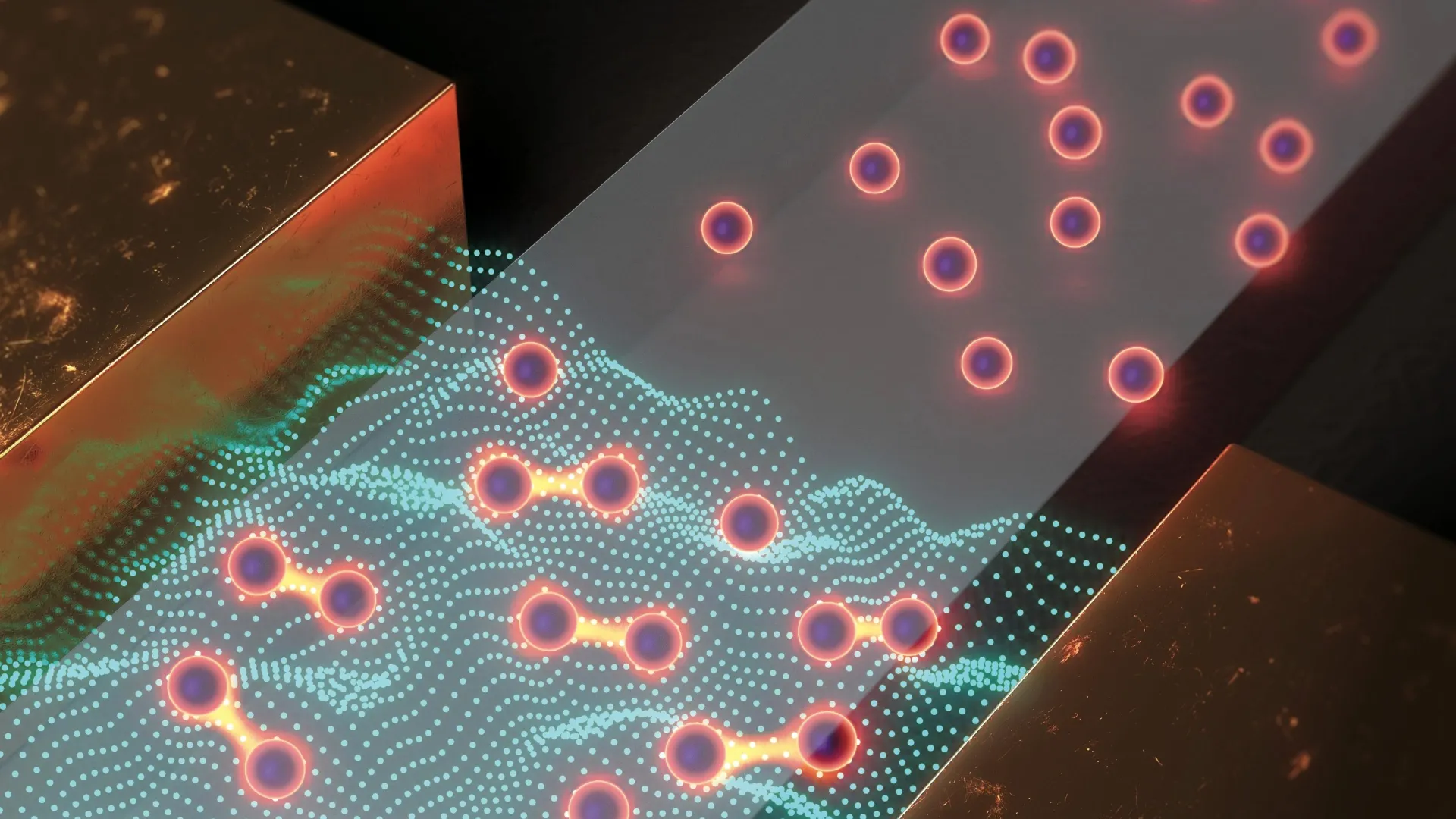
A team led by researchers at the University of Science and Technology of China reports that quantum fluctuations from a vacuum environment can strengthen superconductivity. The findings were published in Nature.
The researchers placed the material NbSe2 inside a terahertz split-ring resonator, a cavity designed to alter and amplify electromagnetic fluctuations. They compared its behavior with the material outside the cavity.
NbSe2 showed a higher superconducting critical temperature inside the cavity. This is the threshold below which the material becomes superconducting.
The work builds on research into shaping vacuum fluctuations and on theoretical studies of engineered quantum environments. The collaboration included scientists from Shanghai Jiao Tong University and MIT.
The result suggests that specially designed electromagnetic environments may offer a way to influence superconductors and other unusual states of matter. The article does not specify what further experiments are planned.
Key points
- A terahertz cavity amplified vacuum fluctuations around NbSe2.
- The material’s superconducting critical temperature rose inside the cavity.
- The findings point to engineered quantum environments as a possible control method.