Venus' mysterious haze is actually cosmic dust
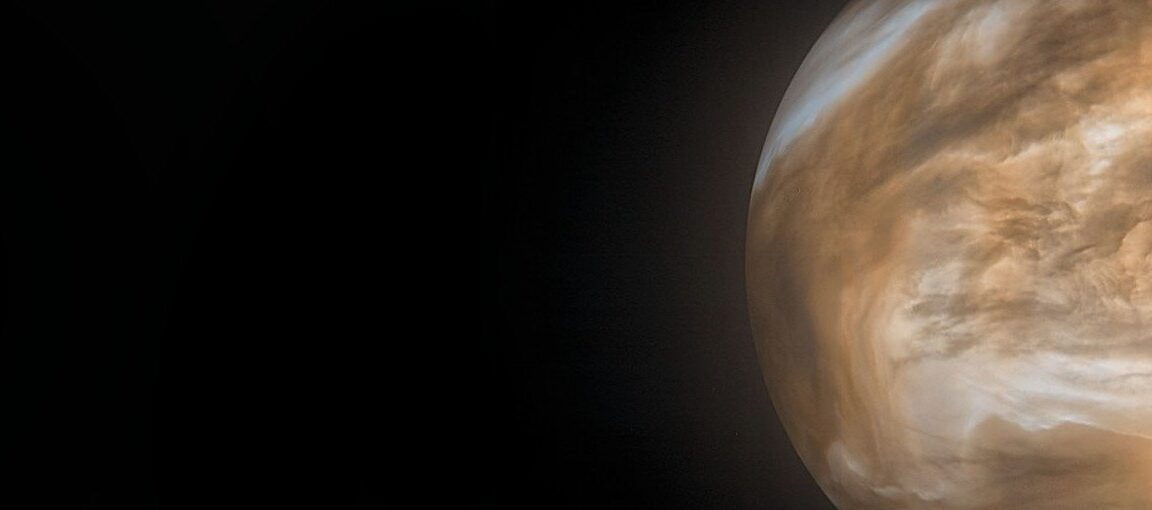
Venus’ yellow lower-atmosphere haze, first observed by probes in the 1970s, has puzzled scientists for decades. A new study offers an explanation based on particles left by meteorites.
Hiroki Karyu and colleagues at Tohoku University used a microphysical model to examine how those particles behave. As meteorites burn in Venus’ atmosphere, their residue can provide surfaces for sulfuric acid to condense on.
The researchers say a steady supply of cosmic dust can sustain the haze. The resulting particles can also help clouds form higher in the atmosphere by serving as condensation sites.
Earlier ideas blamed volcanic ash or dust from the surface. The model found these materials would not interact with atmospheric sulfur in the way needed to produce the haze.
The particles can join into larger clusters before acid condenses around them. These become heavier and sink into the hot lower atmosphere, where the acid evaporates. The finding also helps address another atmospheric mystery, though the supplied article ends before explaining it.
Key points
- Meteorite debris interacting with sulfuric acid is proposed as the source of Venus’ lower haze.
- A Tohoku University team used a microphysical model to test how the particles form.
- The particles may also encourage cloud formation; volcanic ash and surface dust were ruled out as the haze source.