

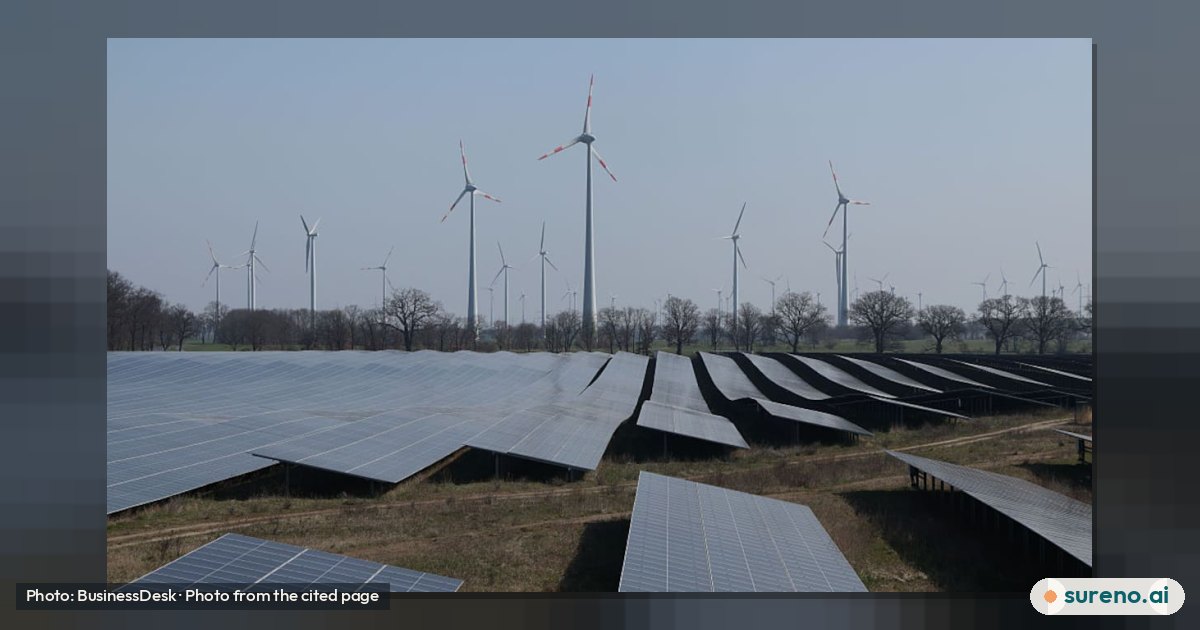
What New Wind Turbines Mean for New Zealand’s Power Supply
Mercury’s planned Puke Kapo Hau project would add 192 megawatts of wind capacity near Dunedin, but local effects and output details remain to be assessed.
The short version
- Wind turbines add electricity by turning wind into power that can be sent to the grid; Mercury’s planned Puke Kapo Hau project is expected to add 192 MW of capacity. 23
- The project would add 40 turbines to the existing Mahinerangi wind farm, west of Dunedin, and is expected to begin generating in 2028. 2
- Together, the project’s two stages are expected to have 228 MW of installed capacity and produce about 646 GWh of electricity a year. 2
- The supplied reports do not describe the project’s specific effects on wildlife, noise, views, or nearby communities.
How will the new turbines add electricity?
Wind turns a turbine’s blades, and the turbine converts that movement into electricity. That electricity can then be delivered into the power system. The more useful wind capacity connected to the system, the more electricity can be generated when wind conditions allow.
Mercury’s Puke Kapo Hau project is planned for the eastern foothills of the Lammermoor Range in Otago. It would add 40 turbines and 192 MW of capacity to the existing Mahinerangi wind farm, west of Dunedin. 23 Capacity describes how much power equipment can produce at a given moment; it is not the same as the amount of electricity produced over a year.
When is the wind farm expected to produce power?
BusinessDesk reported that construction was due to begin in November 2026 and that the expanded wind farm was expected to start generating electricity in 2028. 2 These are reported plans, not confirmation that the project is already operating.
The project notice followed completion of grid connection studies with Transpower, according to BusinessDesk. 2 A grid connection is the link that allows electricity from a generator to enter the electricity network.
How much electricity could the expanded wind farm generate?
The two stages together are expected to have 52 turbines and 228 MW of installed capacity, with annual generation of about 646 GWh. 2 A gigawatt-hour, or GWh, is a unit used to measure electricity over time.
These figures are estimates reported for the combined wind farm. The available sources do not say how much electricity the new 40 turbines alone would generate, or how their output would vary over the year. Wind generation depends on wind conditions, so capacity should not be read as a promise of constant output.
What might nearby communities need to weigh?
A larger wind farm can mean more renewable electricity entering the supply, but residents may also want clear information about construction and the project’s effects on their surroundings. Relevant questions include possible changes to views, noise, roads, land use, and wildlife.
The research provided for this article does not give project-specific findings on those matters, nor does it describe community consultation or any mitigation measures. It would be misleading to say what the impacts will be without that information. The project’s environmental and local effects remain questions for detailed, site-specific reporting.
What does this mean for New Zealand’s power supply?
The project would add to New Zealand’s wind generation, but the available sources do not establish how much it would change the country’s total electricity supply or prices. A 2023 snapshot cited by Wikipedia put wind at 1,059 MW of installed capacity and more than 6 percent of electricity generated; that is historical context, not a current figure. 4
The clearest takeaway is that the planned expansion would increase the system’s ability to generate electricity from wind once it is operating. The project’s actual yearly output, local effects, and contribution to the wider supply will depend on details not provided in the sources.
What we don't know yet
- How much electricity the 40 new turbines alone will generate each year.
- What project-specific assessments say about wildlife, noise, views, construction, and effects on nearby communities.
- Whether the reported construction and generation timetable will change.
Share this explainer
Get this every day, on every new tab
Sureno Browser brings the day's stories, explained simply, to your start page.
Questions people ask
Where is the Puke Kapo Hau wind farm?
How many turbines are being added at Mahinerangi?
Mercury’s planned Puke Kapo Hau project would add 40 turbines. The two stages together are expected to have 52 turbines. 2
How much power will the new wind farm produce?
The new project is reported as having 192 MW of capacity. The combined two-stage wind farm is expected to produce about 646 GWh a year, but the sources do not give a separate annual estimate for the new turbines. 2
When will Puke Kapo Hau start generating electricity?
BusinessDesk reported that generation was expected to begin in 2028, with construction due to start in November 2026. These are reported expectations and may change. 2
Will the new turbines affect wildlife or nearby residents?
The supplied sources do not report specific findings about wildlife, noise, views, or effects on nearby residents. Those impacts cannot be determined from the information available here.
Sources
- Latest wind farm adds to renewable generation rush — BusinessDesk
- Nordex enters New Zealand with 192-MW wind turbine order — Renewables Now, 2026-10-22
- Wind power in New Zealand — Wikipedia
Free tools for this
They run in your browser. Nothing is uploaded and there is nothing to sign up for.
More to read
 Nature & AnimalsHow the SS United States Could Become an Artificial ReefOct 27, 2026 · 3 min read0 views
 Nature & AnimalsPolar Vortex Forecast: What Early Winter Signs Can Tell UsOct 26, 2026 · 4 min read0 views
 Nature & AnimalsWhy October Snow Is Affecting Parts of AlbertaOct 24, 2026 · 3 min read0 views
 Nature & AnimalsWhat a Delay to EU Methane Rules Could ChangeOct 23, 2026 · 4 min read0 views
 Tech & Online SafetyWhat to Know About Apple’s iOS 27.2 UpdateOct 27, 2026 · 3 min read1 view
 Nature & AnimalsWhat New Recordings Reveal About Omura’s Whale HabitatOct 22, 2026 · 3 min read0 views
 Nature & AnimalsWhy Bogong Moths Can Look Like Rain on Weather RadarOct 22, 2026 · 3 min read0 views
 Nature & AnimalsWhy Southern Ontario’s First Snow May Arrive LateOct 21, 2026 · 3 min read0 views
 Tech & Online SafetyWhat Anthropic’s Planned Stock-Market Debut MeansOct 27, 2026 · 4 min read1 view