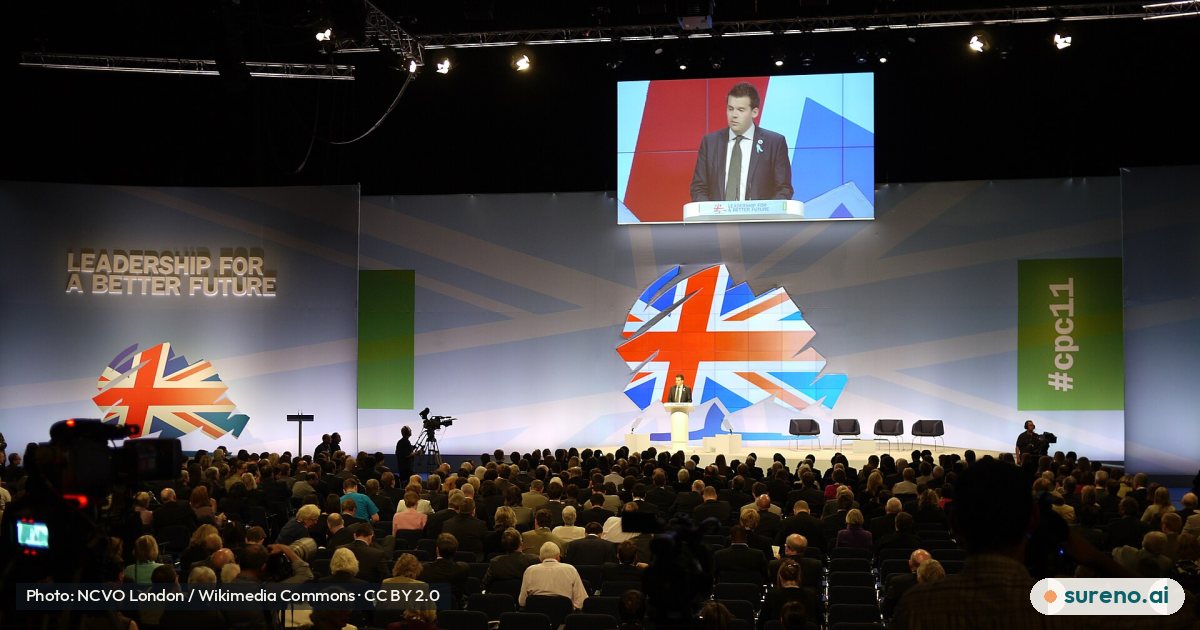
What Britain’s Conservative Party Conference Is—and Why It Matters
The annual gathering brings Conservative politicians and members together, but the available reports offer only a partial picture of this year’s debates.
The short version
- The Conservative Party conference is a four-day national gathering held each October, when the House of Commons is usually in recess. 3
- The party conference does not hold votes on party policy, so its debates and speeches can signal priorities without formally deciding policy. 3
- This year’s gathering is in Birmingham, and reports focus on Kemi Badenoch and a proposed rollback of some green laws. 12
- One newspaper columnist described low attendance and a subdued atmosphere, but that is an impression from one report, not a complete measure of the party’s standing. 1
What is the Conservative Party conference?
It is the Conservative Party’s annual national conference: a four-day event held in October as part of Britain’s party conference season. The House of Commons is usually in recess during this period. 3
The conference brings the party together in public. It can give politicians a place to make speeches and discuss issues, while media coverage offers readers a view of the subjects the party is choosing to foreground. The sources provided do not give a full programme or a detailed account of this year’s sessions.
What happens at the conference?
The supplied sources establish that it is a national party event, but do not describe the full schedule, all the speakers, or the range of events for attendees. One report describes people arriving at the Birmingham gathering and comments on the queues and attendance it observed. 1
The conference is not a formal vote on party policy. Unlike the arrangements described for Labour and the Liberal Democrats, the Conservative conference does not hold votes on policy. 3 That means the event can be useful for following arguments and priorities, but a conference debate should not be mistaken for a binding policy decision.
Why does the conference matter?
A conference can offer clues about what a party wants to talk about and how its leaders present its direction. This year, BBC’s roundup of newspaper front pages highlighted reports about Kemi Badenoch and a proposed “bonfire of green laws.” 2 That phrase is a newspaper headline, not enough on its own to establish the details or likely effects of a policy.
Conference coverage also includes interpretation, not just announcements. A Guardian columnist portrayed the Birmingham event as subdued and questioned whether the party seemed ready for an election. 1 This is one writer’s assessment. The supplied sources do not provide attendance figures, polling, or evidence that would settle how representative that impression is.
What do this year’s debates signal about the party’s direction?
The available coverage points to discussion of green laws and attention on Badenoch at the start of the conference. 2 These are signals about topics being discussed or highlighted; they do not, by themselves, establish a settled party platform or show what the party would do in government.
The reports also differ in emphasis. The Guardian account focuses on the event’s atmosphere and attendance, while the BBC roundup describes newspaper headlines and their subjects. 12 Neither source provides a comprehensive record of policy debates, party decisions, or reactions from across the membership. Readers should treat claims about a major change in direction as provisional unless supported by more detailed information.
Where is the conference held, and does it set policy?
The conference has alternated between Birmingham’s International Convention Centre and Manchester’s Central Convention Complex since 2008, according to the supplied reference. 3 This year’s newspaper coverage places the event in Birmingham. 1
It does not set policy through conference votes. 3 Speeches and debate may still matter as a way to see which ideas party figures promote, but the sources here do not explain the party’s complete process for turning proposals into official policy.
What we don't know yet
- What the full programme and attendance figures for the 2026 conference show.
- The detailed content and status of the reported proposal concerning green laws.
- Whether the conference discussions will lead to formal changes in Conservative policy.
Share this explainer
Get this every day, on every new tab
Sureno Browser brings the day's stories, explained simply, to your start page.
Questions people ask
When is the Conservative Party conference held?
It is held each year in October as part of Britain’s party conference season. The House of Commons is usually in recess at that time. 3
Does the Conservative conference vote on policies?
No. The supplied reference says the Conservative Party conference does not hold votes on party policy. 3 Speeches and discussions can show what party figures are emphasising, but they are not policy votes.
Where is the Conservative conference in 2026?
What is the Conservative Party debating at its conference?
The available coverage highlights Kemi Badenoch and newspaper reporting about a proposed rollback of green laws. 2 It does not provide a complete account of conference sessions or establish the final content or status of that proposal.
Does a quiet conference mean the Conservatives are losing support?
Not on the evidence provided. A Guardian columnist described low queues and a subdued atmosphere, but that is an observation from one report. 1 The sources do not provide attendance figures or polling that would establish what it means for the party’s wider support.
Sources
More to read
 WorldFormer Prince Andrew's Action Against Police ExplainedOct 5, 2026 · 2 min read3 views
 WorldWhen Elections Have No Contest: What It Means for VotersOct 6, 2026 · 3 min read1 view
 WorldJaguar Type 01: what the electric car means for buyersOct 7, 2026 · 3 min read0 views
 WorldWhat It Means to Seize Voting MachinesOct 7, 2026 · 3 min read0 views
 SportsLakers Preseason Opener: What to Know About the Kings GameOct 5, 2026 · 4 min read2 views
 WorldBenin: the country facing Argentina in Messi’s farewellOct 7, 2026 · 3 min read0 views
 WorldBritannia Shield: What the Proposed UK Defence Would DoOct 6, 2026 · 4 min read0 views
 WorldWhy Trump’s Ad Funding Shift Has Drawn ScrutinyOct 6, 2026 · 3 min read0 views
 WorldWhite House Press Pools: How Shared Reporting WorksOct 6, 2026 · 2 min read0 views
 SportsSuper Bowl 2027: Date, Venue and How to WatchOct 7, 2026 · 3 min read0 views