

Boffin’s software spots 2026 ED138, a possible dwarf planet beyond Neptune
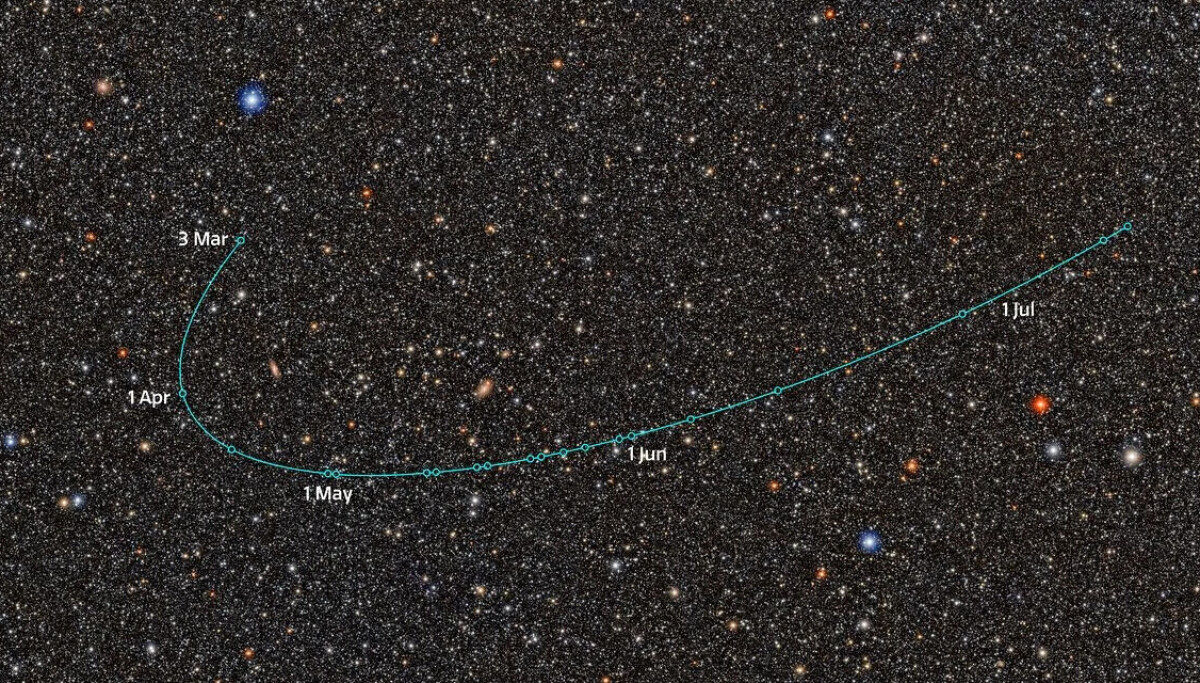
A search across the sky
Matthew Holman, a Rubin Operations team member and contributor from the Center for Astrophysics at Harvard & Smithsonian, analyzed earlier Rubin data with code developed alongside colleague Kevin Napier. The program compares detections of moving objects to identify which observations belong to the same object.
On October 13, the software flagged a bright, distant object that researchers thought might be unusually large. Other astronomers then searched additional records and found relevant observations spanning ten years.
A candidate, not a confirmed planet
Rubin Observatory announced that the object, named 2026 ED138, is a strong candidate for dwarf-planet certification. The article does not report that the classification has been formally granted.
A full planet, under the Union’s definition, must have an important influence on the orbital stability of nearby objects. Dwarf planets instead share their orbital regions with many rocky or icy bodies influenced by other objects.
Size estimates remain wide
Researchers estimate ED138 is between 600 and 1,500 kilometers across. At the smaller estimate, it would be the smallest dwarf planet observed so far. At the larger estimate, it would still be smaller than Pluto, Eris and Haumea, but larger than Makemake and Ceres. The broad range leaves its eventual place among known dwarf planets uncertain.
Rubin’s survey contribution
The analysis used data gathered before LSST operations commenced. Rubin’s announcement credited the combined approach of repeated sky observations and software designed to find small moving objects.
Key points
- 2026 ED138 is a strong candidate for the solar system’s sixth known dwarf planet.
- Harvard & Smithsonian colleagues Matthew Holman and Kevin Napier developed the search code.
- Researchers found ten years of relevant observations in other records.
- Its estimated diameter ranges from 600 to 1,500 kilometers.