365 Days in Isolation: NASA’s Simulated Mars Crew Marks a Year Inside Habitat
A year in isolation
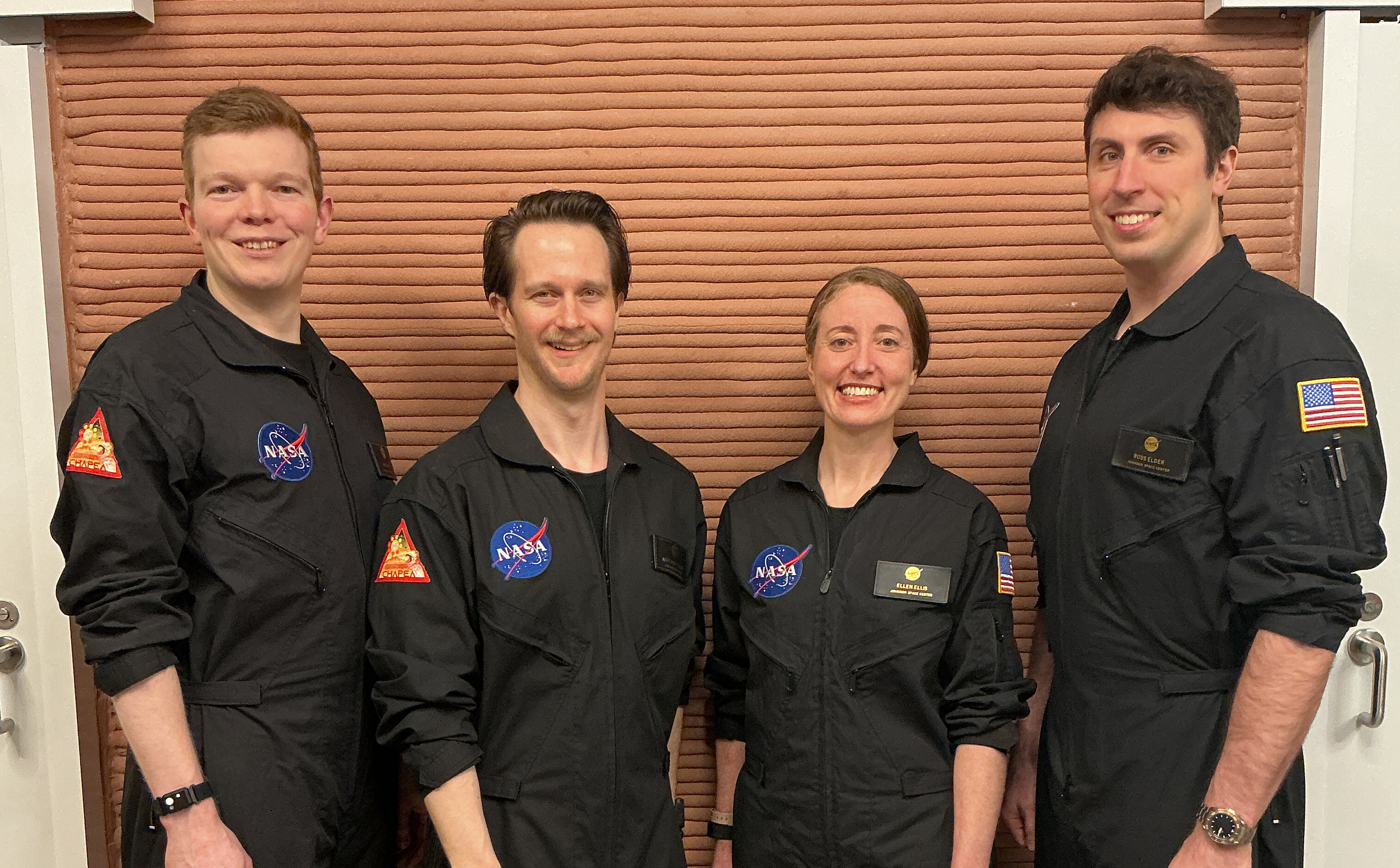
The four CHAPEA Mission 2 crew members have lived in a confined, 1,700-square-foot, 3D-printed habitat since entering it Oct. 19, 2025. They have carried out daily life as if they were on Mars, including growing crops, managing limited resources and navigating delayed communications.
The crew consists of mission commander Ross Elder, medical officer Ellen Ellis, science officer Matthew Montgomery and flight engineer James Spicer. During the mission, they also conducted suited extravehicular activities on a simulated Martian surface.
Researching health and performance
As the crew approaches the one-year point in its 378-day mission, NASA science teams are preparing to process health and performance data. The findings could help the agency weigh mission priorities and develop ways to address risks during future long-duration spaceflight.
The data may show how restricted food and exercise systems affect mission objectives, including surface spacewalks. Researchers are also examining how to support crew autonomy and decision-making when communications can be delayed by as much as 45 minutes each way.
Mission ends with evaluations
The crew is expected to exit the habitat Saturday, Oct. 31, and reconnect with family members, whom they have contacted only by email with a Mars-like communications delay. Afterward, the crew will take part in two weeks of evaluations and debriefs with NASA scientists.
Those sessions will help researchers understand how crews adapt to the routines and demands of long missions. NASA says the work could guide support for explorers seeking to remain healthy, productive and connected far from Earth.
Lessons for future exploration
Grace Douglas, CHAPEA principal investigator, said the team was proud of the crew’s commitment and achievements during a demanding mission. Michael Stenger, chief scientist for NASA’s Human Research Program, said the project is helping researchers understand needs for year-long missions, including medical and psychological care during communication delays.
NASA’s Human Research Program studies how spaceflight affects people and develops methods and technologies to support safe, productive missions. Its research spans laboratories, ground-based analogs, commercial missions, the International Space Station and Artemis missions, with applications for exploration of the Moon, Mars and beyond.
Key points
- Four crew members spent 365 days in isolation at NASA’s Johnson Space Center.
- The 378-day CHAPEA Mission 2 included simulated Mars routines and suited surface activities.
- NASA will study health and performance data to help prepare for long-duration missions.
- After leaving the habitat Oct. 31, the crew will complete two weeks of evaluations and debriefs.