

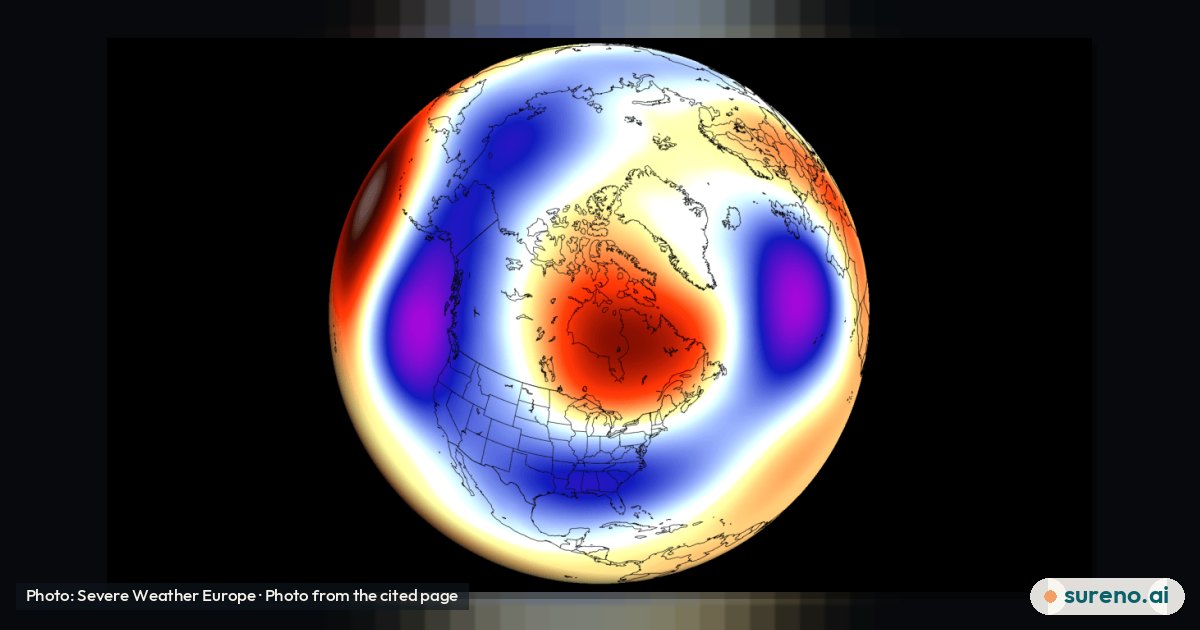
Is a super El Niño forecast for winter 2026–2027?
One recent weather report predicts a very strong El Niño, but the supplied sources are not enough to confirm the label or its winter effects.
The short version
- Verdict: Unproven — one recent forecast describes a super El Niño developing toward winter, but the supplied sources do not include an official forecast or independent confirmation of its measurements. 13
- The report says the event may peak around late December and could shape North American weather patterns. 1
- A separate news report also describes unusually warm Pacific water, but its figures and claims are not independently verified in this source set. 3
- El Niño can influence broad weather patterns, but these sources do not establish what a particular place will experience this winter. 12
What is being claimed about winter 2026–2027?
The claim is that a very strong El Niño is underway and will be a major influence on winter weather in 2026–2027. Some headlines call it a “super El Niño” or “Godzilla” event. Those are labels used in coverage, not proof by themselves that an event has reached a particular measured strength.
El Niño is a pattern involving warmer-than-usual water in the tropical Pacific and related changes in winds and atmospheric circulation. The supplied sources describe those connections, but they do not provide a complete official assessment of the event.
What do the forecasts and reports actually show?
A Severe Weather Europe article dated October 30 says the Pacific event is strengthening and forecasts a peak around late December. It says the pattern could influence North American circulation and discusses possible winter conditions. These are that article’s forecast claims; they are not a guarantee of specific weather. 1
A Global News report also describes the event as exceptionally strong and gives a Pacific temperature figure of 3.5°C above average. It quotes a meteorologist, but the research provided does not include the underlying observation record or a separate official confirmation of that number. 3
The travel article describes possible effects on destinations and recounts weather experiences, but anecdotes and broad travel commentary do not establish a seasonal forecast for every region. 2
Is a super El Niño officially confirmed?
The supplied material does not settle that question. It includes two media reports making strong claims, but no direct statement or data from an official climate-monitoring agency. A Wikipedia page in the source list asserts that the World Meteorological Organization declared an event in June, but that page is not an official WMO publication and cannot establish the claim on its own. 4
For that reason, this fact check cannot verify either the event’s exact strength or claims that it is the strongest on record. The wording “super El Niño” should be treated as a description used by some coverage until reliable measurements and an official assessment are checked.
What is true, and what is missing?
The reports agree on the broad idea that El Niño involves unusually warm tropical Pacific water and can alter atmospheric circulation. They also discuss possible effects on weather patterns. 13
What is missing is a set of official, current observations and a clearly sourced seasonal outlook that confirms the event’s category and explains the confidence and regional limits. The sources also do not show that one outcome—such as a warmer, wetter or drier winter—will apply everywhere. El Niño is a large-scale influence, not a local weather promise.
The travel article’s accounts of storms, waves and changing conditions are not enough to show that El Niño caused each event. The supplied material does not establish those causal links. 2
How can you check this claim yourself?
Look for current updates from official climate and weather agencies, including the World Meteorological Organization and your national weather service. Check the publication date, the measured ocean conditions, and whether a forecast describes probabilities rather than certainty.
Compare the broad seasonal outlook with the forecast for your own location. A headline about a powerful Pacific pattern cannot tell you exactly what the weather will be on a particular day or in a particular town.
What we don't know yet
- Whether official monitoring agencies have confirmed the event’s current category and strength.
- Whether the reported Pacific temperature figure is accurate and how it was measured.
- How the event will affect individual regions during winter 2026–2027.
- How confident seasonal forecasts will be as the winter approaches.
Share this explainer
Get this every day, on every new tab
Sureno Browser brings the day's stories, explained simply, to your start page.
Questions people ask
Will a super El Niño control winter 2026–2027?
A recent forecast says the event may become a major influence on winter patterns. That does not mean it will determine the weather everywhere, and the supplied sources do not confirm the event’s official status. 1
Is the 2026–2027 El Niño the strongest on record?
When is the 2026–2027 El Niño expected to peak?
The October 30 forecast says it may peak around late December. That is a forecast, not a confirmed observation of when the peak will occur. 1
Will El Niño make winter warmer and wetter everywhere?
Where can I check an official El Niño forecast?
Check updates from the World Meteorological Organization and your national weather service. The source set includes reports about their claims, but not a direct official forecast that confirms the event’s current strength. 4
Sources
- November Weather Forecast: Super El Niño Takes Control as Winter 2026/2027 Approaches — Severe Weather Europe, 2026-10-30
- Which Travel Destinations Will Be Most Affected by This Year’s Super El Niño? A Weather Expert Fills Us In — AFAR Media, 2026-10-28
- ‘Godzilla’ El Nino set to bring warmer, drier temperatures to Canada - National | Globalnews.ca — Global News
- 2026–2027 El Niño event — Wikipedia
Free tools for this
They run in your browser. Nothing is uploaded and there is nothing to sign up for.
More to read
 Nature & AnimalsHow El Niño Shapes Atlantic Hurricane SeasonsOct 31, 2026 · 4 min read0 views
 Nature & AnimalsCould a Weak Polar Vortex Affect Canada’s Winter?Oct 28, 2026 · 3 min read0 views
 Nature & AnimalsHow the SS United States Could Become an Artificial ReefOct 27, 2026 · 3 min read0 views
 Nature & AnimalsPolar Vortex Forecast: What Early Winter Signs Can Tell UsOct 26, 2026 · 4 min read0 views
 WorldWhat the U.S. Patriot Missile Sale Means for UkraineOct 31, 2026 · 4 min read0 views
 Nature & AnimalsWhy October Snow Is Affecting Parts of AlbertaOct 24, 2026 · 3 min read0 views