

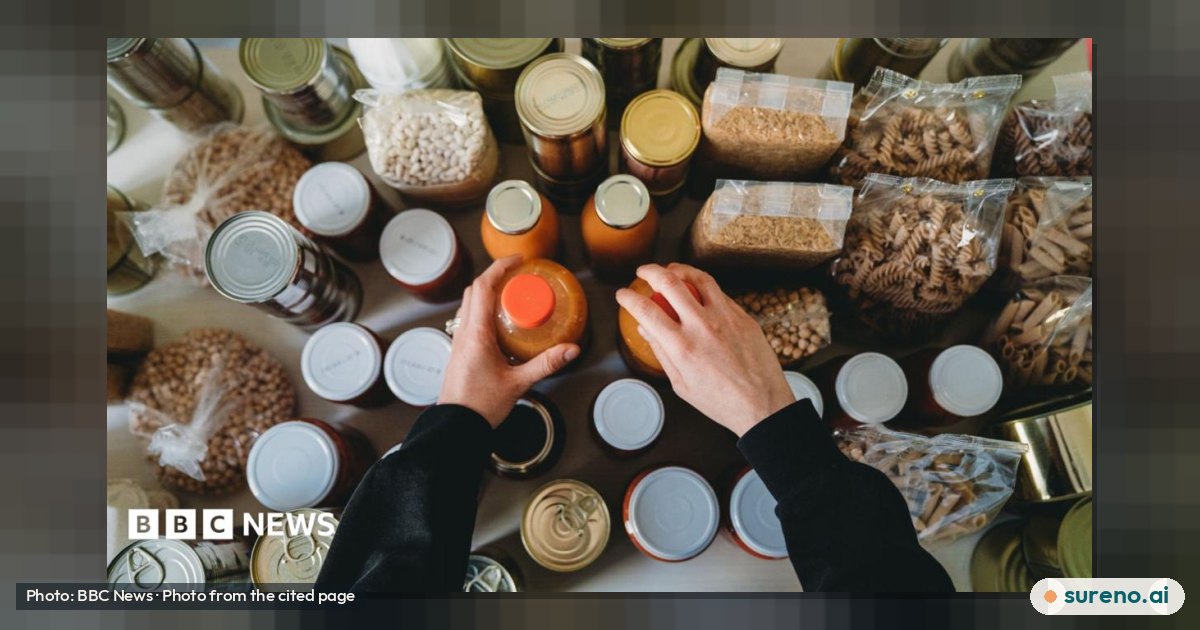
Is it true households should keep emergency food and water?
UK guidance supports keeping basic supplies at home, but the sources do not set out every household’s needs or prove that supplies prevent harm.
The short version
- Verdict: Mostly true. UK government guidance encourages households to keep a small supply of non-perishable food and bottled water, and separate coverage reports a three-day recommendation 13.
- The stated purpose is to help people manage if everyday services are temporarily disrupted, including power, water, phones or internet 3.
- The advice is part of a preparedness campaign; the sources do not show that every household needs exactly the same supplies or that keeping them guarantees safety 13.
- For the current official advice, consult the UK government’s emergency preparedness guidance 3.
What is being claimed about emergency food and water?
The claim is that households should keep food and water at home in case an emergency disrupts everyday services. It is a preparedness recommendation, not a claim that a particular disaster is certain to happen.
The recent headlines refer to UK advice encouraging people to prepare for events such as severe weather and other disruptions. The government describes this as a few simple steps, including keeping a small supply of bottled water and food that does not spoil quickly 3.
What do the sources show about the recommendation?
The government’s campaign says disruptions can affect services people rely on, including power, water, phone signal and the internet. Its advice is intended to help households feel better prepared if services are temporarily interrupted 3.
BBC coverage reports that the government recommends enough supplies for three days, including bottled water and non-perishable food 1. Another BBC report describes the recommendation as three days’ worth of bottled water and tinned food, and quotes Prime Minister Andy Burnham presenting preparation as a sensible step rather than a reason to panic 2.
These reports support the central claim. The official campaign page is the strongest source here for what the government itself says; the BBC articles provide additional reporting and context.
What is true about keeping supplies at home?
UK official guidance does encourage households to keep some food and bottled water at home. The purpose is to have basic supplies available during a temporary interruption to normal services 3.
The recommendation is broader than food and water alone. BBC coverage says the government list also includes items such as wet wipes and a torch, and notes that people who need medication may be advised to keep an extra supply 1. The government campaign also mentions signing up to the Priority Services Register, which helps utility companies identify customers who may need extra support in an emergency 3.
What is missing or not established by these sources?
The sources do not provide enough detail to determine the exact amount or type of food and water suitable for every household. BBC reporting describes a three-day recommendation, while the official campaign summary supplied here uses the phrase “a small supply” 13. The excerpts do not explain how to calculate individual requirements.
Nor do these sources establish that having supplies guarantees a household will be safe, or that every disruption will last three days. They present preparedness as a way to make it easier to cope and help emergency services respond, rather than as a complete solution 13.
The materials supplied also do not provide a detailed, current list of all recommended items. For that, readers should check the official government guidance directly rather than rely only on headlines or summaries.
How can you check this kind of claim yourself?
First, look for the original guidance from the relevant government or emergency agency. Check whether it says to keep a small supply, gives a specific duration, or sets out a full checklist. Then compare reporting with that original advice.
For this claim, the UK government campaign page explains the stated purpose and mentions food, bottled water and the Priority Services Register 3. BBC reports add the three-day detail 12. If the guidance may have changed, check the official page for the latest version and local instructions.
What we don't know yet
- The supplied official campaign summary does not specify exact quantities of food or water.
- The sources do not explain how the general recommendation should be adapted for different household circumstances.
- The supplied material does not include a complete official checklist or establish how long any particular disruption might last.
Share this explainer
Never miss a recall
Sureno Browser can show this week's recalls on your start page, with what to do about each one.
Questions people ask
How many days of emergency supplies should I keep at home?
Does the UK government recommend keeping bottled water?
What food should I keep for an emergency?
Why does the government want households to prepare?
Are food and water the only emergency supplies recommended?
Sources
Free tools for this
They run in your browser. Nothing is uploaded and there is nothing to sign up for.
More to read
 Safety & RecallsWhy the Royal Navy Needs an Ice Patrol ShipOct 23, 2026 · 3 min read0 views
 Safety & RecallsHow the UK Plans to Prepare for Emergencies and AttacksOct 22, 2026 · 3 min read0 views
 SportsWhy INEOS Is Selling Lausanne-SportOct 27, 2026 · 3 min read0 views
 Travel & PlacesWhat BC Ferries’ Leadership Change Could Mean for PassengersOct 27, 2026 · 3 min read0 views