

How 8 Episodes of Netflix’s Greatest Sci-Fi Hit Deliver Peak Lovecraftian Horror
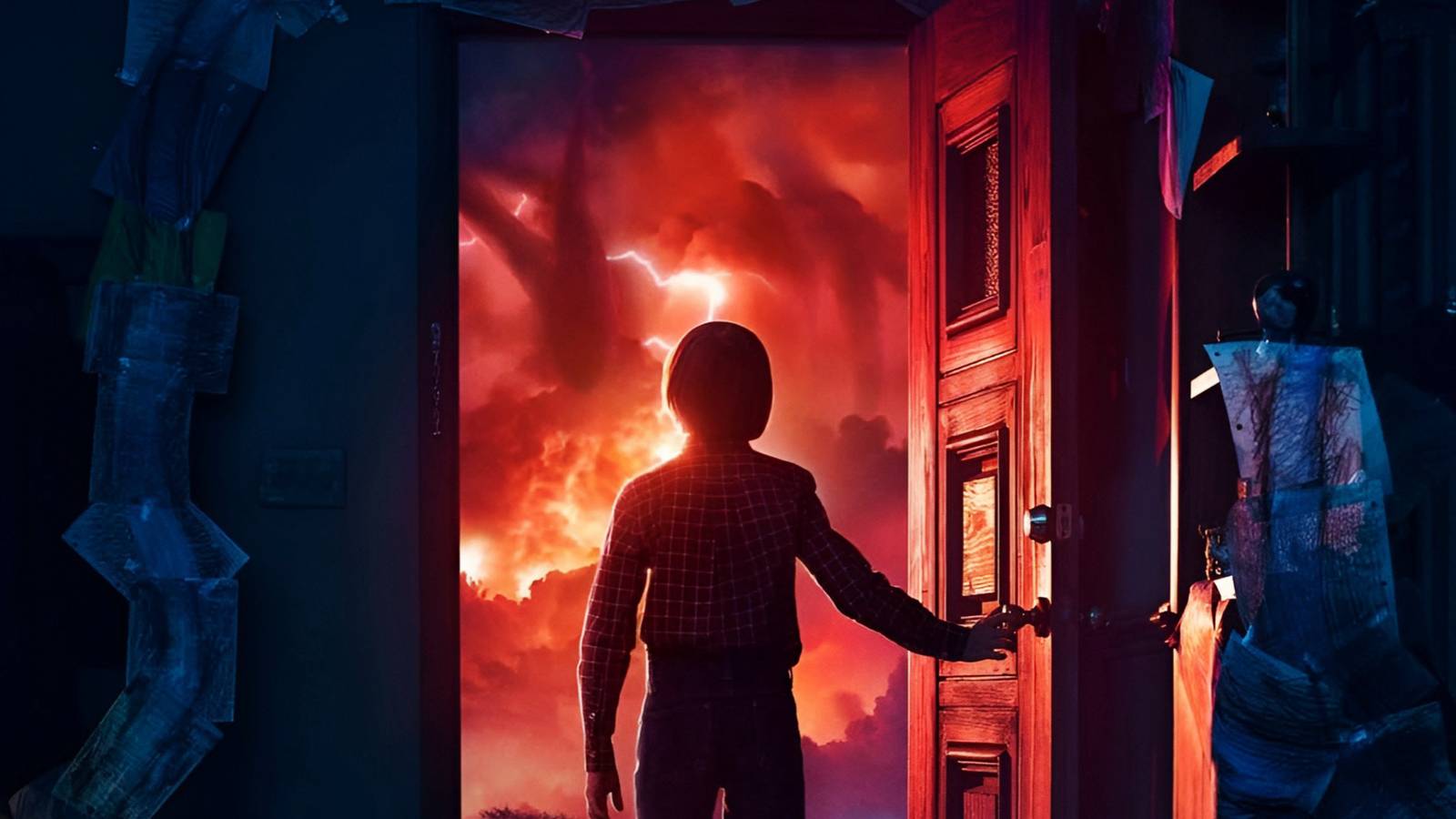
Cosmic horror in Hawkins
Lovecraftian horror often centers on humanity confronting realities beyond its understanding. In H.P. Lovecraft’s story From Beyond, a scientist’s device lets people perceive hidden realms, while interdimensional creatures can perceive and affect them in turn.
In Stranger Things, Dr. Martin Brenner and Hawkins National Laboratory open the Gate while seeking to expand human consciousness and use it to spy on the Soviets. Their experiment exposes humanity to an unknown dimension. The Upside Down mirrors Hawkins, but is portrayed as cold, dark and difficult to comprehend.
A monster kept uncertain
Season 1 largely withholds the Demogorgon’s true nature and appearance. Will’s attempts to reach his family from the other side, while trying to escape the creature, build fear through uncertainty rather than explanation.
The characters also face forces that seem indifferent to human concerns. Joyce’s helplessness and distress echo a familiar feature of Lovecraftian stories, where people struggle against immense powers they cannot control.
Control proves temporary
The season’s ending offers an apparent resolution: friendship seems to save the day, and Will returns to his family. But his later realization suggests that the characters’ sense of control was only an illusion, undercutting the idea that human authority can master the unknown.
The Duffer Brothers have cited Lovecraft’s stories as an influence on Stranger Things, according to EW. The show’s first season makes that connection especially visible through its hidden dimension, uncertain monster and limited human power.
The show changes direction
Season 2 retains some cosmic horror, but makes its threats more tangible. Later seasons continue to shift across genres and explore coming-of-age themes, moving the series away from its early emphasis on unknowable terrors.
By the end, Stranger Things feels more like a conventional supernatural thriller than a sustained take on Lovecraftian horror. The article suggests this shift may help explain why viewers are often more favorable toward the early chapters than the divisive fifth season.
Key points
- Stranger Things’ first eight episodes lean heavily on cosmic horror, though the series as a whole is not Lovecraftian horror.
- The Upside Down is presented as a hostile, hidden dimension that mirrors Hawkins.
- Season 1 keeps the Demogorgon’s nature unclear and questions whether its characters have control.
- Later seasons make the threats more tangible and move across genres.