

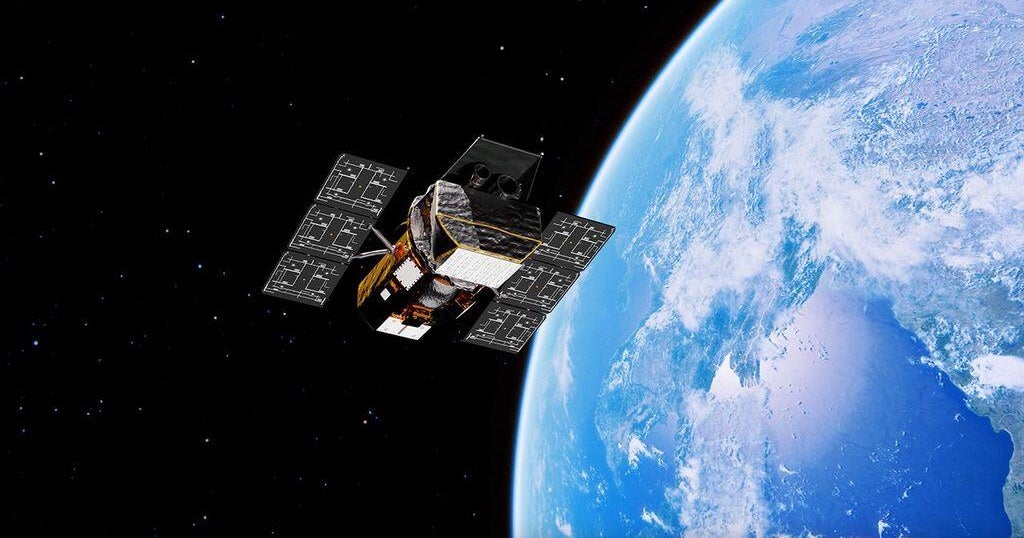
3,200-pound Swift space telescope plunges back to Earth after 22 years in orbit
Reentry followed failed rescue
NASA and the U.S. Space Force tracked Swift’s return. NASA forecast reentry around 3:30 a.m. EST on Nov. 4, with uncertainty extending 11 hours in either direction. NASA had estimated the chance of harm to anyone on Earth at about 1 in 2,100, describing the risk as unlikely. The telescope had been cleared to return in August after the rescue effort faltered.
Robot could not reach Swift
NASA hired Katalyst Space in July to try to rescue the observatory. The company sent a three-armed robot, Link, to reposition it, but the robot encountered trouble soon after launch and could not get within seven miles of Swift.
Link itself fell back to Earth in September. Swift’s planned two-year mission had continued until last month, when solar activity ultimately pulled the telescope down.
A lasting role in astronomy
Swift detected more than 2,000 gamma-ray bursts and 1,400 exploding stars. NASA also called it a “first responder” for the Hubble and Webb space telescopes, sending alerts so those and other observatories could investigate events in greater detail. NASA said Swift expanded knowledge of phenomena including active galaxies powered by supermassive black holes, X-ray flares from stars, supernovae, comets and asteroids in the solar system.
Mission team anticipated the end
John Nousek, an astronomer at Pennsylvania State University who led Swift’s control team, said the team had known the day would come before the telescope launched. Nousek said that in low-Earth orbit, objects eventually come down, and described the end as catastrophic.
Key points
- Swift returned to Earth after more than 22 years in orbit.
- The telescope outlasted its planned two-year mission and operated until last month.
- A rescue attempt failed when the Link robot could not approach within seven miles.
- Swift observed thousands of cosmic events and alerted Hubble and Webb to follow-up observations.