

Ranked choice voting explained as voters in 2 states rank congressional picks
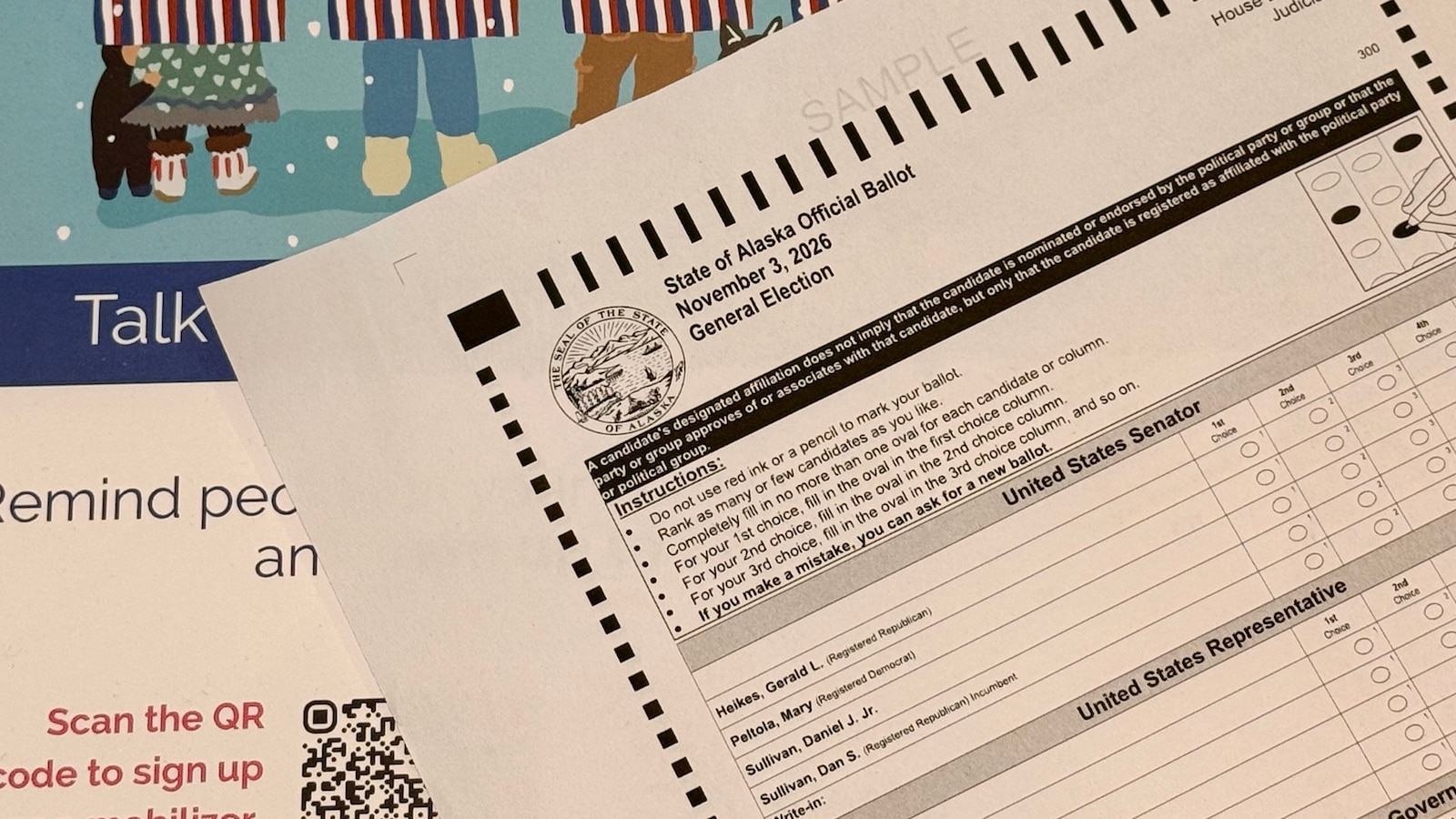
How ranked choice works
Voters list candidates in order: first, second, third and so on. A candidate who receives more than 50% of first-choice rankings wins. If no one reaches a majority, the candidate with the fewest first-choice votes is eliminated. Those ballots are then counted for the next-ranked candidate, and the process continues until a candidate has a majority.
Where voters use the system
Maine has used ranked choice voting since 2018, after voters approved it for congressional races. A similar referendum for state elections passed two years earlier. Alaska adopted the system in 2020 for local, state and federal elections. On Nov. 3, voters there will decide in a ballot question whether to repeal it.
Debate over its effects
Supporters say voters can rank a preferred candidate even when that person may not win, while also backing another candidate they consider a good choice. Ismar Volić of Wellesley College said this can let voters express support for more than one candidate.
Volić said the method can reduce the effect of a spoiler candidate, but does not eliminate it. In Alaska’s 2022 special election for its sole congressional seat, Mary Peltola beat Sarah Palin and Nick Begich after the ranked-choice count.
Campaigns and changing rules
David Kimball, a political science professor at the University of Missouri at St. Louis, said candidates have adjusted their campaigns to seek voters’ second- and third-choice rankings. In New York’s 2025 Democratic mayoral primary, Zohran Mamdani and Brad Lander endorsed each other and urged supporters to rank the other second.
Mamdani received most of Lander’s 120,634 transferred votes and beat former Gov. Andrew Cuomo by more than 130,000 votes, according to election data. Meanwhile, opposition to ranked choice voting has grown: 19 states have banned the method, including through laws passed by 18 state legislatures.
Key points
- Voters rank candidates, and transferred votes help determine a majority winner if no one leads initially.
- Maine and Alaska use ranked choice voting for elections that include congressional races.
- Alaska voters will decide Nov. 3 whether to repeal the system.
- Nineteen states have banned ranked choice voting.