

Germany’s long search for a nuclear waste dump narrows to 5% of its land
A search with few precedents
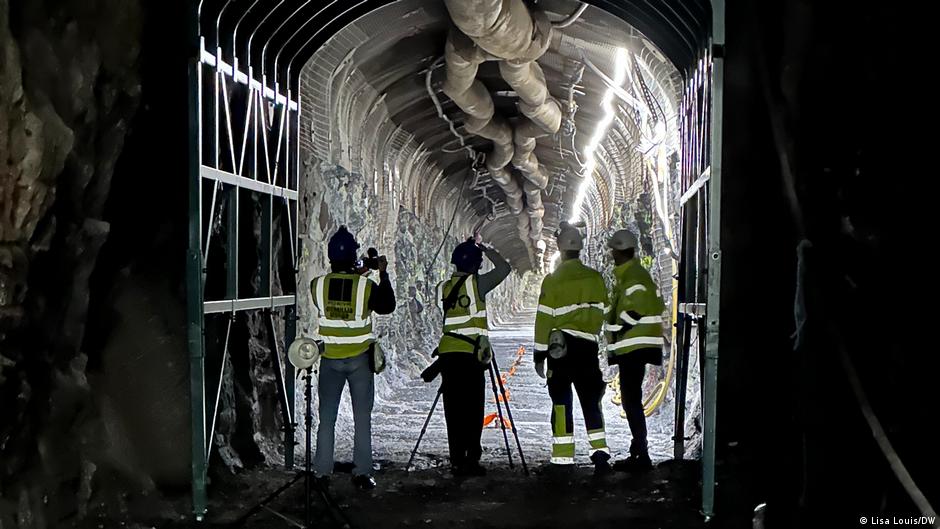
Finland recently became the first country to approve a repository for radioactive nuclear waste. The facility is 400 meters underground on an island in western Finland, at the site of one of the country’s two nuclear power plants. Its development took around 40 years.
The challenge remains unresolved in nearly all countries that operate or once operated nuclear power plants. Around 31 countries have done so, but few have a final destination for their radioactive waste. The costs are expected to reach many billions of euros.
Germany narrows its options
Germany’s Federal Company for Radioactive Waste Disposal, known as BGE, has spent almost ten years looking for a suitable underground site. This week, it said 5% of the country’s land, across 11 of its 16 states, remains under consideration.
The agency is consulting geologists, nuclear experts and physicists, as well as citizens and politicians. Germany hopes to identify a final repository site by 2050, and Environment Minister Carsten Schneider wants to consider whether the process can be accelerated.
Ministry spokesperson Stephan Gabriel Haufe said Germany was among the leading countries in the search. He also said Russia, the United States, the United Kingdom and Japan had not advanced their procedures as far as Germany.
Waste remains in interim storage
Germany decided in 2011, after the Fukushima reactor disaster in Japan, to phase out commercial nuclear power. Its last nuclear power plant closed in 2023, but the waste remains in interim storage, mostly at or near the places where it was produced.
Those locations include 19 former nuclear power plants now being decommissioned, along with several research facilities. The waste will remain in Germany, according to the account of the search.
Safety demands span millennia
Spent fuel elements remain radioactive for many thousands of years, and experts have long supported storing them deep underground. BGE spokesperson Dagmar Dehmer said safety must be demonstrated over an exceptionally long period: 100,000 years in Finland and one million years in Germany, Switzerland and France.
The selection process examines whether rock formations can remain stable at a depth of 400 meters and whether groundwater could be contaminated. A suitable site would have a rock layer around 100 meters thick as a natural barrier; possible formations include clay, granite and rock salt.
As requirements tighten, fewer candidate sites remain. Proximity to major cities is considered later, and communities may be reluctant to host a radioactive waste repository.
Key points
- Germany is considering sites across 5% of its land in 11 states.
- The country aims to identify a final repository site by 2050.
- Germany’s nuclear waste remains in interim storage after the last plant closed in 2023.
- Finland has approved the first nuclear waste repository, after a project lasting around 40 years.