Fuel, housing and school frustrations are fueling social unrest and protests across Europe, from France to Albania
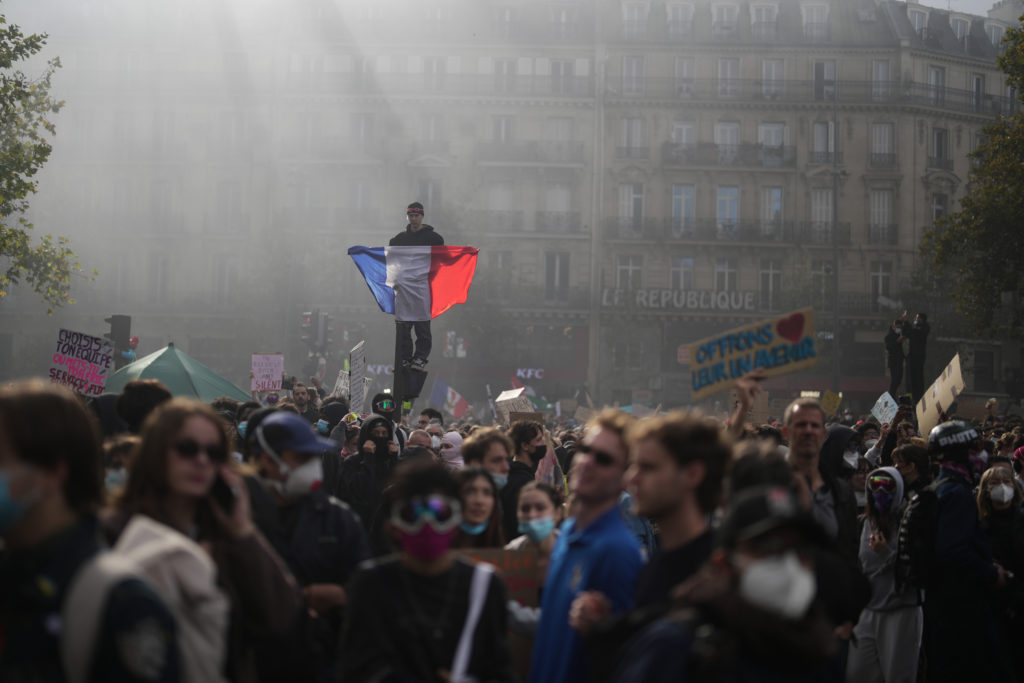
Grievances spill into streets
Weeks of demonstrations have brought crowds to major European cities. Protesters have raised concerns about living costs, public services, schools and housing, while some rallies have involved violence and arrests.
María Silvestre, a sociology professor at the University of Deusto in Spain, said young Europeans feel uncertainty and a lack of control. She said that when problems converge, a spark can channel discontent and send people into the streets.
The protests come as France, Italy and Spain approach pivotal elections. Far-right parties have made electoral gains in Germany, and Europe is also at a critical point in its support for Ukraine.
France protests widen
In France, high school students have blockaded schools and demonstrated for more than three weeks. They say schools, particularly in lower-income neighborhoods, lack staff and are in poor condition.
The CGT labor union and other activists joined after students paused for fall break. The movement has expanded to include concerns about rising living costs and public services.
Hundreds of thousands marched peacefully, but weekend unrest brought 2,400 arrests and serious disturbances. Looting was reported in Paris, Marseille, Lyon and Bordeaux; in Limoges, flames engulfed the 19th-century City Hall, nearly destroying it. Schools were also set on fire, and hundreds were injured amid firebombs and tear gas.
Political responses and blame
President Emmanuel Macron condemned the weekend violence, accusing far-left activists of trying to create chaos by attacking buildings and police. In a televised address, he said those responsible for looting would have to pay for damage and those seeking to bring down the Republic would be held accountable.
President Donald Trump blamed immigrants for the destruction in France in a post on his Truth Social platform, calling for borders to be closed. French authorities and police have not blamed immigrants.
The article describes protests as broad-based and says masked, black-clad agitators have contributed to violence. It also notes that right-wing politicians have used the unrest to advance their arguments.
Housing pressure in Iberia
In Madrid, elementary and secondary schoolteachers began an indefinite strike last week, seeking better pay and working conditions. Teachers elsewhere in Spain have also staged walkouts this year.
Tents have stood for weeks in Madrid’s Puerta del Sol as protesters call for stronger renter protections and respond to rising housing costs. The encampment began after the eviction of Maricarmen, an 87-year-old woman who later died while hospitalized; smaller camps followed in other Spanish cities.
Housing demonstrations have also appeared in Lisbon and Porto, as well as Barcelona. Spain’s government approved affordable-housing measures, but they lacked parliamentary support; Prime Minister Pedro Sánchez announced a snap election for November, and a general strike was called for that month, the first in 14 years.
Key points
- Protests have focused on fuel costs, schools, public services, housing and the rising cost of living.
- France saw 2,400 arrests during weekend unrest, alongside looting, fires and injuries.
- Housing protests and tent camps have appeared in Spain and Portugal.
- A Spanish professor linked young people’s demonstrations to uncertainty and a lack of control.