Why middle income americans are feeling the squeeze as savings dwindle
Emergency savings remain scarce
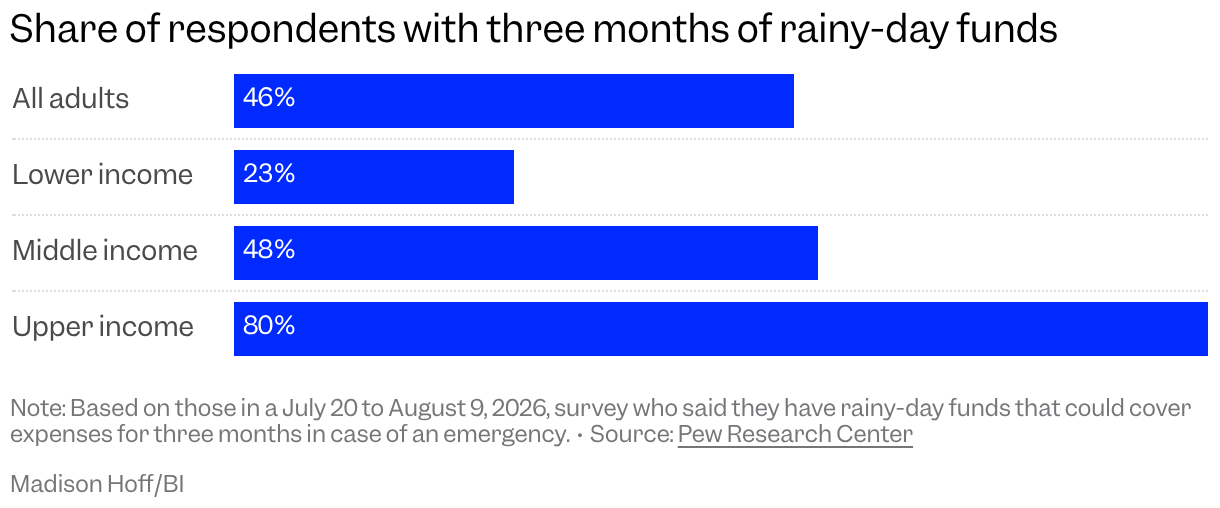
Middle earners are defined as people making between $50,700 and $152,000, adjusted for family size and local living costs. Just over half say they lack rainy-day funds to cover three months of expenses in an emergency.
In the past year, 47% of middle-income earners said they were able to save money. The share among lower-income earners was 24%. Across income tiers, most respondents said they had reduced spending on extras such as dining out or streaming services.
Inflation adds to household pressure
The consumer price index inflation rate rose to 3.7% in September from 3.4%, exceeding the 3.6% forecast. Inflation-adjusted wages have also fallen for six months. Pew found that 71% of lower-income US adults struggled with at least one basic necessity in the past year, including medical care or rent or mortgage payments. The figures were 39% for middle-income adults and 13% for upper-income adults.
Sentiment shifts toward lower earners
Middle-income consumers' sentiment, once more like that of higher earners, now more closely resembles the outlook among lower-income people. The change is another sign of tougher economic conditions for the middle class. AFL-CIO President Liz Shuler said, “Working people are living on the edge, working longer and harder than ever for less money.” She added that people are angry about filling their tanks and worried about winter heating bills.
Key points
- Just over half of middle-income Americans lack savings to cover three months of emergency expenses.
- Forty-seven percent of middle-income earners said they saved money in the past year, compared with 24% of lower-income earners.
- Inflation reached 3.7% in September, while inflation-adjusted wages fell for six months.
- Middle-income consumer sentiment now more closely aligns with that of lower earners.