Eva Mamlok: Berlin Square Renamed for Jewish Anti-Fascist Resistance Fighter
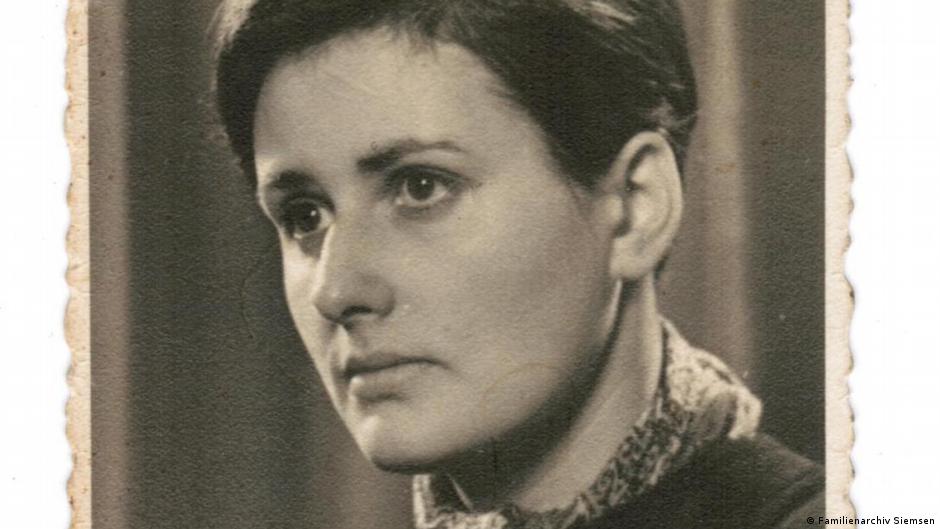
Resistance from her teenage years
Born in Berlin on May 6, 1918, Mamlok grew up in a Jewish family that ran a wholesale wine business. She was 14 when Hitler became chancellor in 1933 and belonged to the Socialist Workers' Youth.
After authorities suppressed the organization, she joined underground resistance. Inge Berner, the sole survivor of Mamlok’s later group, testified that Mamlok painted “Down with Hitler” on a department store roof at Blücherplatz as a teenager.
Mamlok was arrested in November 1934 after joining a commemoration for socialist leaders Rosa Luxemburg and Karl Liebknecht at Friedrichsfelde Cemetery. Officials labeled her views hostile to the state and held her without trial at the women’s concentration camp in Moringen until May 1935.
A network of women resistors
In 1940, compulsory labor at the Berlin firm F. Butzke Schrauben-Industrie brought Mamlok together with other women opposed to Nazism. They formed an informal network later known as the Eva Mamlok Group, distributing leaflets and writing slogans critical of Hitler.
The group also shared banned books, including works by Thomas Mann and Lion Feuchtwanger. Cultural researcher Alexandra Weltz-Rombach said the library now standing on the renamed square made the location a fitting symbol of resistance and books.
Deportation and death
Mamlok had a daughter, Tana, in 1939; the father’s identity is unknown. Tana was placed in a Jewish orphanage in Berlin, deported to Auschwitz-Birkenau in 1942 and murdered.
Berner’s testimony says Mamlok continued resistance there, arranging for a contact in Berlin to send a cake with a miniature camera concealed inside. In October 1944 she was transferred to Stutthof, where she died in December.
A new name in Kreuzberg
The Berlin square Blücherplatz will become Eva-Mamlok-Platz on October 16. It is in Kreuzberg, and Berlin’s Central and Regional Library stands on the site. The renaming is intended to make more people familiar with Mamlok’s actions. Her resistance began as a teenager and continued through persecution, imprisonment and deportation.
Key points
- Berlin will rename Kreuzberg’s Blücherplatz Eva-Mamlok-Platz on October 16.
- Mamlok joined underground resistance after the Socialist Workers' Youth was suppressed in 1933.
- The Eva Mamlok Group distributed anti-Nazi leaflets, wrote slogans and shared banned books.
- Mamlok died at Stutthof in December 1944, after deportation to the Riga Ghetto in 1942.