MIT astronomers catch a star in a feast that could last billions of years
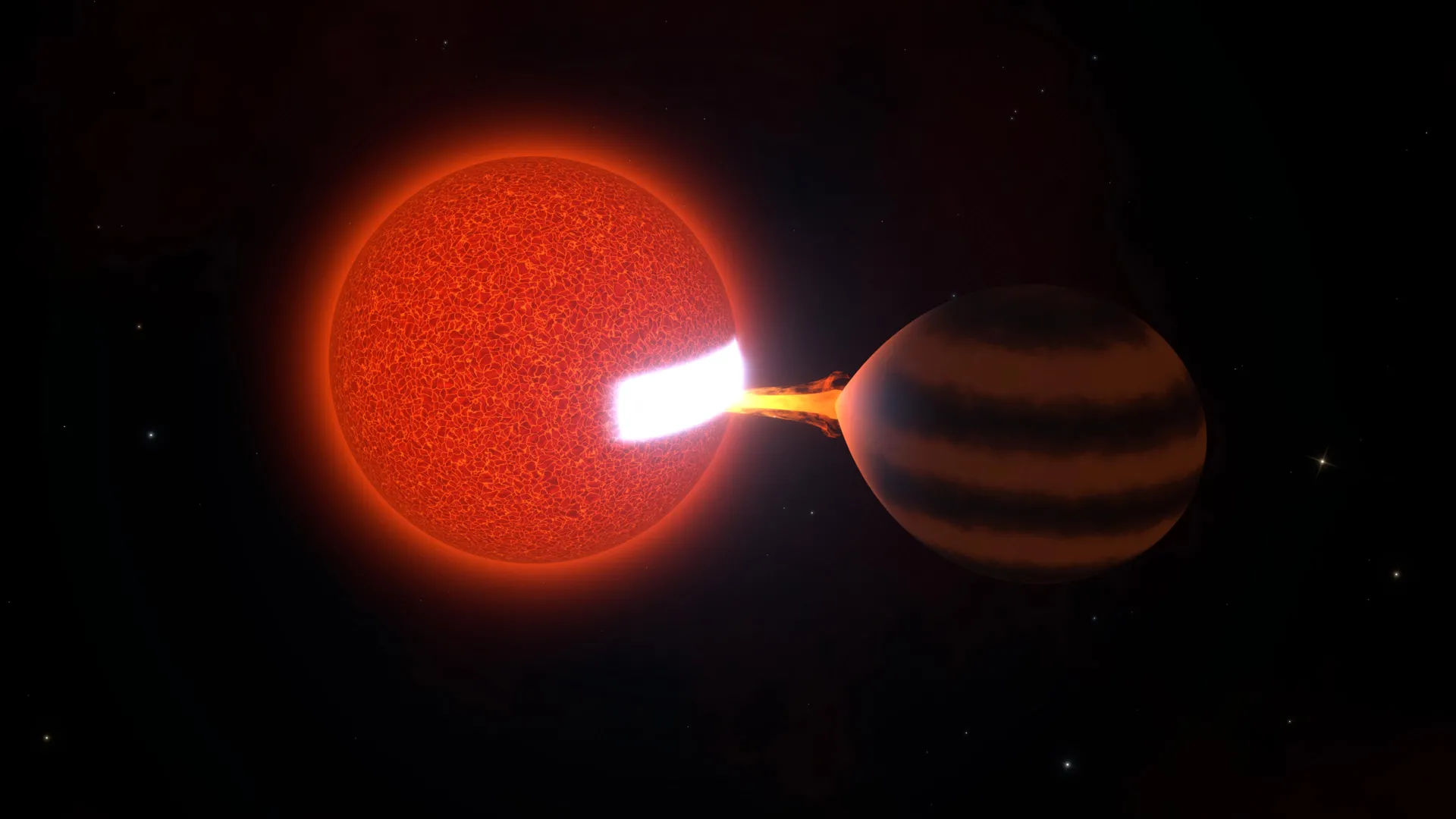
The system, called ZTF J0440+2325, is in the Milky Way. A low-mass star is gradually taking material from its nearby brown dwarf companion rather than consuming it all at once.
Brown dwarfs are heavier than typical planets but lack the mass needed to sustain the hydrogen fusion that powers ordinary stars. The team says this is the first observed case of a low-mass star steadily feeding on another low-mass object.
The transfer is unusually slow. It may continue for hundreds of thousands of years, and possibly billions, offering an example between stable planetary orbits and rapid stellar engulfment.
The finding was reported by an international team led by MIT researchers in Nature Astronomy on October 5. The discovery began when Kevin Burdge noticed an unusual brightness pattern in observations from the Zwicky Transient Facility, which repeatedly surveys the sky.
The result suggests that a star’s interaction with a nearby companion need not end in a sudden swallowing event. The article does not describe a next step for the research.
Key points
- ZTF J0440+2325 is about 300 light-years from Earth.
- A low-mass star is steadily taking material from a brown dwarf.
- The slow process could persist for hundreds of thousands of years or possibly billions.