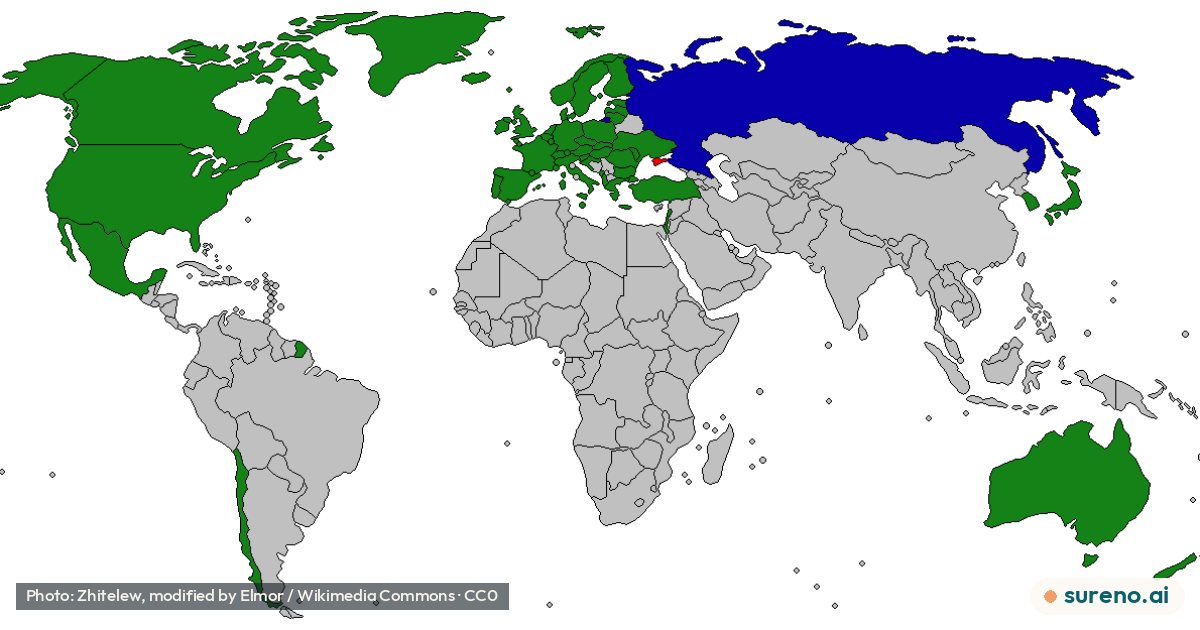
How Trump’s Order Pauses New Russia Sanctions
The order uses a waiver in a new sanctions law, but the available reports leave important details about its scope and legal effects unanswered.
The short version
- Trump signed an executive order waiving the application of sanctions, restrictions and duties under the new Graham Act, citing US national interests. 2
- The law was signed by Trump in September and was due to take effect on Sunday; the order means the measures will not take effect as planned. 12
- The law includes possible tariffs of up to 100% on major purchasers of Russian oil and gas, as well as measures targeting Russian officials, banks and tanker operators. 1
- The White House said it sent Congress a certification, but the reports do not explain the detailed reasoning or how long the waiver will last. 2
How did Trump waive the new Russia sanctions?
Trump used an executive order to waive the application of measures in a new law known as the Graham Act. An executive order is a written direction from a US president about how the federal government should act. The order says the waiver is being made in the national interests of the United States. 2
This was not a rejection of the bill before it became law. Trump signed the sanctions bill in September, and it was due to take effect on Sunday. The order instead prevents the covered sanctions, restrictions and duties from taking effect as planned. 12
The available reporting describes the action as a waiver. It does not provide the full text of the law or order, or spell out the legal steps in detail. So it is safest to say that the order invokes a waiver provided for in the law, rather than claim that it cancels the law or permanently removes its sanctions. 2
What sanctions were supposed to take effect?
The law aimed to put pressure on Russia over its war against Ukraine. It gave the president broad powers to impose tariffs of up to 100% on the five largest purchasers of Russian oil and gas. China and India were identified as especially significant buyers. 1
The law also included sanctions aimed at Russian President Vladimir Putin, senior Russian government figures, banks and other financial institutions. It addressed Russia’s so-called shadow fleet: tankers used to get around existing sanctions. 1
The sources do not list every covered person, company or transaction, and they do not give a complete account of which individual measures the order has put on hold. The reports support a general description of the law’s targets, not a full guide to who would have been affected. 12
What does the order mean for the law Congress passed?
The immediate effect reported is that the new sanctions will not take effect on schedule. The distinction matters: the law was passed and signed, while the president has now used a waiver to hold back its application. 12
The reports do not establish that the order repeals the law, changes its text, or settles how far presidential authority extends. They say Trump cited a waiver and submitted a certification to Congress. Without the full law and order, it would be misleading to describe this as a final legal ruling about the balance of power between Congress and the president. 2
The law’s name refers to the late Republican Senator Lindsey Graham of South Carolina, who died on July 11, according to the BBC report. The BBC says he had been a strong supporter of Ukraine in Washington. 1
Why did Trump say the waiver was in the national interest?
Trump’s order says that applying the sanctions at this time would not be in the US national interest. The White House did not immediately explain how pausing them would serve that interest, according to DW. It did say a report explaining the decision had been submitted to Congress. 2
The timing has drawn attention because Trump had recently said the United States would buy Russian diesel in an effort to bring down energy prices. The BBC and DW both connect the sanctions decision to that statement. The BBC also reports that the plan prompted a bipartisan backlash among lawmakers. 12
Those details provide context, but they do not prove why the administration made the waiver decision. The public explanation reported by the sources is the national-interest justification in the order; a fuller account of the reasoning is not included in the available material. 2
What should readers watch for next?
The key questions are what the submitted report says, which specific sanctions are covered by the waiver, and whether the pause has a defined end point. The supplied reports do not answer those questions. 2
The reports also do not describe any later congressional response or a court decision about the order. For now, the clear point is narrower: the new measures were not due to take effect as planned after Trump signed a waiver order citing national interests. 12
This is a change in US policy toward Russia, but it does not mean that every existing US sanction on Russia has been lifted. The sources describe a waiver of measures under this particular new law, not a general cancellation of other sanctions. 12
What we don't know yet
- Which specific provisions and targets are covered by the waiver.
- How long the waiver will remain in effect, or what could end it.
- What reasoning the report submitted to Congress contains.
- Whether Congress or a court will challenge or further clarify the order.
Share this explainer
Get this every day, on every new tab
Sureno Browser brings the day's stories, explained simply, to your start page.
Questions people ask
Did Trump cancel all US sanctions on Russia?
What is the Graham Act?
It is the name used in the reports for a new US sanctions law aimed at Russia over its war against Ukraine. It included possible tariffs on major purchasers of Russian oil and gas and measures targeting Russian officials, financial institutions and tanker operators. 1
Why did Trump pause the Russia sanctions?
Trump’s order cited US national interests. The White House did not immediately explain how pausing the measures served those interests, though it said a report explaining the decision had been submitted to Congress. 2
Can a US president use an executive order to override Congress?
The reports say Trump used an order to invoke a waiver under the new sanctions law. They do not provide enough detail to determine whether the action overrides Congress or how courts might assess the president’s authority. 2
Sources
- Trump waives several Russian sanctions as new US law takes effect — BBC News
- Trump puts new Russia sanctions on hold — dw.com, 2026-10-17
Free tools for this
They run in your browser. Nothing is uploaded and there is nothing to sign up for.
More to read
 WorldWho Controls Starshield Speed Limits in Ukraine?Oct 15, 2026 · 3 min read1 view
 WorldWhat the White House Press Secretary Does—and Why It MattersOct 17, 2026 · 3 min read0 views
 WorldWhat the EU Summit Could Mean for Support for UkraineOct 16, 2026 · 3 min read0 views
 WorldWhy Trump Is Again Calling Canada the 51st StateOct 16, 2026 · 3 min read0 views
 SpaceNASA's DAVINCI Venus Probe Explained: Built to Survive HeatOct 2, 2026 · 6 min read2 views
 WorldWhy Ukraine’s Strikes on Russian Oil Refineries MatterOct 16, 2026 · 3 min read0 views
 WorldWhy Ships Still Transit the Strait of Hormuz Despite RiskOct 16, 2026 · 3 min read0 views
 WorldWhat We Know About Donors to Trump’s White House BallroomOct 16, 2026 · 3 min read0 views
 WorldWhy Former FBI Employees Are Suing the Justice DepartmentOct 16, 2026 · 4 min read0 views
 SportsDaniil Medvedev Wins Hangzhou and Eyes Season RevivalOct 3, 2026 · 4 min read1 view