

What the Border Wall Ruling Means for Big Bend
The ruling lets construction resume while a legal challenge continues, but it does not settle the dispute over the project’s environmental and historic effects.
The short version
- The Supreme Court lifted a lower-court order that had temporarily stopped construction in the Big Bend region, allowing the Trump administration to proceed while litigation continues. 12
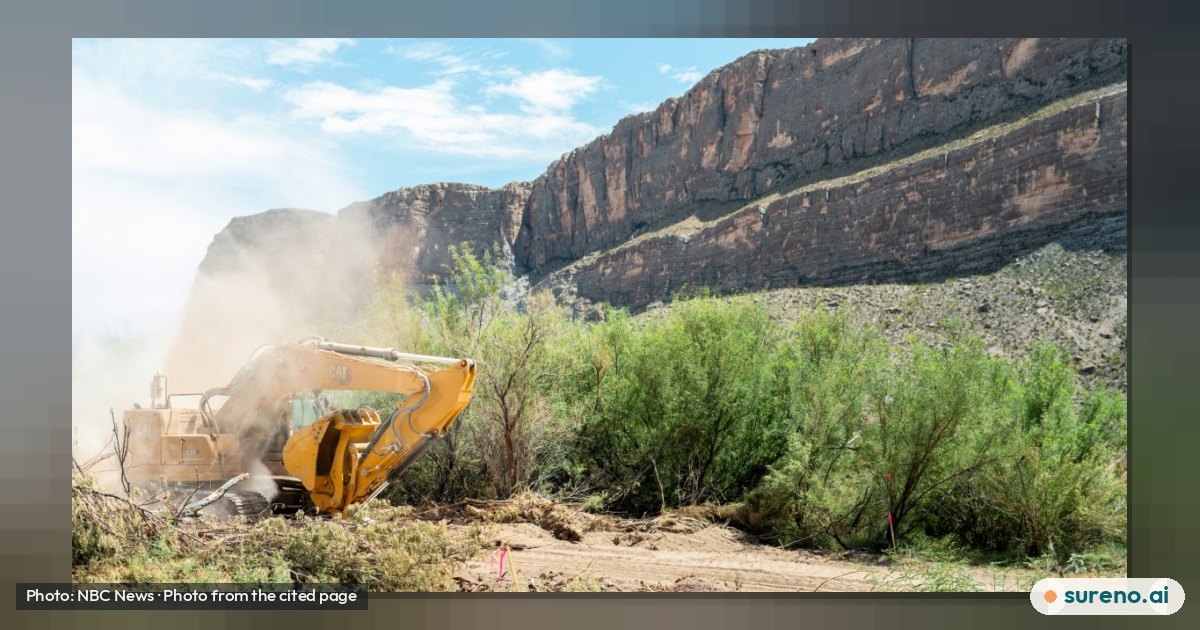
- The plans include a physical wall and other infrastructure; the government says the construction in question would cover 341 miles. 13
- The court’s decision addressed whether the lower-court order could stand, not whether the project will harm the environment or historic sites. 12
- Justice Ketanji Brown Jackson was the only justice reported to dissent. 12
What did the Supreme Court allow in Big Bend?
On November 9, 2026, the Supreme Court lifted a federal district court order that had temporarily blocked construction of border infrastructure in the Big Bend sector of southwest Texas. The administration can therefore resume work while the legal case proceeds. The ruling did not end the lawsuit or make a final decision on every dispute about the project. 12
The plans include physical barriers, access roads and vehicle barriers, according to reporting on the administration’s plans. The government says the section at issue would involve 341 miles of construction. That figure describes the construction in question; the wider Big Bend sector covers more than 500 miles of the southern border, according to CBS News. Those are different measurements and should not be treated as the same thing. 123
Why had construction been paused?
A federal judge in Texas had issued an injunction, a court order temporarily stopping construction while the case was being considered. Environmental advocates and local challengers argued that the project could damage the region’s environment and historic sites. Some challengers said construction would reduce their ability to use and enjoy the area. 12
The dispute also concerns waivers issued by the Department of Homeland Security. NBC News reported that three waivers were issued in February, May and July, by then-Secretary Kristi Noem and her successor, Markwayne Mullin. The sources available here do not give the full text of those waivers or all the legal arguments against them. 1
Why did the court lift the order?
In an unsigned, five-page decision, the Supreme Court said the federal judge lacked authority to issue the order. The court said the administration was extremely likely to prevail on that point and that the injunction impeded the government’s stated interests in border security and integrity. 12
The court also pointed to immigration law that allows the homeland security secretary to waive some environmental-protection and conservation requirements for border construction. In the court’s view, that law showed a preference for moving border construction forward despite the harms the challengers described. This was an assessment tied to the emergency request before the court; it does not establish that the challengers’ concerns about local effects are unfounded. 2
Justice Ketanji Brown Jackson was the only justice reported to disagree. She would have denied the Justice Department’s request for emergency relief. 12
What could the ruling mean for Big Bend?
The immediate effect is practical: construction is no longer blocked by the lower court’s injunction while the legal dispute continues. The project’s planned infrastructure could affect parts of a remote region that includes Big Bend National Park. The available reports describe possible environmental and historic-site concerns, but do not establish the extent of any eventual effects. 123
For people who visit or live in the region, the ruling is not a final account of what will be built, where all work will take place, or what changes people may experience. The sources say the administration can resume construction, but do not provide a complete construction schedule or a detailed map of the work. 12
What is still unresolved?
The legal challenge is continuing. The Supreme Court’s action removed the temporary barrier to construction; it did not, based on the reports available, resolve every claim about the waivers, the project’s local effects or the challengers’ ability to use and enjoy the area. 12
The reports also do not establish exactly when work will resume, the precise locations of each planned structure, or what environmental and historic assessments may follow. Those details may become clearer as the case and construction plans develop. As of November 10, 2026, the clearest takeaway is that construction may proceed during the litigation, not that the dispute is over. 123
What we don't know yet
- When construction will resume and how quickly it will proceed.
- The exact locations and final design of the planned barriers, roads and vehicle barriers.
- How the ongoing case will resolve the challenges to the waivers and the project.
- What specific environmental or historic effects construction will have.
Share this explainer
Get this every day, on every new tab
Sureno Browser brings the day's stories, explained simply, to your start page.
Questions people ask
Did the Supreme Court approve the entire Big Bend border wall?
Is construction in Big Bend still allowed during the lawsuit?
Will the border wall go through Big Bend National Park?
What kind of border construction is planned in Big Bend?
Did the Supreme Court decide whether the project will harm the environment?
Sources
- Supreme Court paves way for Trump to build a section of his border wall in the Big Bend area of Texas — NBC News, 2026-11-09
- Supreme Court allows Trump administration to resume border wall construction in Big Bend region — CBS News
- Supreme Court lifts pause on border construction in Big Bend, Texas — ABC News
More to read
 WorldWhat the Reported U.S. Strikes on Qeshm Island Could MeanNov 3, 2026 · 4 min read0 views
 WorldWhat the Supreme Court’s California Ballot Ruling MeansNov 3, 2026 · 4 min read0 views
 WorldSupreme Court Rejects Bid to Set Aside California BallotsNov 3, 2026 · 4 min read1 view
 Travel & PlacesQantas Sydney–London Flights: What Changes in 2027?Nov 10, 2026 · 3 min read0 views