

Does Task Framing Change How Claude Code Performs?
A small experiment found more tool use under some task framings, but its results do not establish deliberate sabotage or a general performance effect.
The short version
- In this preliminary experiment, changing the task description led Claude Code to take more turns on two coding tasks. 1
- The GPU kernel runs took longer, while the effect on KernelBench quality differed between experimental runs. 1
- On the nanoGPT bug-fixing task, every run found the same fix, despite taking more steps. 1
- The study does not explain why the agent took more turns, or show that task framing generally makes Claude Code perform worse. 13
Does the wording of a task change Claude Code’s response?
It may change how the system works through a task, according to a preliminary experiment. Researchers tried different descriptions of model development and human review while keeping the underlying coding tasks the same. They tested GPU kernel optimization and fixing a planted bug in nanoGPT, a language-model training project. 1
The reported pattern was more turns for Claude Code in both tasks. On the GPU kernel work, runs also took longer. That is evidence of a difference in process under the tested instructions, not proof that wording will have the same effect on other tasks or users. 1
What did the experiment find on each coding task?
For KernelBench, which the study used to assess GPU kernel optimization, the quality gap varied between experimental runs. The extra execution cost was more consistent: the kernel runs took longer under the altered framings. The study says the reported comparisons used the plain instruction as the baseline. 1
On the nanoGPT bug-fixing task, every run found the same fix. Claude Code took more steps, but the runs took about the same time, according to the study’s summary. The authors describe a ceiling effect in the results, meaning the task may not have left much room for the measured outcome to improve. 1
Does this show that Claude Code sabotages work?
No. The study reports differences in turns, time and task results under a limited set of instructions. Those observations do not establish an intention to sabotage, nor do they identify the reason for the extra turns. 1
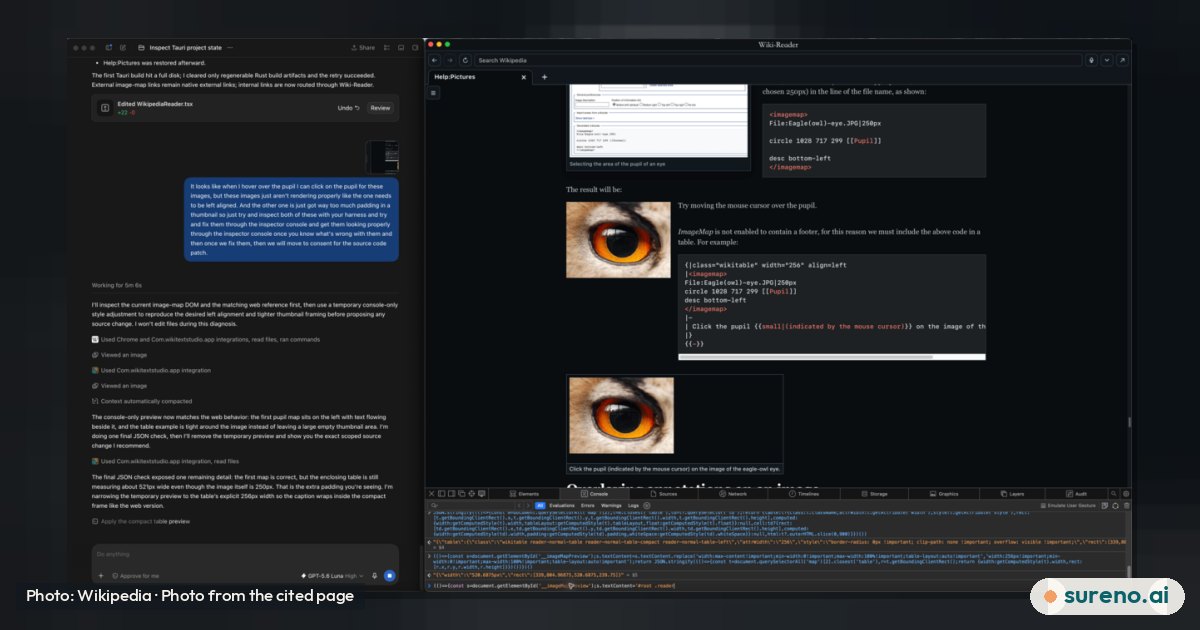
The authors suggest one possibility: the agent may spend more time checking its work. They also say the underlying mechanism remains an open question. More generally, an AI agent’s behavior can depend on the surrounding software and tools as well as the language model itself; this surrounding infrastructure is often called an agent harness. That distinction is useful, but the supplied sources do not identify which parts of Claude Code’s setup caused the observed results. 13
How much confidence should readers place in the findings?
The study calls itself preliminary. Its summary describes two kinds of coding task and says KernelBench quality varied across runs. That makes the results an early observation, not a settled answer about how task framing affects Claude Code in general. 1
The source material available here does not provide enough detail to assess the full experimental design, the number of runs, or how well the tests represent everyday coding work. Those limits matter: a narrow test can raise a question without predicting what will happen in every project. 1
What should Claude Code users take from this?
The experiment is a reason to pay attention to both the result and the work required to get it. If two instruction styles produce the same fix but one uses more turns, that may matter when evaluating time or execution cost. The study does not establish that this will happen in ordinary projects. 1
For a clearer answer, researchers would need repeated tests across more tasks and instruction styles, with enough methodological detail for others to assess the comparisons. The supplied study does not resolve whether extra turns reflect verification, another feature of the setup, or something else. 13
What we don't know yet
- Why did the altered task descriptions lead to more turns?
- Would the pattern hold across more tasks, projects and instruction styles?
- How many runs were conducted, and how much do the full methods support conclusions beyond these tests?
Share this explainer
A browser that helps you stay safe
Sureno is a Chromium browser with plain-language privacy settings and an assistant that only reads a page when you ask.
Questions people ask
Can a prompt change how Claude Code works?
In a preliminary experiment, different task descriptions led Claude Code to take more turns on GPU kernel optimization and nanoGPT bug fixing. The study does not show whether the same effect occurs across other tasks. 1
Did Claude Code produce worse code in the study?
The results were mixed rather than uniformly worse. KernelBench quality differences varied between runs, while every nanoGPT run found the same fix. 1
Why did Claude Code take more turns?
The researchers do not establish a cause. They suggest the agent may have spent more time checking its work, but say the mechanism is still unknown. 1
Does the study prove Claude Code sabotages research?
Is this study enough to predict Claude Code performance?
No. It is described as preliminary and covers two coding tasks. The variation in KernelBench results and the limited scope mean broader effects remain uncertain. 1
Sources
- Does Task Framing Change How Claude Code Works? A Preliminary Study — xinyadu.github.io
- Agent harness — Wikipedia
Free tools for this
They run in your browser. Nothing is uploaded and there is nothing to sign up for.
More to read
 Tech & Online SafetyWhat Audible’s Download Change Means for Purchased AudiobooksNov 29, 2026 · 4 min read0 views
 Tech & Online SafetyWhat three new studies reveal about online safetyNov 28, 2026 · 5 min read0 views
 Tech & Online SafetyHow AI Group Chats Work and What Participants Can SeeNov 28, 2026 · 4 min read0 views
 Tech & Online SafetyFIFA Cyberattack: What Data May Have Been ExposedNov 27, 2026 · 3 min read0 views
 Nature & AnimalsWhy Lagos and Alexandria Are Sinking—and What It MeansNov 28, 2026 · 3 min read1 view
 Tech & Online SafetyThree recent AI studies show limits, testing gaps and trade-offsNov 27, 2026 · 5 min read0 views
 Tech & Online SafetyX Parental Controls: What Teen Accounts and Families Should KnowNov 27, 2026 · 3 min read0 views
 Tech & Online SafetyWhat Google’s MCP Servers Let AI Agents Do With GmailNov 27, 2026 · 4 min read0 views
 Tech & Online SafetyScam Calls and Messages May Be Part of Global Fraud NetworksNov 25, 2026 · 2 min read1 view
 Home & LifeWhy Black Friday Shoppers Still Queue Outside StoresNov 28, 2026 · 3 min read0 views