

Pakistan plans to send troops to Saudi Arabia, bolstering defenses following Houthi attacks
Deployment details remain unclear
Pakistan’s military announced the deployment on Sunday, saying personnel would operate within Saudi territory under existing defense cooperation arrangements. It did not provide a troop count, schedule, length of service or specific duties.
The statement described the deployment as a way to improve Saudi defensive capacity amid new security concerns. It also renewed Pakistan’s commitment to protecting Islam’s two holiest mosques, in Mecca and Medina.
Attacks raise regional pressure
Saudi Arabia has faced Houthi missile and drone strikes, some deadly, as regional tensions have grown since the Iran war began in February after U.S. and Israeli strikes on Iran. The Houthis have also imposed a shipping blockade viewed as an extension of that conflict.
The Houthis control Yemen’s most populous areas, including Sanaa, while Saudi Arabia has backed the internationally recognized government in the country’s civil war. Fighting between the rebels and Saudi-backed government forces escalated this summer.
Defense pact and earlier support
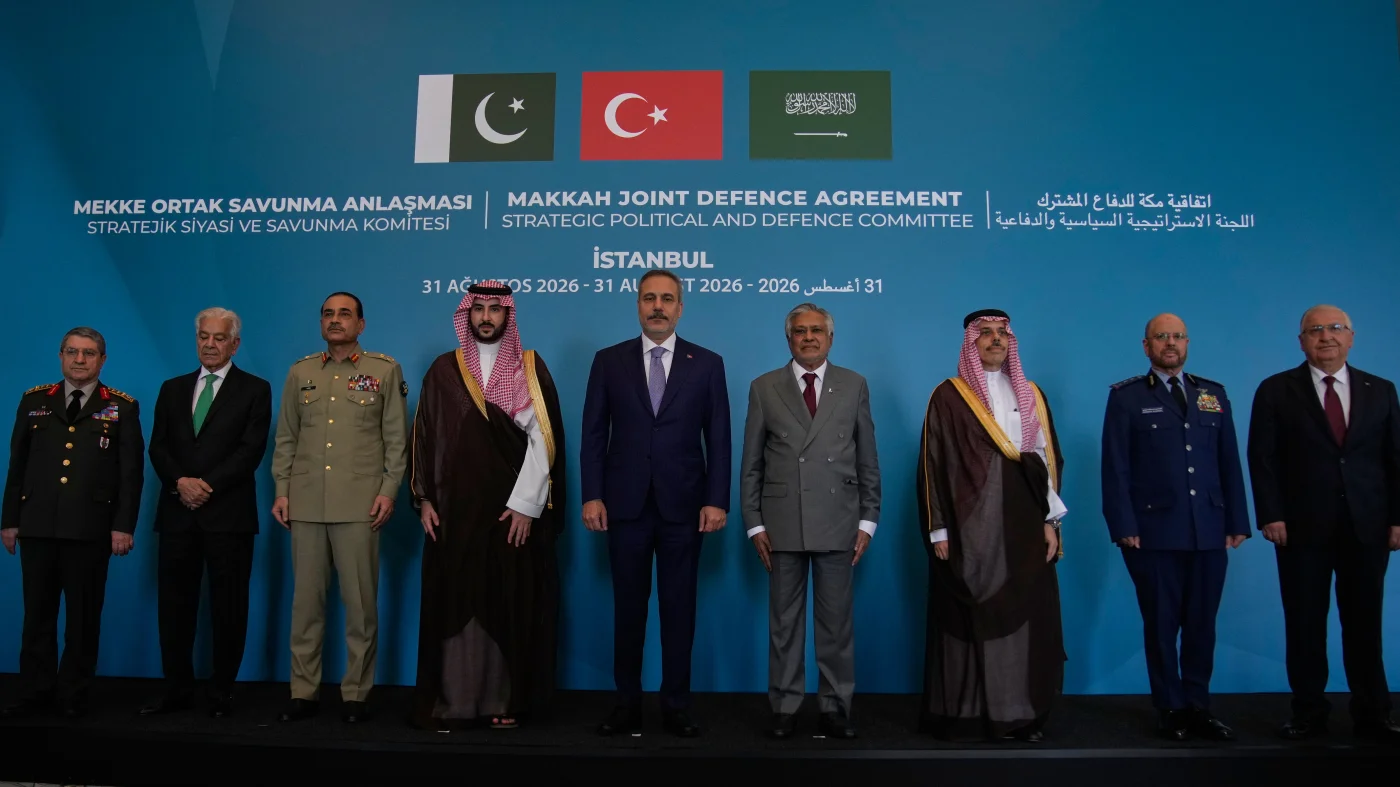
Pakistan, Turkey and Saudi Arabia signed the Mecca Joint Defense Agreement on Aug. 7. The pact says an attack on one member will be treated as an attack on all three, and the countries say it is defensive and aimed at no particular state.
Egypt said just over a month earlier that it would provide military support to Saudi Arabia, without publishing details. A regional official said Egypt would send air defense systems and aircraft, but no ground troops to Yemen.
Key points
- Pakistan will send troops to Saudi Arabia, but has not disclosed their number or arrival date.
- The deployment is intended to strengthen Saudi defenses amid Houthi missile and drone attacks.
- Egypt has also pledged military support, with air defense systems and aircraft reported as part of its assistance.