

Germany’s BSW rules against limiting ties with far-right AfD
Delegates reject proposed limits
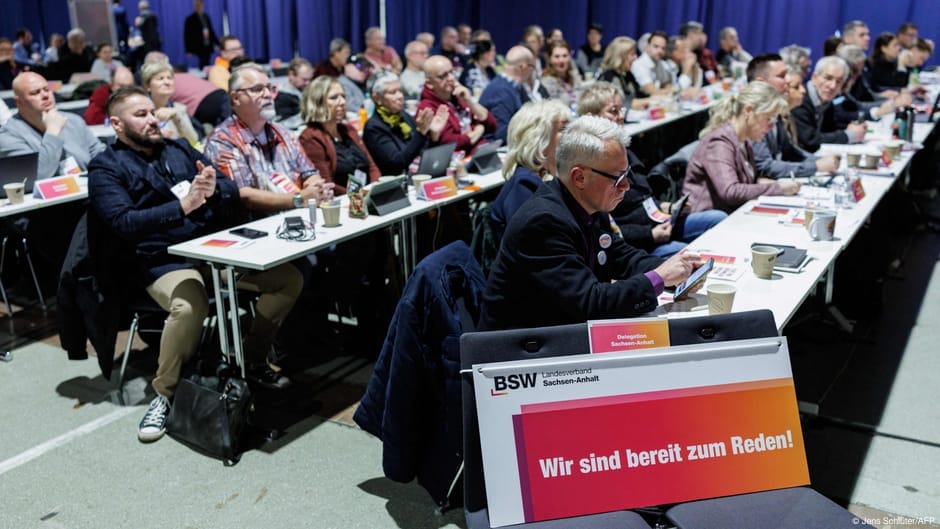
The Alliance for Social Justice and Economic Reason, known as BSW, voted against a motion seeking a clearer separation from the AfD at its party conference in Dresden. Most of roughly 600 delegates rejected the proposal, which had been submitted by several founding members.
The motion called for the party to rule out any de facto backing for a far-right government. BSW’s vote means it has not adopted a broader ban on cooperation with the AfD at the federal level.
Saxony-Anhalt raises stakes
The debate follows the AfD’s result in Saxony-Anhalt’s September state election, where it won 39 seats. In October, AfD lawmaker Tobias Rausch became the state parliament’s speaker, the first far-right politician to hold such a post in Germany since World War II.
The BSW holds five seats in the state legislature. Together, the two parties would command a majority of its 83 seats, putting their possible cooperation under close scrutiny.
Wagenknecht leaves options open
The model nevertheless allows joint motions and votes, and potentially written agreements. Wagenknecht said the AfD was not a long-term partner, while saying the BSW would consider possible majorities for peace, social improvements and changes to public broadcasting.
Some policy overlap remains
The AfD and BSW share some positions on Germany’s response to the war in Ukraine. Both are critical of military support for Kyiv and oppose or question sanctions against Russia, saying the measures harm Germany’s economy.
Key points
- BSW delegates rejected a motion seeking a clearer line against cooperation with the AfD.
- The parties’ five BSW seats and AfD seats could form a majority in Saxony-Anhalt’s 83-seat parliament.
- The Magdeburg Model rejects a formal coalition but permits joint votes and potentially written agreements.
- Wagenknecht says the AfD is not a long-term partner.