

Malaysia’s data-center boom tests how US tries to restrict Chinese offshore computing capacity
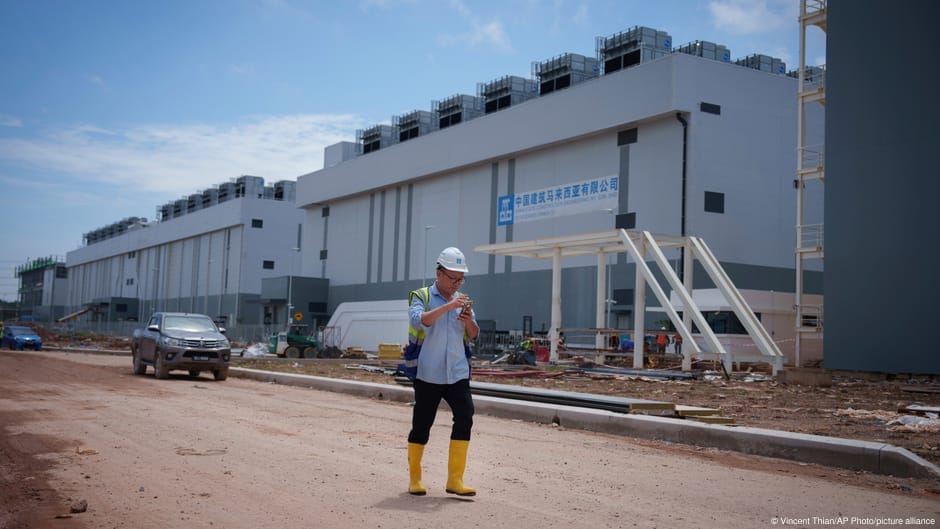
Malaysia’s data-center boom
Malaysia has attracted heavy investment in AI infrastructure. The article reports that about €510 billion ($559 billion) has been invested since February 2025, and says Fitch Solutions has opened 125 data centers in the country.
Johor, in western Malaysia, is a focal point: the Digital Ministry says 16 of 27 new data centers are located there. The government expects the projects to generate jobs, with up to 90% of those positions projected to go to local residents.
Low electricity prices and access to international submarine cables are among the advantages for operators. Amazon and Oracle have each invested $6 billion in the region, while Microsoft and Google have invested $2 billion apiece. Alphabet announced a further $15 billion in early November.
A route to computing power
US export controls have made high-performance chips, including Nvidia products, difficult to obtain in China. Washington has also tried to prevent sales of advanced lithography equipment made by Dutch firm ASML.
Some Chinese companies are responding by legally buying or leasing computing capacity overseas. This can give them remote access to US chips installed in foreign data centers, allowing them to develop AI models outside China.
Estimates and uncertainty
The institute said overseas data centers hosting US AI chips were an important source of computing for China, but difficult to quantify. Customers and capacity use are often not disclosed by cloud providers or data-center developers, while Chinese companies reveal little themselves.
Deals face political pressure
In early October, Shenzhen-based Tencent signed a five-year, $7 billion agreement with Oracle for computing capacity equivalent to 100,000 modern AI chips. Tencent was expected to pay 30% upfront, but the deal collapsed a few weeks later.
Neither company has explained why the agreement fell through. Media reports attributed the outcome to pressure from Beijing and Washington: China wants to build its own chip industry, while senior US officials reportedly raised security concerns with Oracle.
In mid-2025, the US threatened an additional 25% tariff on Malaysian imports, according to Chinese consulting firm Equal Ocean, to deter circumvention of chip export controls. The article says Malaysia responded by opposing illegal resale and introducing licensing requirements for transshipment, but its final sentence is cut off before giving further details.
Key points
- Malaysia’s data-center growth is concentrated in Johor and supported by low power costs and cable links.
- Chinese companies can lease overseas computing capacity to access chips restricted from direct export to China.
- A think tank estimated overseas data centers supplied about 24% of China’s computing power by year-end.
- A planned Tencent-Oracle computing agreement collapsed after reported pressure from governments in Beijing and Washington.