

What would world collapse look like? These six post-apocalyptic novels imagine it very differently
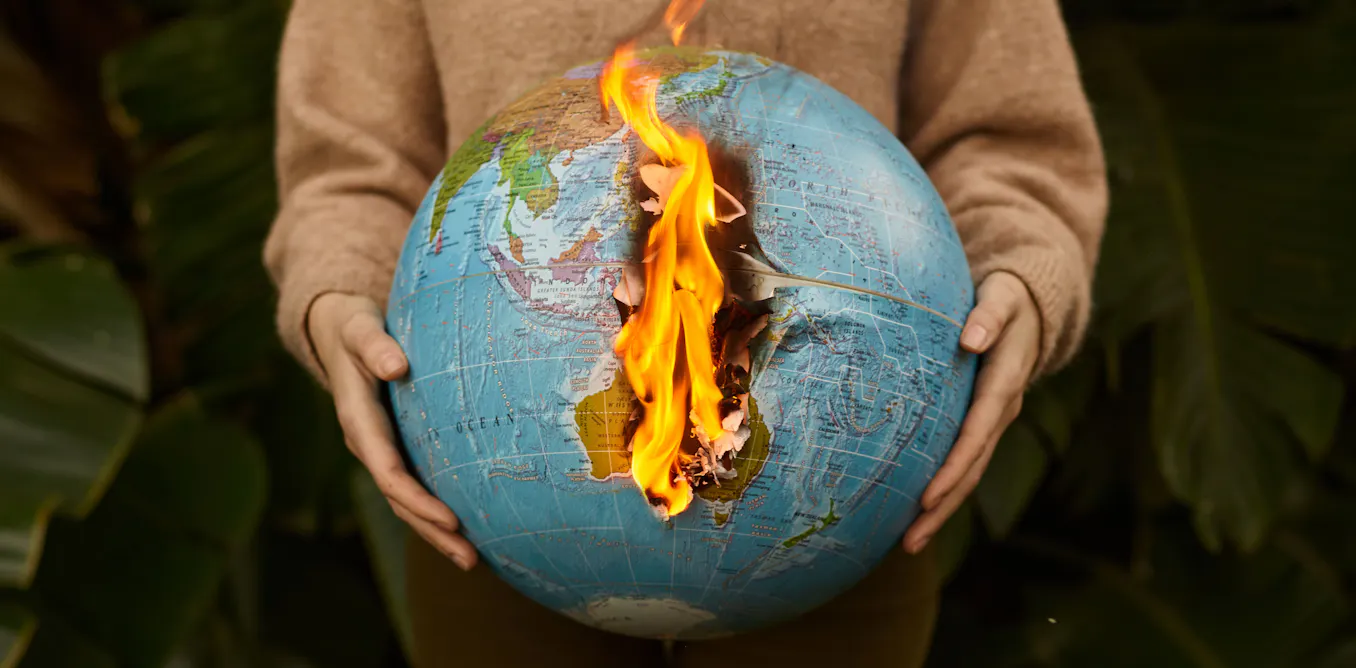
Fiction built around feared futures
Mary Shelley’s The Last Man, published in 1826, is widely regarded as the first post-apocalyptic novel. The genre uses a “what if” question to build an imagined world, often examining present-day concerns through a future crisis.
Climate change, future pandemics and socioeconomic inequality offer material for such stories. Philosopher Danielle Celermajer says that facing feared futures together can help people recognize how much they do not want them.
Writers and critics have also warned that climate fiction can produce paralysis or hopelessness. The challenge is to question the present while leaving room for agency and resistance.
Atwood’s world after bioengineering
Margaret Atwood’s Oryx and Crake (2003) begins her Maddaddam trilogy. Its narrator, Snowman, lives in a near future transformed by bioengineering and a plague, exploring human ruins reclaimed by nature as he looks for food and fresh water.
The novel critiques corporate greed and technology advancing without restraint. Though its opening book approaches hopelessness, the rest of the trilogy considers how people might rebuild and form community.
McCarthy’s ash-covered landscape
Cormac McCarthy’s The Road (2006) does not name a definite cause for the collapse of society and the biosphere. It depicts a cold, ash-covered world, suggesting possibilities such as nuclear fallout, a nuclear winter or a volcanic eruption.
A father and son travel across the United States amid constant threats of starvation and cannibalism. The novel concentrates on survival and the limits people may cross to stay alive. The story is among the most brutal in the group, but its striking prose has made it a significant work for readers exploring the genre.
A virus reshapes society
Justin Cronin’s The Passage (2010), first in a trilogy, follows a virus outbreak from Day Zero at a US military base to a century later. Humans now live in small fortified colonies, while major cities lie in ruins.
The colonies face attacks from “virals”, creatures drawing on zombie and vampire mythology. Cronin has said his daughter’s request for a story about a girl who saves the world inspired the book.
Key points
- Post-apocalyptic fiction often uses imagined disasters to examine concerns of the present.
- Oryx and Crake links bioengineering and plague with a critique of corporate greed.
- The Road follows a father and son through an ash-covered United States.
- The Passage depicts fortified communities a century after a virus outbreak.