

Sonia Gandhi’s memoir: five takeaways on grenades, grief and India’s deepening political divide
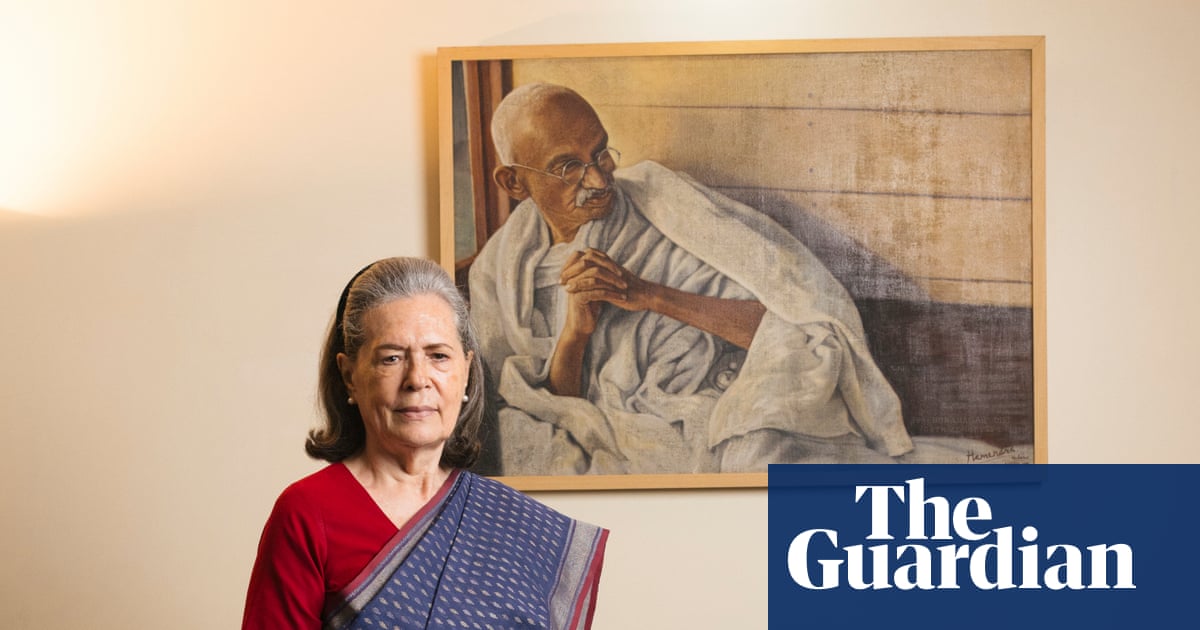
Private loss and public violence
Gandhi’s memoir follows her path from a small Italian town to India’s political circles, a journey she describes as being driven by love. She writes about the death of her first child soon after birth.
She also recounts finding grenades in a room at the family home after Operation Blue Star, the 1984 military action at the Golden Temple in Amritsar. Her account includes the assassinations of her mother-in-law, Indira Gandhi, in 1984 and her husband, Rajiv Gandhi, in 1991.
A country and its divide
Belonging traces India’s political transformation from Gandhi’s arrival in 1968 to the present, when Hindu nationalism is the dominant political force under Narendra Modi. The account also reflects the deep polarisation of contemporary politics.
Gandhi writes that she has had “practically no real contact” with Modi during his 12 years leading the country. She says that when they have shared a room, he has tended to look away, though he has sometimes briefly asked about her health after a hospital stay.
Power, leaders and conventions
Gandhi describes what she sees as a more authoritarian political style, in which those in power try to “belittle and torment” opponents. She notes that her son Rahul has been mocked by the BJP with the name Pappu, meant to suggest inexperience and naivety.
A 2012 conversation with Hillary Clinton prompts Gandhi to reflect on women leaders and their backgrounds. She recalls that Indira Gandhi could feel isolated despite her authority, particularly in the months before declaring the Emergency.
Pressures around publication
Gandhi recalls an earlier era when journalists could question prime ministers directly, contrasting it with the present relationship between media and government. Penguin Random House India withdrew from publishing her memoir in August after initially planning to release it.
Gandhi told the Guardian that Penguin was uneasy with criticism of the government and dropped the book after she rejected suggested edits. Penguin disputed that explanation, saying the claim about refused edits did not accurately describe the circumstances. The publisher had also withdrawn from distributing Joe Sacco’s book on the 2013 Muzaffarnagar violence; Sacco blamed India’s political climate, while Penguin cited an inaccurate map and unresolved citation issues.
Key points
- Belonging recounts Gandhi’s personal losses and the assassinations of Indira and Rajiv Gandhi.
- The memoir follows India’s political shift from a Congress-dominated republic to Hindu nationalism under Modi.
- Gandhi describes limited contact with Modi and growing efforts to ridicule political opponents.
- Gandhi and Penguin gave conflicting explanations for the publisher’s withdrawal from the memoir.