

A 1,600 year old Roman glass mystery: scientists finally crack how to recreate its striking color shift
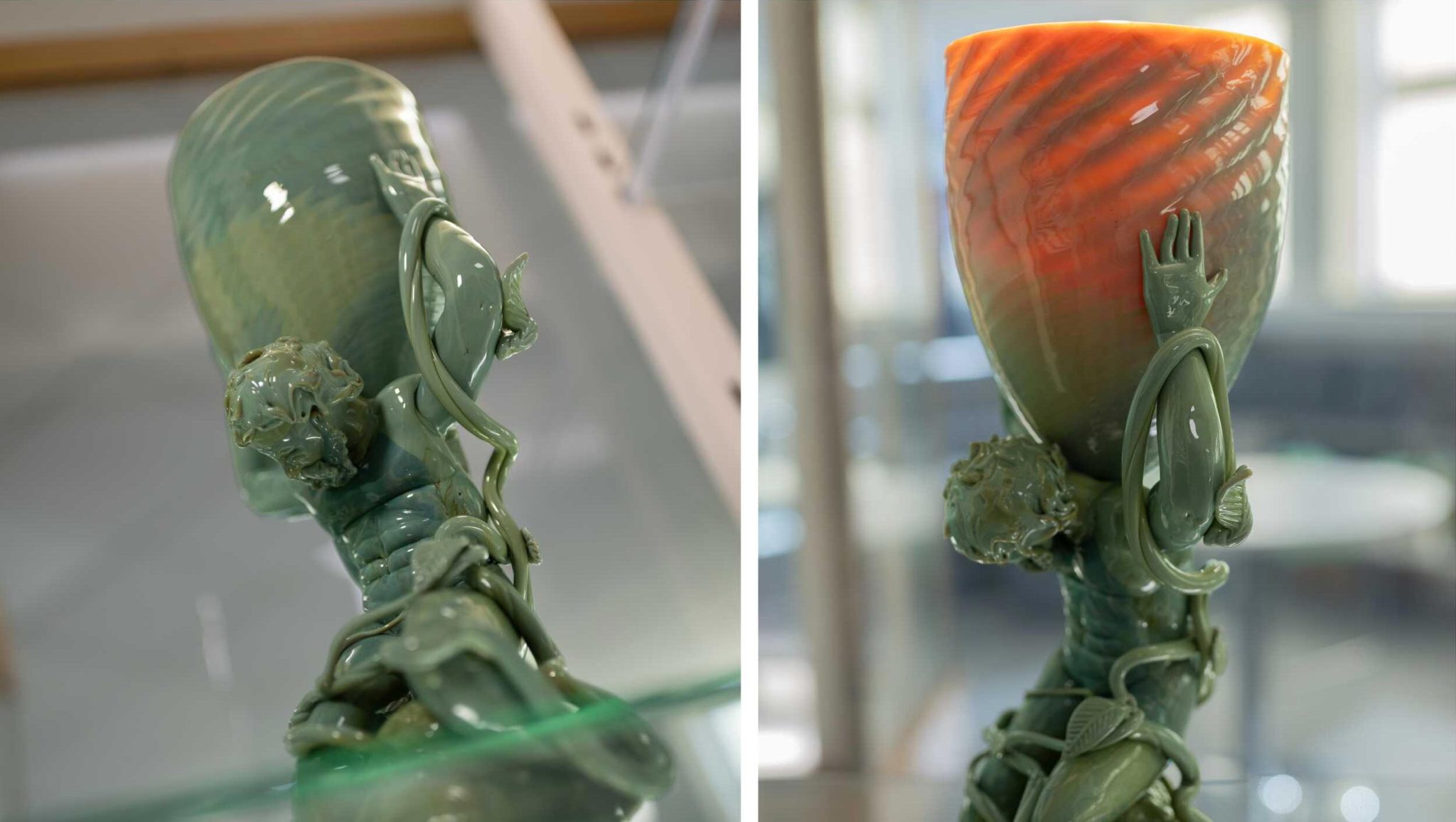
The cup’s striking colors
The Lycurgus Cup shows a different color depending on how it is lit: reflected light makes it look green, while light passing through produces a red appearance. Its carved scene features the mythical Thracian king Lycurgus caught in vines as punishment for his actions.
In 2022, an international panel of artists and conservators included the cup among seven glass wonders of the world. The recognition reflected its design, unusual optical qualities and unusually good preservation.
Recreating an ancient effect
Researchers attribute the color shift to small quantities of gold and silver in the glass. Under suitable conditions, the metals form layered nanoparticles, whose dimensions and shapes affect how they interact with visible light.
That explanation has not provided a dependable recipe. Roman glassmakers’ precise methods are unknown, and modern efforts to reproduce the effect have had inconsistent results.
Experiments in Sheffield
The project gained momentum after Christina Metcalfe, a project manager for the Molecular Photonic Breadboards project, asked University of Sheffield technician Dr. Lisa Hollands to make the glass for the university’s 2025 LightFest. Hollands drew on more than 25 years of glass work and tested furnaces, ingredients and oxygen levels, including experiments with sugar.
Her repeated trials produced an opaque green sample under reflected light that appeared red when lit from behind. The result showed that modern materials and methods can reproduce the optical effect, but it did not identify the original Roman formula.
A sculpture and future uses
The team commissioned glass artist Elliot Walker, winner of season two of Netflix’s Blown Away, to create a contemporary work using Hollands’ recipe. Walker combined inspiration from the Lycurgus story and the Farnese Atlas, replacing the sculpture’s globe with a cup to display the glass’s changing appearance.
The glass is expected to be used mainly for decoration. Metcalfe said the project aimed to give the public a tangible way to understand what embedded nanoparticles can do; the research may also aid work on photonic materials and advanced glass for managing radioactive waste.
Key points
- Dr. Lisa Hollands developed a repeatable method for making color-changing glass at the University of Sheffield.
- The sample looks green in reflected light and red when illuminated from behind.
- The experiments recreated the effect but did not establish the Romans’ exact recipe.
- The findings may inform photonic materials and glass used to manage radioactive waste.