

Imagine newsletter explores plankton’s power over food webs, climate and sharks
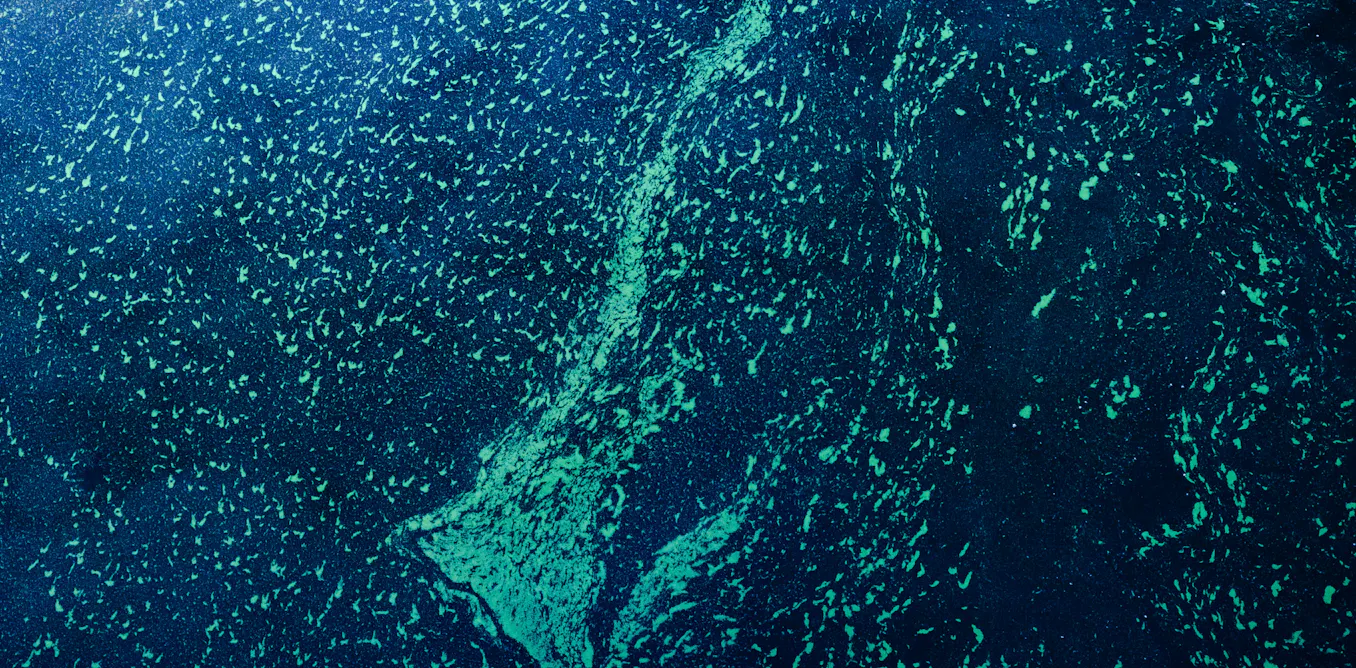
Small drifters, major food webs
The word plankton means “drifter” in Greek. The term covers organisms that do not actively swim, from microscopic life to large barrel jellyfish, carried by currents and tides through oceans, rivers and lakes.
Phytoplankton are single-celled algae that use photosynthesis to capture carbon dioxide and release oxygen. They underpin marine food webs, feeding zooplankton such as copepods; those tiny animals, in turn, provide food for young fish, basking sharks and blue whales.
When marine animals die and sink, some of the carbon captured by phytoplankton goes down with them. That process makes phytoplankton important to the climate, as well as to ocean life.
Climate pressure on plankton
Marine heatwaves are becoming more frequent as the climate changes, and some plankton are shifting toward cooler waters near the poles. Researchers examining plankton fossils have also found signs that some species may now have less capacity to adapt than in the past.
Warming around the last ice age, about 21,000 years ago, happened gradually, unlike current climate change. A University of Bristol study by paleobiologists said rapid change and reduced food supplies are making adaptation difficult for plankton.
Plankton reveal where sharks feed
Phytoplankton have chemical signatures that differ by location. These microscopic “postcodes” can be passed along the food web, and researchers have used them to study the feeding patterns of 114 shark species.
Christopher Bird and Clive Trueman of the University of Southampton found that coastal sharks, including great whites and reef sharks, had fed near where they were caught. Mako sharks in the open ocean appeared to rely on food from a particular plankton postcode, regardless of where they were caught; knowing sharks’ feeding grounds can help protect them.
Clouds over the Southern Ocean
Plankton also help shape clouds over remote parts of the Southern Ocean. Clouds form when water vapour condenses onto tiny airborne particles, called cloud condensation nuclei; University of Leeds researcher Daniel Grosvenor said plankton help supply these particles.
Grosvenor’s team found that areas of ocean with more plankton tended to have more cloud droplets. The research suggests plankton can affect how much sunlight clouds reflect, and that the Southern Ocean’s surface would probably be somewhat warmer without phytoplankton.
Key points
- Phytoplankton capture carbon dioxide, release oxygen and support marine food webs.
- Some plankton are shifting toward cooler waters as marine heatwaves become more frequent.
- Chemical signatures carried through food webs can help researchers map where sharks feed.
- Plankton contribute to cloud formation over the Southern Ocean and may affect ocean-surface temperatures.