

Why Trump, Putin and Xi Cannot Carve Up the World Like 1945’s Big Three Leaders
A proposed meeting draws comparisons
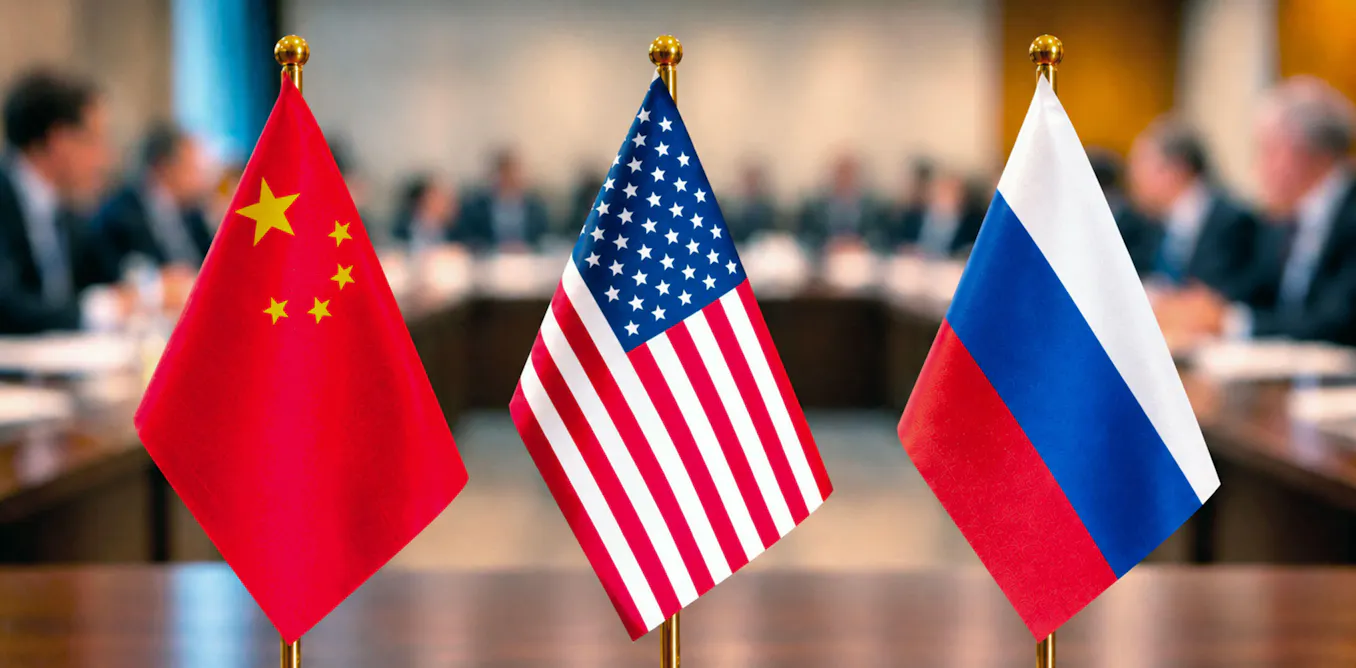
Discussions are underway about a possible meeting between Donald Trump, Xi Jinping and Vladimir Putin alongside the Asia-Pacific Economic Cooperation summit on November 18-19. The prospect recalls the Yalta summit of February 1945, where Britain, the United States and the Soviet Union discussed the postwar world.
The three present-day leaders govern countries that see themselves as great powers. Trump appears to regard himself as part of a modern triumvirate with Xi and Putin, and to show them more respect than he does most other presidents and prime ministers.
Plans for spheres of influence
The 2025 US national security strategy describes the western hemisphere as a region of US predominance and suggests Russia and China could have similar spheres. US action to change leadership in Venezuela and its support for sympathetic populist regimes in Latin America are presented as signs of that approach.
Putin seeks to restore Russian control over Ukraine by force and uses bribery, threats and subversion to promote sympathetic governments in the former Soviet sphere. Xi has stated his aim to regain control of Taiwan and seeks greater Chinese influence in Myanmar, Southeast Asia and the South China Sea.
All three appear to view Europe, particularly the European Union, as an obstacle. The EU’s shared sovereignty, common rules, human rights and rule of law offer an alternative model, while the US and Russia appear to support anti-EU populist parties and grievances that could weaken European unity.
Empire in a changed world
Imperial power is not limited to controlling territory. It also concerns who makes decisions about resources, trade, security and government. After the second world war, some newly independent states argued that economic and governance rules maintained forms of control even after formal colonial rule ended.
Empires had long brought diverse populations under one authority, but nationalism challenged that model. Competitive nationalism contributed to instability and, between 1914 and 1945, two devastating world wars. By the end of the second, leaders had developed the capacity to destroy humanity and sought better ways to resolve disputes.
Independence and global ties
The United Nations grew from 43 member states in 1946 to 193. Many countries fought for independence and remain determined to keep it; the postwar multilateral system aimed to protect smaller states from having their people and territory treated as possessions.
Public resistance also challenges the idea that people can be traded between powers. Greenlanders have demonstrated that refusal, while Iranians and Ukrainians have shown willingness to fight for the right to choose their governments. The future of Delcy Rodríguez, described as the US-installed interim president of Venezuela, remains uncertain.
Trade and technology have also changed relations among people and states. Globalisation may be unfashionable, but it remains a reality.
Key points
- A potential Trump, Xi and Putin meeting has prompted comparisons with the 1945 Yalta summit.
- The leaders’ apparent interest in spheres of influence faces resistance from countries protecting their independence.
- The UN expanded from 43 members in 1946 to 193.
- Nationalism, public resistance and globalisation have changed the conditions that once supported empires.