

From Time Travel to Tea and Robots: 16 Short Sci-Fi Books to Read This Weekend
Classics in a compact form
Several foundational science-fiction works are short enough for a brief reading stretch. H.G. Wells’ The Time Machine, published in 1895, runs to just under 150 pages in some editions and follows a fast-moving time-travel plot.
Mary Shelley’s Frankenstein, released in 1818, is often classified as an early science-fiction novel, though it also has strong horror elements. Most printings exceed 150 pages, and the story’s use of technology to revive a creature supports its philosophical concerns.
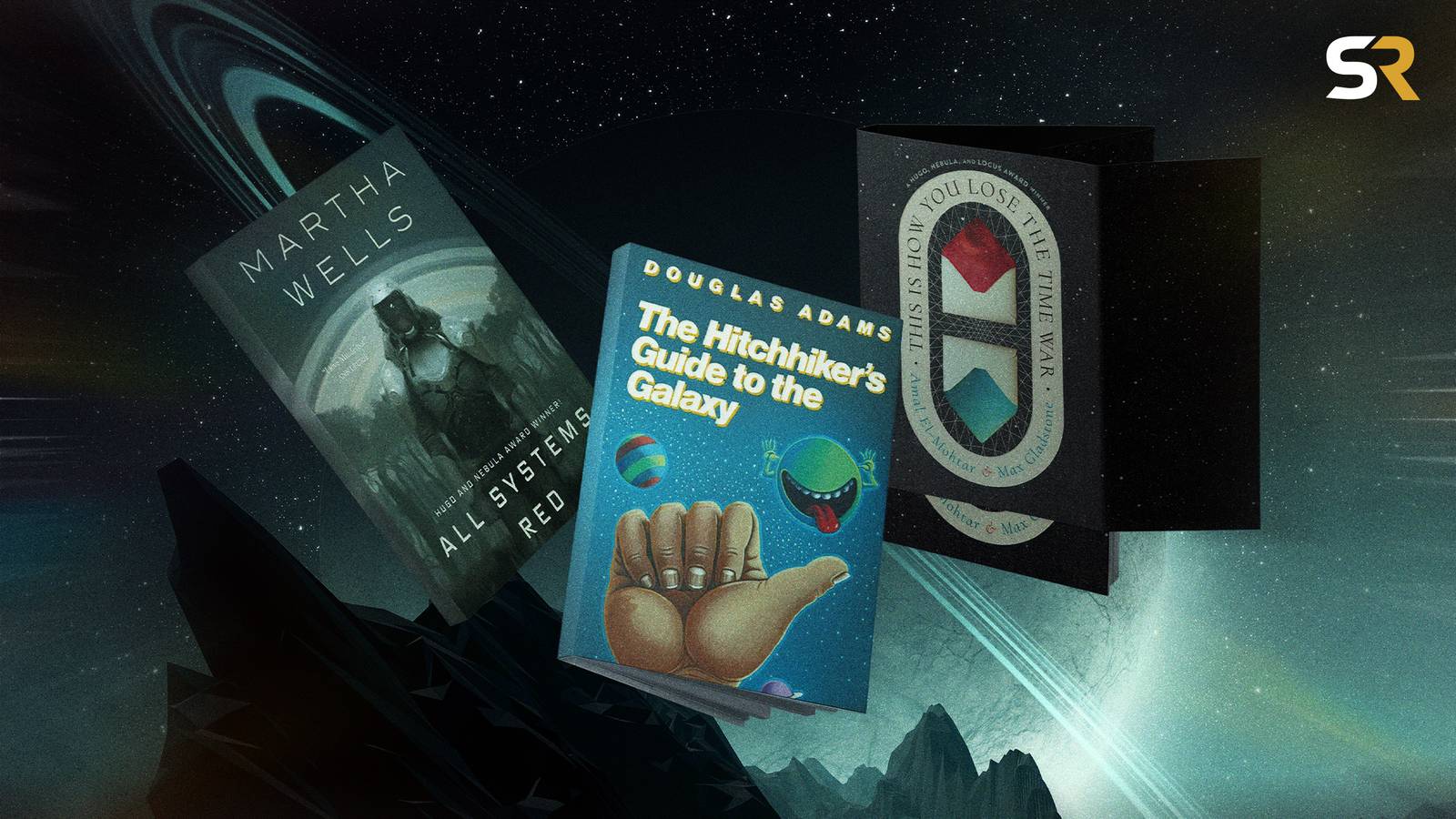
Douglas Adams’ The Hitchhiker’s Guide to the Galaxy, published in 1979, offers a comedic alternative at roughly 220 pages. Its many adaptations reflect its popularity, and its playful approach makes it accessible to newcomers as well as genre fans.
Short stories across space
Space travel and life beyond Earth can fuel sweeping sagas, but they also work in shorter books. Nnedi Okorafor’s Binti, a Hugo Award-winning novella from 2015, is under 100 pages and follows its heroine’s dangerous journey to Oomza University.
John Scalzi’s Redshirts, published in 2012, is a roughly 300-page comedy set aboard the starship Intrepid. It focuses on low-ranking crew members who begin to suspect they are unlikely to survive.
Aliette de Bodard’s On a Red Station, Drifting, released in 2024, places refugees on a space station. At just over 170 pages, the novella builds tension in a compact setting.
Thoughtful modern novellas
Ursula K. Le Guin’s The Word for World Is Forest is a novella of just under 200 pages. Published in 1972, it explores issues that remain relevant, making it a brief but reflective read.
Becky Chambers’ A Psalm for the Wild-Built, published in 2021, is a Hugo Award-winning novella of around 150 pages. Set on a habitable moon, it follows a tea monk whose quiet life changes after encountering a sentient robot.
Key points
- The Time Machine is under 150 pages in some editions.
- Binti is a Hugo Award-winning novella under 100 pages.
- Frankenstein blends early science-fiction ideas with horror and philosophical themes.
- A Psalm for the Wild-Built pairs a tea monk with a sentient robot.