

Make Sense of Israel’s Ambiguous Election and the Arab Vote’s Rising Power
Counting Leaves Power Unsettled
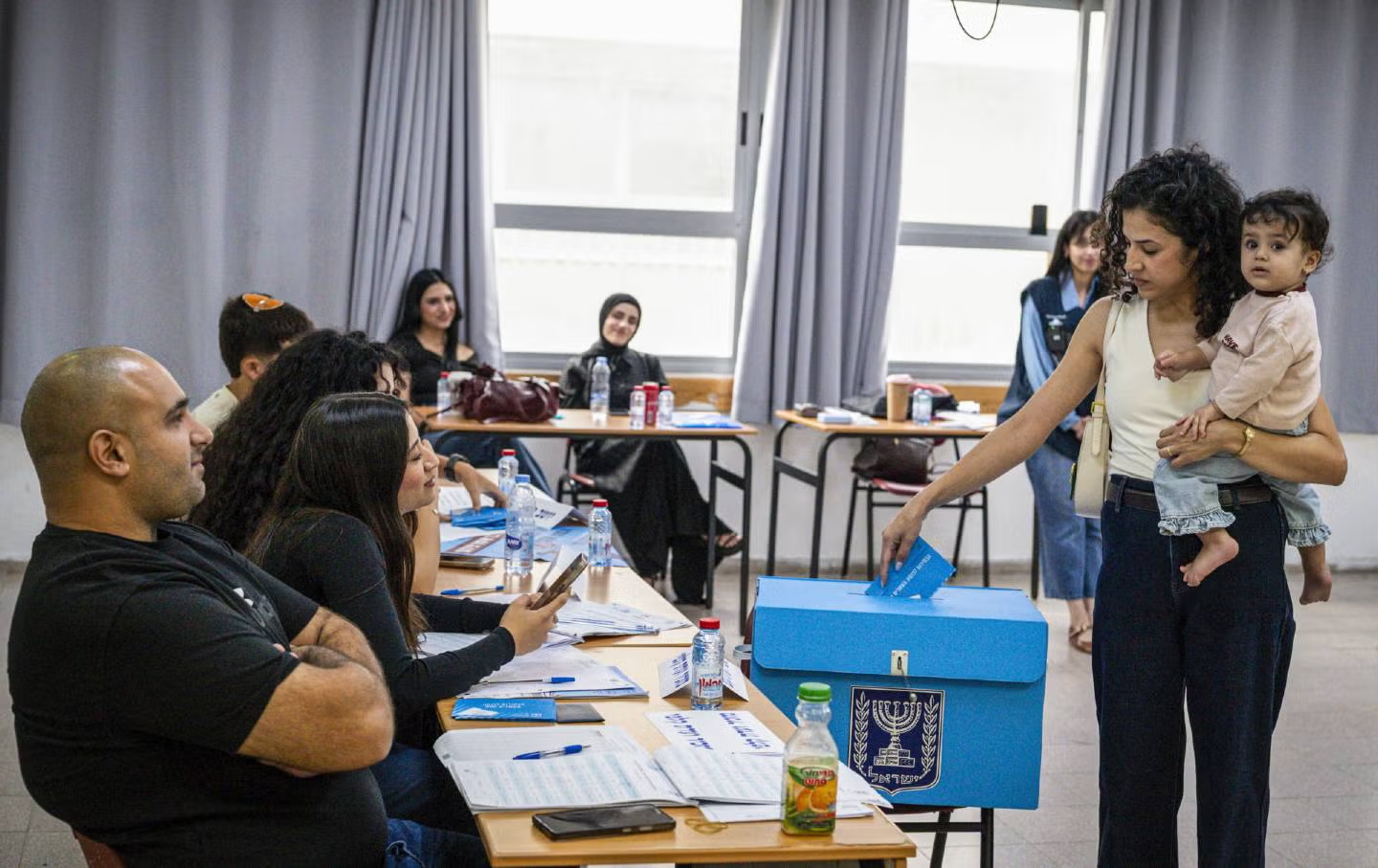
Votes were still being counted by the end of Wednesday, when only half of the actual ballots had been tallied. Nearly 80 percent of Israelis voted. Netanyahu had the most votes, but the article says he could not gather the 61 allied seats required for a majority in the 120-member Knesset. His campaign push for right-wing voters to back him rather than smaller allied parties may have weakened his own bloc. The article says far-right ministers Itamar Ben-Gvir and Bezalel Smotrich would not return to power, regardless of the outcome.
Eisenkot Faces Two Paths
The opposition bloc’s election-night optimism faded after Eisenkot finished second to Netanyahu. The former IDF chief could seek a unity government with Likud, though he had previously ruled that out, or include at least one Arab-led party in a governing coalition.
Those options divide his bloc. Avigdor Lieberman, on its right flank, has rejected an alliance with Arab parties, while the Democrats, the bloc’s left-wing party, support their inclusion. Lieberman’s vote total also fell below expectations.
Arab Citizens Turn Out
Arab citizens voted in numbers described as roughly double their previous records, contributing to the high overall turnout. The article says many were motivated by opposition to hostility toward their communities, the devastation in Gaza and the loss of occupied Palestinian territory under Netanyahu’s government.
Arab citizens with Israeli citizenship within the internationally recognized 1967 borders include many Palestinians descended from the pre-1948 population, as well as Bedouins. The Joint List, a secular left-wing alliance of three parties, is popular among many Palestinians in the Galilee and northern Israel; Bedouins mostly vote for Ra’am, a moderate Islamic party.
Representation Could Shift Politics
The Joint List doubled its representation. Its leaders said they would support a non-Netanyahu government from outside it, while Ra’am had previously joined a government led by Bennett and Lapid. Ra’am’s second candidate was an Israeli Jewish former police official, a move intended to challenge Jewish-Arab division.
Arab-led parties have historically been excluded from government by both left- and right-wing Zionist parties. Political sociologist Ameer Fakhoury said the vote could mark the “beginning of political and moral repair,” or the gradual ruin of both peoples.
Key points
- Netanyahu led the count but appeared unable to secure a 61-seat majority.
- Eisenkot could pursue a unity government with Likud or include Arab-led parties.
- Arab citizens voted in record numbers, and the Joint List doubled its representation.
- Eisenkot’s bloc is divided over whether to ally with Arab-led parties.