

4 Takeaways: Israel’s Election Leaves Netanyahu’s Future Uncertain
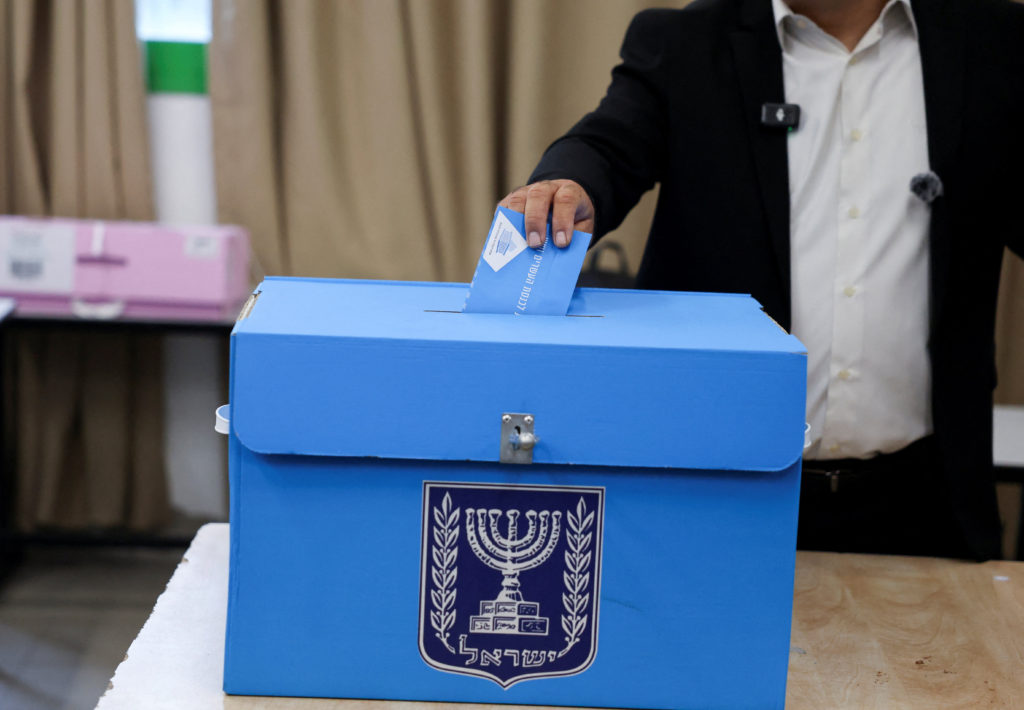
Record turnout after October 7
Israelis cast ballots in record numbers in the country’s first election since the October 7 attacks and the war in Gaza. The campaign unfolded amid a widely felt sense that the country faces a consequential choice.
Jonathan Barsade, president of the nonpartisan America-Israel Democracy Coalition, said voters see the election as a decision about Israel’s future direction. His group helped bring about 70,000 Israeli expatriates back to vote, since Israel has no mail-in voting.
Opposition leads, without a majority
Election projections show opposition parties winning more parliamentary seats than the coalition led by Netanyahu, Israel’s longest-serving prime minister. The results could set up a change in government, but the opposition does not have enough seats to form a majority.
That gap points to weeks of negotiations. At Gadi Eisenkot’s headquarters, supporters emphasized that opposition parties and Arab parties together won substantially more seats than Netanyahu’s coalition, which lost seats.
Arab parties complicate negotiations
Arab parties opposed to Netanyahu are projected to win a record 17 seats. However, Eisenkot’s coalition partners are unlikely to agree to work with them, complicating efforts to assemble a governing majority.
The projected seat totals therefore do not settle who will govern. The opposition’s lead is clear in the projections, but the path from that result to a new government remains uncertain.
Voters look toward peace
Some voters described the contest as a choice about the country’s future and its political direction. Barsade said the stakes were seen as lasting for decades, while the campaign drew Israelis with sharply different political views.
Avshalom Seri, 75, voted against Netanyahu and said he hoped new leaders would pursue peace. He pointed to children and grandchildren, saying the country had fought enough and that it was time for peace.
Key points
- Projections give opposition parties more seats than Netanyahu’s coalition, but not a parliamentary majority.
- Arab parties are projected to win a record 17 seats, though opposition allies may not work with them.
- Negotiations over forming a government could take weeks.
- About 70,000 Israeli expatriates returned to vote because Israel has no mail-in voting.