

Hypoid Differential Gear Oil Needs Different Chemistry From Engine and Transmission Oils, Jalopnik Explains
How hypoid gears work
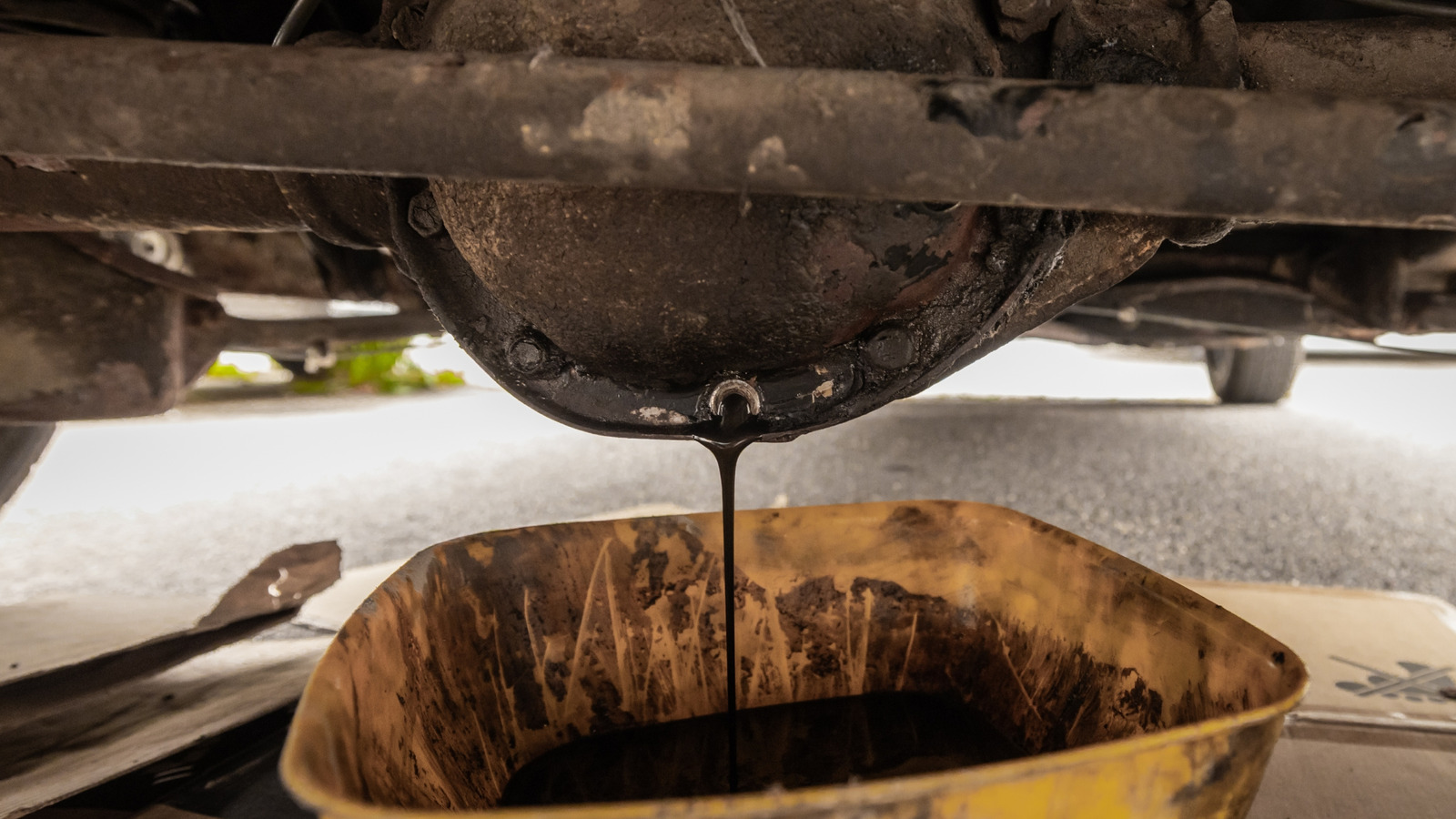
Hypoid gearsets are found in differentials between the rear wheels and sometimes the front wheels. They are common in tow-oriented pickups and body-on-frame SUVs, and some all-wheel-drive vehicles use them in a power transfer unit.
The pinion meets the ring gear away from its center, allowing the driveshaft to sit lower. But the teeth slide against each other, squeezing away the oil film and creating boundary lubrication. GL-5 gear oil uses extreme-pressure additives to protect the exposed metal surfaces.
Why engine oil differs
Engine oil lubricates moving parts and manages combustion byproducts such as soot and sludge. It uses milder anti-wear additives, including ZDDP, rather than the heavy extreme-pressure formulations used in hypoid gear oil.
Those stronger additives are not intended for engines and can become corrosive to some engine metals at about 200 degrees Fahrenheit. Phosphorus-based additives are also limited in engine oil to help prevent catalytic converter damage. Differential oil, by contrast, must protect gears during normal driving and heavy loads, without needing to control engine contaminants.
Viscosity numbers do not match
Engine and gear oils use separate viscosity rating systems: J300 for engine oil and J306 for gear oil. Their grade numbers therefore cannot be compared directly. A gear oil rated 90 is roughly in the thickness range of SAE 40 or 50 engine oil, not twice as thick. Modern engines, however, are designed for lighter oils than the much heavier gear oil used in many differentials.
Manual transmission exceptions
Manual transmissions often use helical gears, which slide less than hypoid gears, and many call for GL-4 oil with about half the extreme-pressure additives of GL-5. Sulfur-phosphorus additives in GL-5 can corrode brass synchronizers and other brass or bronze components, especially at higher temperatures.
Many differential oils are also formulated to be slippery, while synchronizers need friction to engage gears. Some manual transmissions, including certain Subaru models, do require GL-5, and aftermarket suppliers make GL-5 oils for specific manual-transmission applications. Manual and automatic transmission fluids are not interchangeable.
Key points
- Hypoid gear teeth slide under pressure, requiring specialized extreme-pressure protection.
- GL-5 additives can harm some engine metals and catalytic converters.
- Gear and engine oil viscosity grades use different rating systems.
- Some manual transmissions require GL-5, but others may be damaged or shift poorly with it.