Why Zimbabwe wants digital payments to build trust in its newest currency, and why technology alone isn’t enough to save it
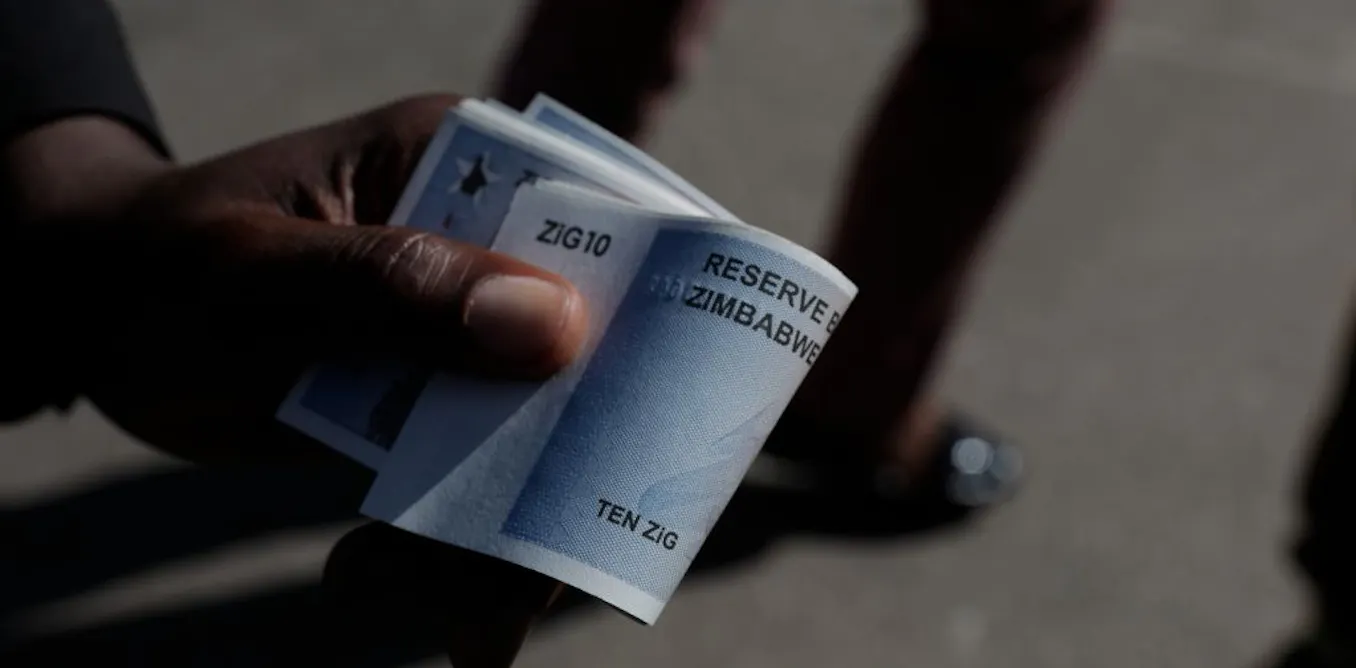
A payment system under discussion
It could also allow direct account payments for small purchases instead of card use. Cross-border payments and remittance connections may be added later, but the system’s success would depend on whether people choose the ZiG willingly.
Trust shaped by currency history
Past crises were linked to government spending exceeding tax revenue and being financed through money creation. Many households and businesses turned to US dollars to protect savings and plan transactions.
The ZiG faces a confidence test
The Reserve Bank devalued the ZiG on 27 September 2024, moving it from 13.9 to 24.4 per US dollar, a 43% reduction. At the time, some company taxes and most government services required the currency, and traders who rejected it could be fined.
Those requirements did not lead to widespread voluntary use, amid concerns that the government might issue more ZiG than the economy needed. Annual ZiG inflation fell to 2.9% in August 2026, then rose to 3.7% in September; US-dollar inflation increased from 3.1% to 3.46% over that period.
Several months of low inflation may not be enough to establish durable confidence. At the end of September, foreign reserves stood at about US$2 billion, around two months of import cover and below the Reserve Bank’s three-month target.
Conditions for digital adoption
The proposed system could make ZiG payments more accessible, but the central bank’s handling of money and interest rates must remain credible. People should be able to choose between the ZiG and the dollar, using the local currency because it is convenient and stable rather than compulsory.
Zimbabwean institutions would also need to retain control of the payment network. Other countries, including Namibia, Peru and Trinidad and Tobago, have worked with NPCI International, but local control remains a central consideration when importing payment technology.
Key points
- Zimbabwe is negotiating over an Indian-based system intended to make ZiG payments faster and cheaper.
- A history of currency instability continues to shape public confidence in the ZiG.
- The ZiG lost 43% of its value against the US dollar in September 2024.
- Voluntary use depends on credible monetary management, consumer choice and local control of the system.