

Maps made by South Africa’s Amadiba communities ask whose vision of development counts, and what matters
Mapping what communities value
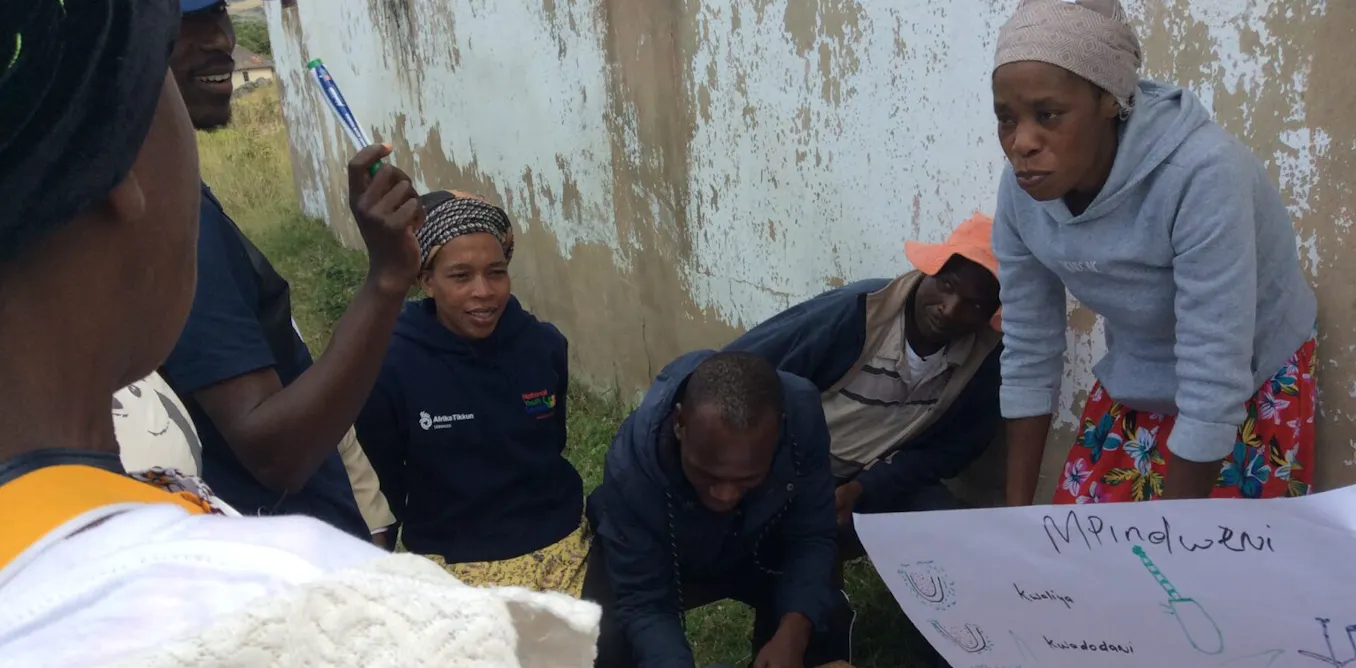
The Amadiba Crisis Committee formed in 2007 to oppose titanium mining on ancestral land. Working with the committee, researchers launched Maps Are Now Our Spears, a counter-mapping project designed to challenge how powerful institutions justify development and land use.
One hundred elders, adults and young people over 18 from six coastal villages shared accounts of life on the land. Together, they identified what should be protected for future generations. GPS trackers recorded the locations of important natural, historical, cultural and spiritual sites, as well as food-growing and grazing areas.
A different picture of the coast
The maps document how customary land use, local livelihoods and cultural heritage are connected. They show a range of economic activities and community practices that care for the ecosystem.
This account contrasts with the 2025 Draft Wild Coast Coastal Development Plan, which describes the area as highly impoverished and says residents damage the environment. The plan presents mining as a source of jobs the region needs.
Residents’ practices include collective land-use decisions, community-led ecotourism and shared food production. Small farms grow maize, amadumbe and sweet potatoes; sweet potato and amadumbe sales alone are estimated to bring in R60,000 (US$3,605) per household each year.
Road plans and local alternatives
An independent report found that construction had caused noise, dust, cracked homes and polluted drinking-water streams. The completed road is expected to divide communities and limit access to farmland and communal resources; its 80-metre road reserve would affect ancestral land, wetlands and sensitive habitats.
A court ruling and development
The maps and the alternative road proposal present the communities as seeking development that supports their way of life, rather than rejecting development outright. The project also highlights how promises of jobs and growth can be used to promote mining and large infrastructure despite potential harm.
Key points
- The Maps Are Now Our Spears project records places and practices Amadiba residents want to protect.
- One hundred people from six coastal villages helped identify what mattered for future generations.
- An independent report found construction had caused noise, dust, cracked homes and polluted drinking-water streams.
- The Amadiba Crisis Committee sent Parliament an inland highway alternative designed to avoid sensitive coastal areas and homes.